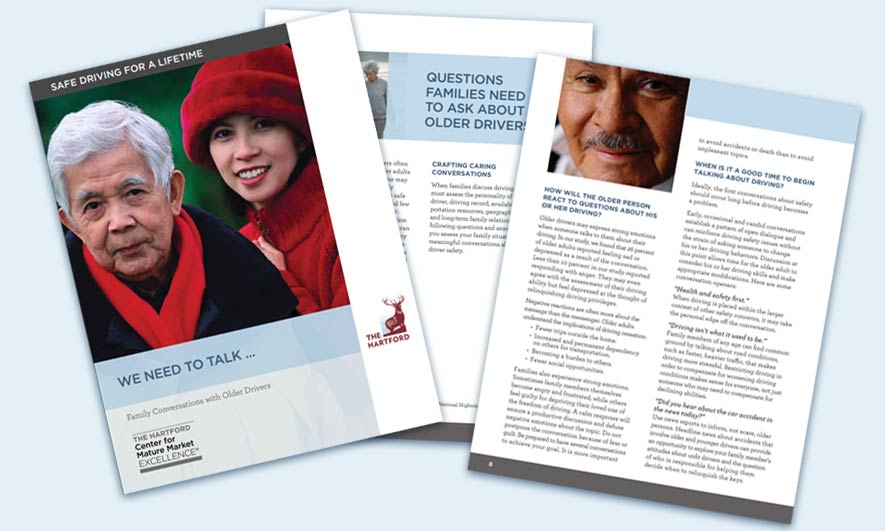
Because driving represents independence and freedom for most older adults, the idea of limiting or giving up driving can be a deeply personal and emotional issue. That's why The Hartford Center for Mature Market Excellence,® together with the MIT AgeLab, created information to help families address sensitive subjects and foster meaningful family conversations about older driver safety.
For older drivers, limiting driving presents practical problems and can cause strong emotions, from sadness to anger. Family members themselves may feel angry, frustrated, or guilty about depriving their loved one of the freedom of driving. Despite these concerns, family members and older drivers alike prefer to keep these conversations "in the family."
The Hartford Center for Mature Market Excellence and the MIT AgeLab developed information to help families initiate productive and caring family conversations with older adults about driving safety. These suggestions are based on our joint, original research with drivers over the age of 50.
Are Older Drivers at Risk?
Statistics indicate that most older adults are safe drivers, with high safety belt use and few citations for speeding, reckless driving or alcohol-related charges. In fact, the actual number of accidents involving older drivers decreases as age increases. Experts attribute this decline to self-imposed limitations, such as:
- Driving fewer miles.
- Avoiding driving at night and during bad weather.
- Steering clear of rush-hour traffic.
However, medical conditions, medication usage and reduced physical function can increase the risk of accidents and injury among older adults. The decision to limit driving depends on each individual. Each family must ask, "Is my older relative safe?"
Make Your Family Conversation Productive
The Hartford Center for Mature Market Excellence and MIT AgeLab research showed that older adults preferred that the majority of older driver safety conversations be held with family members ... or a physician. However, not all of these family conversations are well-informed or productive. For family members to be supportive, they need to be sure their safety concerns are valid – looking for a pattern of problems, not simply an isolated incident – and do their homework.
Help Beyond the Conversation
Most older drivers will agree to limit or stop driving after patient, caring conversations with family members. If the driver refuses to comply, you may need to enlist the support of a doctor or driver rehabilitation specialist for a formal driver assessment.
If you feel that safety is seriously compromised, you may have to take unilateral action, such as contacting the motor vehicle licensing authority.
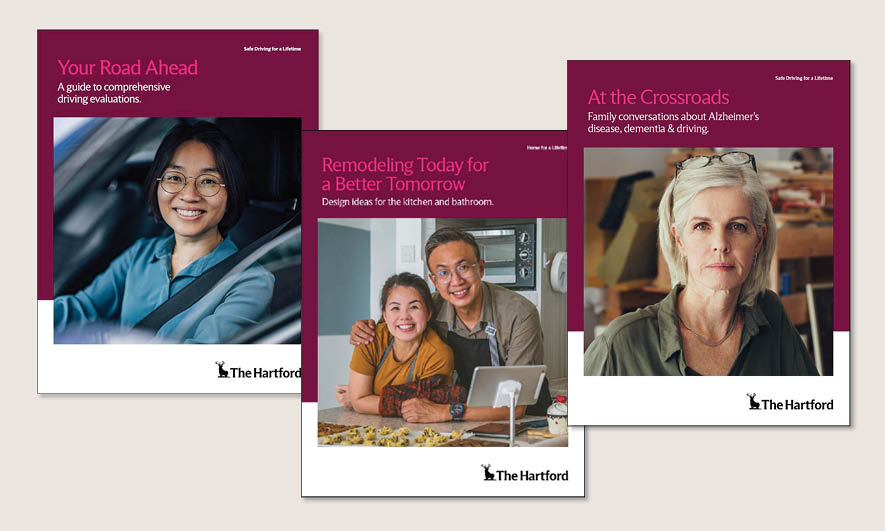
If the older driver has dementia, families should be vigilant about observing driving. Anyone with a diagnosis of Alzheimer's disease, or any other form of progressive dementia, will eventually lose the skills necessary for safe driving.
For more information about family conversations with older drivers, download or order your free copy of We Need to Talk: Family Conversations with Older Drivers.
 Talking about driving with an older adult, and deciding if they should make the transition from driver to passenger, can be difficult. To help you, AARP Driver Safety has created a free online seminar. Based on information created jointly by The Hartford and the MIT AgeLab, the We Need to Talk seminar offers practical tips and advice in four interactive modules.