

As businesses throughout the country take steps to lower energy costs and access new power solutions, the use of solar energy continues to gain momentum. Solar production across the United States grew by 25% as many new projects came online in 2024.1
The use of solar power can have positive impacts on the environment and generate long-term energy cost savings, but there are several factors that commercial property owners and facilities managers should consider prior to investing in solar.
One of those risks is fire. Although considered to be relatively safe, when a rooftop solar panel fire occurs, it can be devastating.
“Adding a renewable energy source to a building does pose potential for an increased fire hazard," says Tracey Greene, real estate industry practice leader at The Hartford. “That's why it's important that panels are installed and maintained properly to mitigate that risk."
While solar PV systems generally do not pose a higher fire risk compared to other electrical systems, it is important to address any potential hazards both during and after installation.2 When installing or maintaining existing solar panels, consider the following suggestions to help reduce fire risk.
Work With Reputable Manufacturers and Installers
As market demand for solar has increased, so has the number of contractors and companies supporting the industry. This is especially noticeable with the advancement of data centers to support Artificial Intelligence (AI). The United States counted more than 275,000 workers employed in solar as of 2023; of which 178,812 were installation and project development jobs.3 Certification is important. Not all installers are certified for solar, which may lead to questionable workmanship, improper installation and increased fire risk.
“Solar contractors and installers who have earned their North American Board of Certified Energy Practitioners voluntary certification are considered more favorably by insurers," says Greene.
As part of due diligence efforts, building owners should confirm if an installer holds a manufacturer's certified designation. Additionally, owners should ensure that installers follow the National Electric Code (NEC) guidelines. These have been adopted in all 50 states and represent the benchmark for safe electrical design, installation and inspection.
“If a contractor is unfamiliar with NEC, that's a red flag," says Greene.
Use Quality Solar Panel Materials and Evaluate Rooftops
Facilities managers should also consider the materials that solar panels are built with. Make sure the panel module frame and back sheets are not constructed of plastic, especially foamed plastic, which can be highly combustible and lead to a rapidly developing fire.
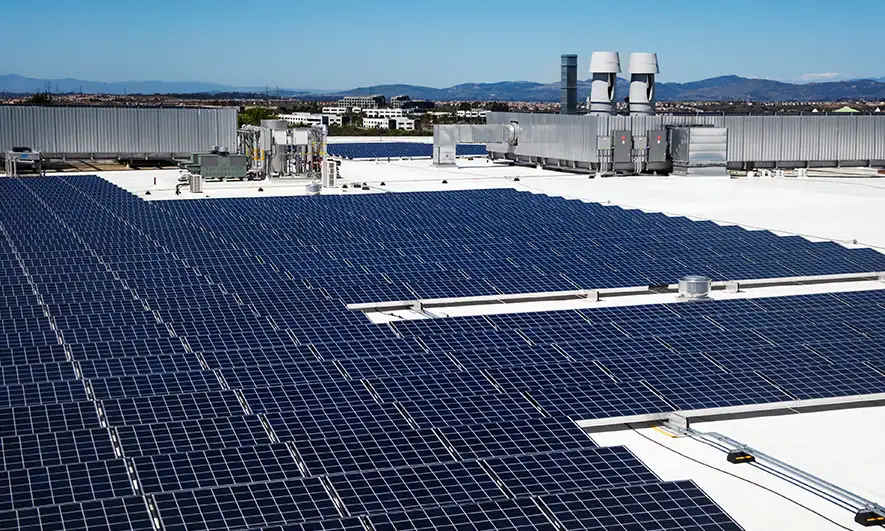
Another frequently overlooked solar panel risk is the combustibility of a building's roof. There are four different insurance classes for roofs. Class one is fire-rated and is the safest for solar panel installation. Lower roof classes often have combustible insulation underneath the roof cover, which can make electrical fires worse on a rooftop panel.
“Combustible insulation can easily ignite and move a rooftop fire down into the building’s structure," says Kenneth Travers, risk engineering technical manager for property and product at The Hartford.
Create a Rapid Shutdown and Rooftop Access Plan
Solar panels can also create issues for firefighters during fires ignited elsewhere, creating a risk of shock and electrocution as they’re working and trying to put out flames. Greene says it’s important for commercial building owners and managers to create written emergency plans with clear lines of responsibility for shutting down solar power. Those plans should be developed in partnership with the local fire department. Panels installed before 2017 may require a manual shutdown process. Those put in place after 2017 are now designed to include a rapid shutdown feature. Proper installation that adheres to manufacturer instructions is critical to ensure safety features are working correctly, as is keeping current on any product recalls.
Additionally, adequate space must be available on the roof for firefighters to combat a fire. Typically, rooftop panels should have 4 to 6 feet perimeters on the roof and in between panels.
“They may need to cut holes and open up a roof to allow smoke and hot gases to exit a building," explains Greene. “But if solar panels are placed too closely together, it may prevent them from doing this.”
Inspect Solar Connectors
Solar panels rely on cables that connect inverters and combiner boxes to transfer electrical energy. When supply chains were disrupted during the pandemic, some solar panel installers used incompatible cables and connectors that were not from the same manufacturer.
“That can create a potential electrical failure point, causing a short circuit and possibly initiating a fire," Travers says.
For arrays installed between 2020 and 2023, it’s recommended to have a reputable electrician experienced in PV installation update connectors as soon as possible to ensure compatible parts are used. Electricians should also conduct a thermographic inspection of all PV panels, inverter and combiner box connectors to check for overheating and thermal damage, as well as replace any thermally or physically damaged components.
Schedule Regular Maintenance and Testing
As with any system, solar panels are susceptible to wear and tear and require regular testing and maintenance. Travers recommends detailed inspections every two years, which includes powering off the entire system and testing all elements. There are a growing number of reputable national firms that building owners can hire to conduct this work.
Incorporate Battery Storage in the Equation
Battery Energy Storage Systems (BESS) are installations of one or more batteries meant to store and distribute electrical energy. They are quickly becoming popular additions to solar energy systems and require the same attention to installation detail and maintenance. Adherence to National Fire Protection Association guidelines is necessary as these lithium-ion batteries can fail and ignite a “thermal runaway fire.” Extremely dangerous, thermal runaway occurs when the batteries catch fire and release combustible gases, spreading flames rapidly in a cascading fire-event.
Minimize Weather-Related Hazards
Fire hazards aren’t the only risk of solar panels. Damage from area vegetation or weather-related events can occur as well. Depending on the geographic location, additional measures can be taken to reduce the likelihood of loss from weather-related events. These can include additional clearing and trimming of trees around the building or installing special guards to protect the panels during a weather event.
Consider the Costs
Installing a solar energy system on a commercial building is a big investment. Making the choice should come after thorough research and exploration.
“As with any business decision, it's important to evaluate the overall risk and reward of adding solar," says Greene. “Consider how energy savings and any tax incentives will offset the costs to install, insure and maintain solar panels."
2 SolarKal, Solar Fires – Shining Light on Prevention. Viewed August 2025.
General Product Description | This general product description is information only and designed for insurance producers. It is neither an offer to sell nor a solicitation to purchase any particular insurance product, and may not be disseminated to the general public. This general product description outlines the coverage(s) that may be afforded under a policy from The Hartford. All policies should be examined carefully for suitability and to identify all exclusions, limitations and other terms and conditions. In the event of a conflict between any policy and this document, the terms and conditions of the policy shall control.
About Surplus Lines Coverage | The coverage(s) identified in this general product description may be written on a surplus lines basis. Eligibility for surplus lines insurance coverage is subject to state regulations and requires the use of a surplus lines broker. Surplus lines insurance policies are generally not protected by state guaranty funds. In connection with the insurance offered herein, the broker is responsible for any disclosure or stamping requirements associated with surplus lines policies, and compliance with any declination, due diligence, or record-keeping requirements for surplus lines policies, and collection and payment of the applicable surplus lines premium taxes and any other applicable surcharges owed on each policy and to make any related filings. Surplus lines coverage is underwritten by Navigators Specialty Insurance Company, Maxum Indemnity Company, Pacific Insurance Company Ltd. (except in CT and HI) and Hartford of Illinois Insurance Company in CT and HI.
About The Hartford Underwriting Companies | The coverage(s) identified in this general product description may be underwritten by one or more of the property and casualty insurance companies of The Hartford Insurance Group, Inc. In Texas, Arizona, New Hampshire, Washington and California, this insurance is underwritten by Hartford Accident and Indemnity Company, Hartford Casualty Insurance Company, Hartford Fire Insurance Company, Hartford Insurance Company of the Midwest, Hartford Insurance Company of Illinois (CT and HI only), Hartford Lloyd’s Insurance Company (TX only), Hartford Underwriters Insurance Company, Maxum Casualty Insurance Company, Maxum Indemnity Company (not licensed in CA), Navigators Insurance Company, Navigators Specialty Insurance Company (not licensed in CA), Pacific Insurance Company Ltd. (except in CT and HI) (not licensed in CA), Property and Casualty Insurance Company of Hartford, Sentinel Insurance Company, Ltd., Trumbull Insurance Company and Twin City Fire Insurance Company and its property and casualty insurance company affiliates, One Hartford Plaza, Hartford, CT 06155.
The Hartford Insurance Group, Inc., (NYSE: HIG) operates through its subsidiaries, including underwriting company Hartford Fire Insurance Company, under the brand name, The Hartford,® and is headquartered at One Hartford Plaza, Hartford, CT 06155. For additional details, please read The Hartford’s legal notice at https://www.thehartford.com.