

Navigating the economic complexities of the last five years has been a challenge for advanced manufacturing companies who are assessing their international strategies. According to The Hartford’s 2025 Risk Monitor report, roughly two-thirds of business leaders surveyed are rethinking their global footprint due to concerns about rising inflation, supply chain disruption and business interruption risks.1
Rather than the leaner strategy of just-in-time production, manufacturers now want redundancies that minimize disruptions. These can include onshoring, reshoring and local control that bring suppliers closer to production, enabling manufacturers to respond quickly to demand, reduce waste and enhance product quality.
“We're still in the early chapters of the onshoring story,” says Chris Slack, head of commercial surety for The Hartford. “New factories need to be built, and new capital needs are required. Yet there is a hesitancy to commit to building those facilities. Given the changing trade requirements in the United States, there’s an added complexity for manufacturers, including the need for surety bonds that provide guarantees to regulators and others.”
Surety Bonds as a Strategic Risk Management Tool
Customs, tax, license and permit bonds function as insurance guarantees that enable manufacturers to confidently grow their operations in the U.S. through investments in facility expansions, equipment purchases and strategic partnerships. A well-crafted plan for these types of bonds and others is especially important during times of operational volatility and regulatory changes, as delays or poor insurance coverage can trigger defaults and claims.
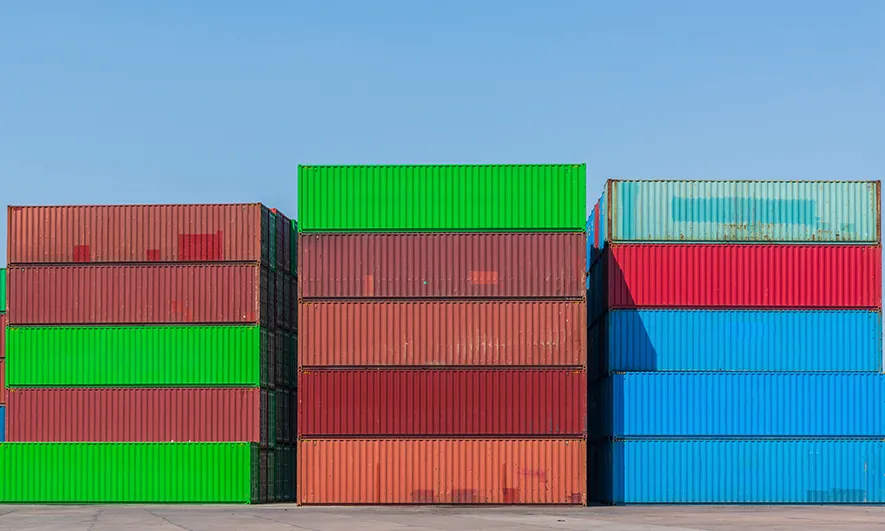
Customs bonds in particular help manufacturers stay compliant and manage their duty exposure as they move goods across the border. The ambiguity associated with tariff changes in 2025 and into the future makes this a unique challenge.
“Throughout the year, customers were assessing how the moving target of tariffs affected their import volumes, their duty exposure and the size of bonds they needed to cover customs risks. In a lot of cases, bond amounts associated with customs increased many multiples higher than prior years. We expect this uncertainty to continue,” Slack explains.
According to The Hartford’s Global Insights Center, 2025 tariff changes increased prices for lumber, copper and steel imports and created other disruptions within the manufacturing sector.2 This, in turn, created tension on balance sheets and financial statements that ultimately affected the way surety companies were underwriting their clients’ surety needs.
“Manufacturers rarely have boilerplate solutions around surety bonds,” he explains. “There's a new appreciation for the relationships between brokers and carriers around these risks. While we obviously don’t control how large the costs associated with new tariffs will be, we can help guide clients through the added stresses of their new bond coverage associated with customs.”
A Holistic Surety Program for Manufacturers
Surety carriers support more than just regulatory risk. Performance bonds help manufacturers contend with guaranteeing equipment or product delivery, the commissioning of equipment and supporting the long-term output of a product. And these risks are growing. With advanced manufacturing, there are many more moving pieces but fewer suppliers and parts-makers for the high-value goods that serve that high-tech space.
Issuing bonds in this new reality requires carriers to have the expertise needed to review complex digital and proprietary contracts. Manufacturers in this economy may require longer lead times and longer contracts that may need to be flexible or phased out. Having a good working relationship with surety companies means they can consider more than just the financials.
“There's a level of integrity and character that doesn't show up on just a balance sheet,” says Slack. “We're credit analysts in a lot of ways. And yet, we go deeper than that because we understand there’s a larger story beyond just the balance sheet, income statement and the creditworthiness of a company.”
The Future of Surety in Manufacturing
Whether it's microchips or windmills, these new industries are creating new economies. In many ways, contracts for manufacturers of these types of goods are still developing or adapting. Manufacturers need surety innovation and partnerships with insurance companies and brokers that are willing to learn and stretch with them.
“When we underwrite surety needs for high-tech and advanced manufacturers, we’re signing next to these firms, vouching they can execute on their contracts,” says Slack. “To do that, we consider the experience of these advanced manufacturers. We’re also looking at how mature or unique their product is, the service capabilities they bring to contracts and the company’s cash flow and capital structure.”
Our dedicated Bond Division meets the needs of our customers and brokers by building long-term relationships rooted in superior service, support and expertise. To learn more about surety bonds for advanced manufacturers, explore our surety bonds offerings.
1 The Hartford, “Reshoring: The Risks of Bringing Business Operations Back to the U.S.,” viewed December 2025.
2 The Hartford, “Tariffs: The Crossroads of Geopolitics and Economics,” viewed December 2025.
The information provided in these materials is intended to be general and advisory in nature. It shall not be considered legal or medical advice. The Hartford does not warrant that the implementation of any view or recommendation contained herein will: (i) result in the elimination of any unsafe conditions at your business locations or with respect to your business operations; or (ii) be an appropriate legal or business practice. The Hartford assumes no responsibility for the control or correction of hazards or legal compliance with respect to your business practices, and the views and recommendations contained herein shall not constitute our undertaking, on your behalf or for the benefit of others, to determine or warrant that your business premises, locations or operations are safe or healthful, or are in compliance with any law, rule or regulation. Readers seeking to resolve specific safety, legal or business issues or concerns related to the information provided in these materials should consult their safety consultant, attorney or business advisors. All information and representations contained herein are as of December 2025.
Links from this site to an external site, unaffiliated with The Hartford, may be provided for users' convenience only. The Hartford does not control or review these sites nor does the provision of any link imply an endorsement or association of such non-Hartford sites. The Hartford is not responsible for and makes no representation or warranty regarding the contents, completeness or accuracy or security of any materials on such sites. If you decide to access such non-Hartford sites, you do so at your own risk.
The Hartford Insurance Group, Inc., (NYSE: HIG) operates through its subsidiaries, including the underwriting company Hartford Fire insurance Company, under the brand name, The Hartford,® and is headquartered in Hartford, CT. For additional details, please read The Hartford’s legal notice at https://www.thehartford.com.