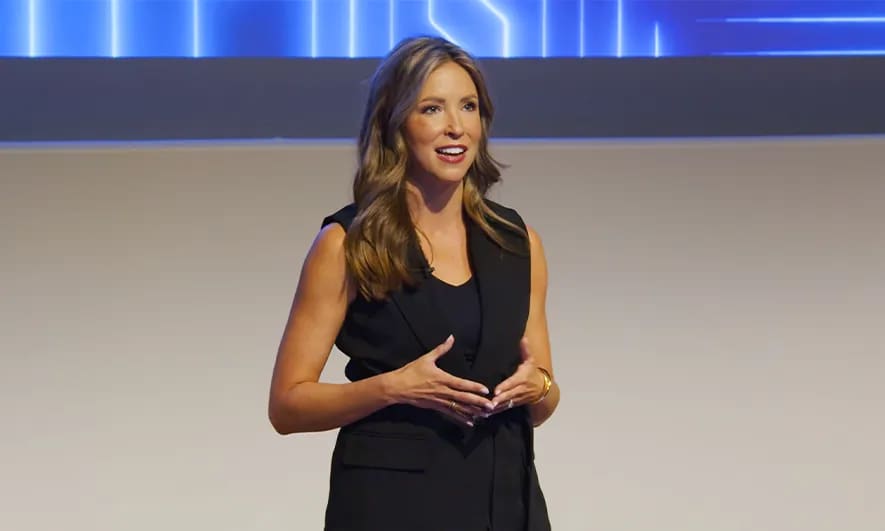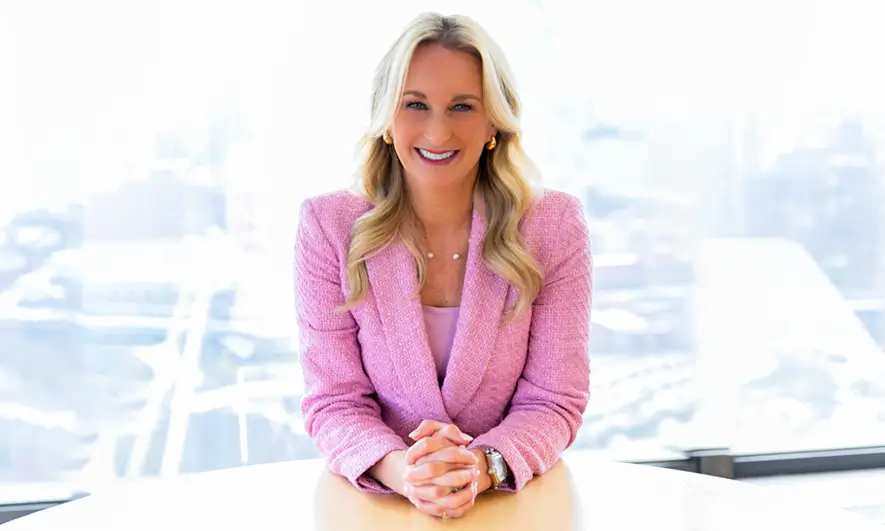
At The Hartford, we know employee benefits are most impactful when customers experience them as holistic solutions instead of a series of products. We sat down with Kim Rudeen, our head of absence management for Employee Benefits, to discuss her approach to developing solutions that can have real-world impacts.
What is your role and how would you describe the work you do?
KR: I'm the head of absence management for Employee Benefits. I’m responsible for our integrated absence management solutions and the related customer experiences. It’s my job to think about the customer journey — for both employers and employees — when someone takes a leave of absence for a medical condition, short-term disability, caretaking for a family member or welcoming a new child.
How would you describe the work your team does?
KR: I have a strong team of absence product specialists who monitor what’s happening in the absence landscape. They focus on industry trends, competitive intelligence, employer challenges around productivity and how to help our customers’ employees plan for absences from work. Their role is to look outward, listen, and take those insights and distill them into product strategy.
That work helps us understand what products we need to offer, what benefits and features the products should include and how the claims experience should translate for both employers and their employees. Our products make a promise, but the customer and claims experiences are what help us deliver on it.
The product team has a unique vantage point across the organization. By working closely with partners across underwriting, sales, operations, claims, technology, finance and service, we can connect customer needs, market trends, competitive insights and business performance to help inform strategic priorities and investment decisions that drive profitable growth.
Our role isn’t to build a product and hand it off. It’s to work in close partnership across the business, considering how to best meet employer or employee needs at each moment of the benefits cycle.
How do you work toward and measure success?
KR: The key to product management is choosing the right problems to solve, delivering that solution at the right time and making sure its value is clear to our customers. To achieve that, we work closely with our sales and relationship management teams, as well as brokers, to understand our customers’ needs.
At the start of every project, we clearly define the problem we are solving, why it matters and how we can measure its success. We establish those measures early and track them as the solution reaches customers. We then feed what we learn back into the product lifecycle, and if something does not land as expected, we revisit it. That could mean retraining our people, adjusting the message or enhancing a feature.
One example of a successful outcome of our process is our Absence Dashboard. When we saw that HR teams were struggling with limited visibility into their workforce absences and relying on static absence reports, our product teams developed the Absence Dashboard to simplify and streamline how they manage leave. By delivering a single, real-time view of all absence activity, including claim status, trends and return-to-work insights, our goal was to empower HR to quickly understand their workforce, spot patterns and make more informed decisions — all while saving time and improving productivity. Once the product is in the market, we monitor those measures of success and feedback so we can continue iterating and improving.
What trends have you seen in the industry?
KR: A trend I’m paying attention to is the continued expansion of paid family and medical leave. More states are adopting these programs, and this expansion is pushing employers to think more broadly about their overall paid leave strategies, including non-mandated leave programs.
These voluntary programs take different forms. Some carriers offer family leave insurance products, while others can help employers manage their company-paid leave solutions.
This has driven a need for stronger administration, tracking and reporting capabilities, because each employer’s leave policies and programs are highly individualized. We are focused on enhancing our ability to manage different leave types, coordinate them with other benefits and reporting the relevant data back to both employees and employers.
Another important trend is the growing conversation around supplemental health benefits.1 Medical costs continue to rise and more of that cost is being shifted to employees. As a result, we are seeing increased interest in voluntary supplemental health products.
A leave of absence is often a moment when employees rely on benefits. This creates an opportunity to think about how leave and supplemental health benefits can work together. That is top of mind for me as we look ahead.
Where do you see opportunities based on those trends?
KR: As workplaces and technology evolve, employee benefits are evolving in tandem. Our Future of Benefits study shows that two in three employers cite simplicity and cost as the top drivers for choosing a single carrier.2 Streamlined solutions that help reduce the number of vendors and technology solutions employers manage, as well as cost containment, are critical to the customer experience. When I look at the big picture, I see three major opportunities ahead:
- Integration: To me, integration is the thoughtful coordination of benefits, implementation and the employee experience under one carrier. There is an opportunity to support employees during key moments in the claim journey, like a single point of intake for supplemental health and short-term disability benefits and being able to more quickly and easily determine other benefits employees may be eligible for at time of claim. Getting things like this right can have a huge impact on an employee’s claim experience.
- Insights: We also have an opportunity to use analytics from our claims data to improve how these benefits work together. Because we manage absence at scale, we have valuable insights that can help simplify these products and make them easier to use.
- Individualization: Employers are shifting more costs to employees and recognizing that their workforce has become more diverse in its needs. What works for one employee may not work for another. As a result, employers want to offer more choice. That means we need to design experiences for a wide range of people.
Our responsibility is to help employees understand benefits that may be available, see their value and make the benefits and claims experience easy to navigate. They should not have to worry about paperwork, phone calls or whether they contacted the right place. The goal is to create an experience that feels supportive and avoids complexities. That’s another reason why our focus is on comprehensive solutions, not individual products.
What’s something in your personal life that allows you to show up at your best in your professional life?
KR: I have always been athletic and competitive, and that mindset translates easily to product work. Product management feels much like building a winning team in that it’s about bringing the right people together, setting clear goals and inspiring others toward a shared outcome.
In product, our role is to help cross-functional teams within The Hartford see the big picture and define what it takes to succeed. Success depends on your ability to influence, motivate and get people excited about their role in developing these solutions that can help impact people’s real-life concerns.
Celebrating progress is important. When a product launch goes well, it matters to thank people, recognize their efforts and point back to the measures of success defined at the beginning. Showing that something worked builds momentum. In product management, the work is never finished. There is always another iteration or improvement to make. I bring a competitive mindset to that process — not just aiming to be good enough — but pushing to be the best and continuing to raise the bar.