This article first appeared in BenefitsPro on November 25, 2025, written by Ann Clifford.
Chemical manufacturing ranks among the nation’s most hazardous industries, with workers facing a 25% to 50% higher likelihood of serious work-related injury or illness compared to the average industrial employee.1
Common employee injuries, such as chemical burns, toxic inhalation and contact dermatitis, typically result in longer recovery periods than injuries from mechanical accidents.
Understanding these unique risks is crucial for benefits advisors and consultants who work within the industry. Helping companies that work with chemicals assess and mitigate risk has a ripple effect on employee health, productivity and business resiliency.
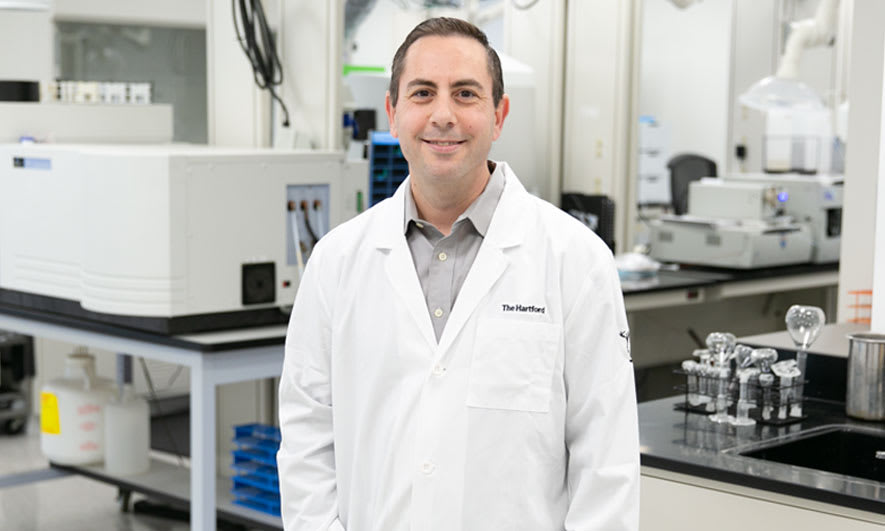
To explore how organizations and advisors can better anticipate and prevent these risks, Bob Ross, risk engineering laboratory director at The Hartford, explains how risk engineering uncovers hidden hazards, safeguards employees and strengthens performance. The lab itself is one of the few in the industry that can provide data and other information related to risk and the protection of workers in various industries, including chemical manufacturing.
Q: What types of workplace risks are most common in the chemical industry?
Ross: The biggest concern is exposure to chemicals. Exposures can cause sudden medical emergencies or chronic health issues that develop over time. Many of these jobs are also physically demanding. Extended or high-stress shifts can lead to physical and mental fatigue, increasing the risk of hazardous situations.
Q: How does risk engineering help employers identify and understand these risks?
Ross: Our Risk Engineering team works directly with employers to evaluate workplace exposures and develop practical ways to address them. By combining on-site consultation with laboratory analysis, we can see how field conditions translate into potential health risks.
We start by learning how the work gets done for our clients – what the operations look like day to day, what chemicals are used and how employees interact with them. Our role isn’t inspection; it’s consultation. Once we conduct a comprehensive review of chemical processes and employee exposure, we collect samples and send them to our in-house lab for analysis. That data helps determine whether exposures are within safe limits or if they could create a problem over time.
Q: Once the initial risk evaluation phase is done, how can you best deliver results for your clients?
Ross: Collaboration between our risk engineering consultants and lab specialists makes this approach effective. The people collecting samples are in constant contact with the chemists who analyze them, so we can interpret results quickly and in the context of how the work is performed. Instead of simply confirming whether a substance is present, we’re helping clients understand why it’s there and how to address it before it affects employees.
Q: Once workplace risks are identified, what steps are most effective in reducing or eliminating them?
Ross: After we understand the source of the exposure, there are several next steps we can take:
- We examine the hierarchy of controls, starting with ways to remove the hazard altogether.
- If elimination isn’t possible, we look at substitution or engineering controls, like improving ventilation or implementing process changes.
- After that, we can explore and recommend administrative measures, such as rotating employees or improving safety training.
- Lastly, we may recommend solutions like personal protective equipment because that means the hazard still exists; we’re just limiting contact with it. Our goal is to remove or minimize the risk before it ever reaches the employee.
The business outcome goes beyond compliance or safety metrics. When exposures are reduced, employers see fewer incidents, fewer workplace injury and illness claims and less downtime. A safer operation is also a more reliable one – and that directly supports productivity and overall business resiliency.
Q: How does proactive risk management support employee well-being and overall business performance?
Ross: Everyone deserves a healthy workplace and a good quality of life. When employers take a proactive approach to identifying and reducing exposures, they’re protecting that quality of life for their employees. It also builds employee trust. Workers feel safer and more valued when they see their employer investing in their well-being.
Q: What should benefits advisors and brokers keep in mind when working with clients that handle chemicals or other high-risk materials?
Ross: Advisors should recognize that chemical exposures aren’t limited to one type of hazard or one outcome. Every compound, mixture or reaction can produce different effects, sometimes immediate and sometimes long-term. Helping clients understand that complexity and connecting them with the right resources to evaluate exposures can make a measurable difference.
The Hartford is one of only a few insurance carriers in the U.S. with its own accredited risk engineering laboratory.* Having those capabilities in house means we can analyze samples directly, consult with our risk engineering consultants in real time and help employers take faster, data-driven action to protect workers.
Advisors who highlight these types of proactive resources can help clients build safer, more resilient operations.
Learn More About The Hartford’s Risk Engineering Laboratory.
Ann Clifford is a freelance writer who translates her background in financial services marketing into specialized content focused on employee benefits and small business topics.