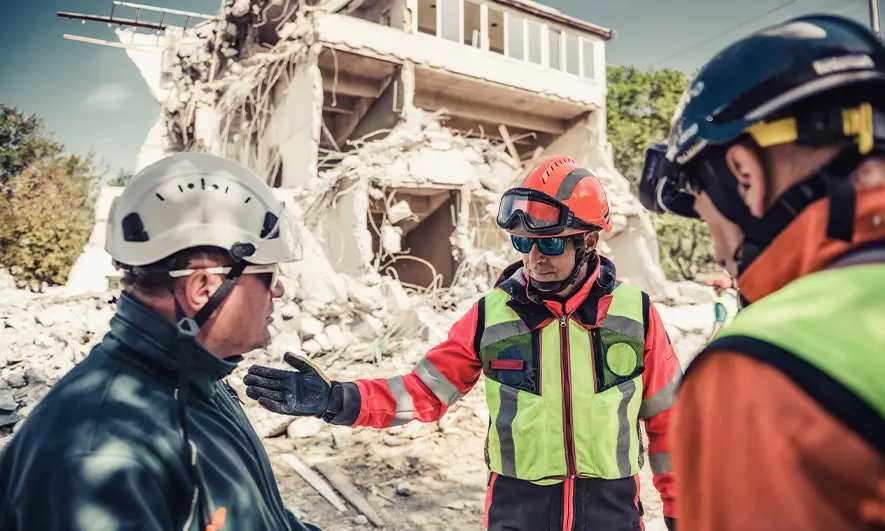



With extreme weather events on the rise, business resiliency planning must evolve. Not only do decision makers need to reconsider new protections for physical facilities and assets but also for the people who are at the heart of the business.
According to a 2023 report from Commonwealth, 49% of workers say their job has been personally impacted by unusual or extreme weather events.1 From damage to personal homes to worries about loved ones, the stress of weather-related disasters can significantly impact employees. Companies with an employee resilience plan in place are likely to recover more quickly and help employees get back on their feet and back to work.
“Even if your building can withstand a storm, if employees can't recover, your operations may struggle,” says Austin Koch, head of sustainability and underwriting at Y-Risk, a company of The Hartford.
The Impact on Operations
The frequency and severity of recent weather events should be a concern for businesses across the country. Just in 2024 alone, the U.S. experienced 27 different extreme weather events with damages estimated at $182.7 billion.2
These events lead to more than just physical property damage. Companies may experience business interruption and supply chain issues, not to mention the impact on employee production. If employees are significantly affected and cannot return to work quickly, or at all, a company may find itself understaffed. Rehiring or retraining to fill the gap can increase costs in terms of lost time and budget.
For employees who do return to work, it’s important to recognize how the financial, mental, and physical toll impacts performance.
“With all the challenges your employees may be facing at home, they may be absent more or unable to fully engage at work,” says Wendy Dowd, head of product innovation at Y-Risk, a company of The Hartford. “Their inability to be present and fully focused may cause absences, performance issues like distraction, or on-the-job accidents and injuries.”
It’s imperative that companies have plans in place, both to build their physical place of business back and to assist their employees during these difficult times, which can lead to:
- Improved employee safety and productivity
- Boost to morale and employee wellness
- Faster return-to-work outcomes
- Higher employee retention
Understanding Employee Needs
In The Hartford’s recent Risk Monitor report, 44% of businesses ranked natural disasters as their primary worry and 37% cited extreme weather as a factor. When resilience planning for extreme weather events, companies often consider a basic mitigation-first approach backed by data-driven assessments. The concept is proactive, to adjust physical buildings and operations in a way that prevents the damage from an event. But it may overlook one essential piece of the puzzle - employee well-being.
After a weather-related event, like a flood, tornado or regional fire, affected employees naturally focus on how to carry on with daily life, making it difficult to come back to work.
“Employees may become displaced, or need to evacuate to a safer location, leaving behind clothing, food and medications,” says Dowd. “As they look for temporary shelter, they may need help with caring for pets or elderly family members. They may experience food insecurity. Employees can struggle to find childcare solutions or transportation as well. This adds an unexpected financial burden that many people are not prepared for.”
In addition, employee mental health is likely to suffer from the trauma and from carrying the burden of interruptions in routines, education and financial strain.
Showing Up for Your Employees
Studies indicate more than 80% of workers would like an expanded employer response to mitigate the effects of extreme or unusual weather.3
In the event of extreme weather, employers will want to consider the well-being of their employees alongside their immediate company needs. In fact, according to Occupational Safety standards, employers are responsible for employee welfare during hurricanes and other weather disasters. Requiring them to come to work in those conditions may subject them to dangers like vehicle accidents or electrical hazards.4
A comprehensive plan can help managers decide when to send people home in advance of an expected event and how to set in motion plans to assist them with:
- Flexible work arrangements: Job sharing and schedule adjustments could make coming back to work more manageable.
- Federal Emergency Management Agency (FEMA) information: If declared a federal emergency, companies can facilitate help with FEMA benefits.
- Employee Assistance Plan benefits: These plans can offer mental health counseling, connection and support for legal issues.
- Transportation options: Companies can offer shuttles or reimbursement for public transit services.
- Financial support: Employee crisis funds or loan programs can help employees afford short-term necessities.
- Connections to local resources: Employers can act as an information center for state and local social programs, as well as non-profit assistance.
“While you can’t control the actual event, what is in your control is your preparation, planning and response” says Dowd.
The Role of Insurance
By leveraging high-quality data based on claims and other internal sources, companies can accurately assess weather risks, identify potential hazards and prioritize adaptation measures. This approach not only helps mitigate the impacts of natural disasters but also supports the business’ overall resiliency.
Data from claims, operations and other sources can help create:
- Comprehensive risk assessments that regularly evaluate exposure to weather-related events and help business leaders adjust risk mitigation plans accordingly.
- Resilient infrastructure investments that strengthen facilities, supply chains and operational plans to withstand extreme weather.
- Data-driven insurance partnerships with carriers who leverage their advanced modeling and industry expertise to provide tailored risk solutions.
- Advanced business continuity and emergency strategies to deliver robust response plans that minimize disruption and ensure employee safety.
“I think there's an opportunity for clients to go deeper with their agents, brokers and also the carriers to explore extreme weather consequences and solutions,” says Koch. “We encourage our clients to have contingency plans. Ultimately, the steps they take can keep their doors open and their employees employed, while minimizing the impacts of that event as much as possible.”
Learn more about building resilience plans for your businesses.
1,3 Feeling the Heat: Climate Change’s Impact on Worker Financial Security, Commonwealth, viewed August 2025.
2 Billion-Dollar Weather and Climate Disasters, NOAA’s National Centers for Environmental Information, viewed August 2025.
4 When Disasters Strike: Pay, Leave and Related Issues, SHRM, viewed August 2025.