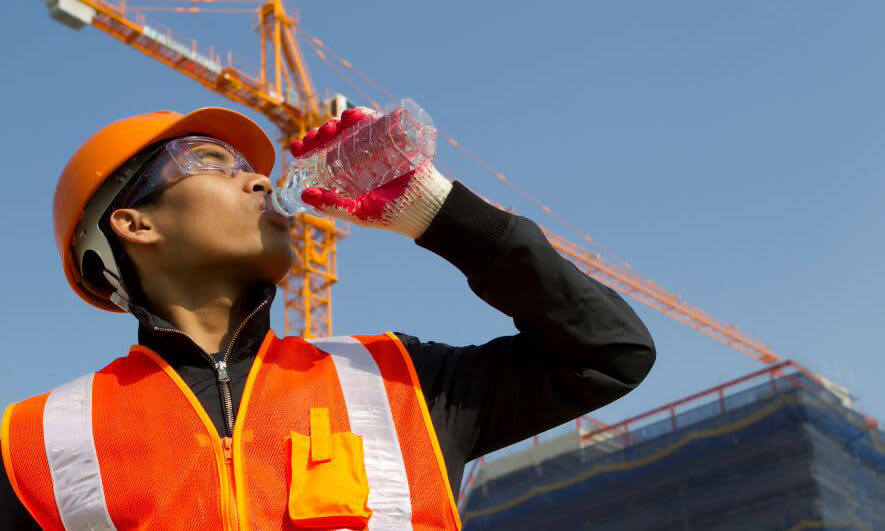

Heat-related illnesses on the job can be a very serious matter. Heat exhaustion poses a risk for accidents, since workers can become confused and less alert. Heat stroke can lead to extreme health complications, even death.
Although most often addressed in the hot summer months when the risk of heat-related illness increases, the safety and health of workers in physically demanding roles or hot and humid indoor environments should always be considered.
Temperature Matters
Heat can take a toll on your body if you’re not properly prepared. It’s important to regulate your body temperature by hydrating and gradually acclimating your body to withstand the increasingly hot conditions. Your body has “heat control mechanisms” that get overworked in hot, humid and poorly ventilated areas. When you’re exercising or doing physical labor, your muscles generate heat as a metabolic by-product.
Sweating can dissipate heat when the air is dry or a breeze is blowing. But when humidity rises and the air becomes denser, sweat doesn’t evaporate from the skin as readily. When this occurs, your core body temperature becomes too high, and you can suffer from heat cramps, heat exhaustion or heat stroke. Heat stress can occur suddenly and be very dangerous. That’s why it’s important to recognize the warning signs of heat stress.
Warning Signals of Heat-Related Illness
| Heat-Related Illness | Symptoms | Treatment |
|---|---|---|
| Heat Cramps |
|
|
| Heat Exhaustion |
|
|
| Heat Stroke |
|
|
Margie Snyder, assistant director of risk solutions at The Hartford, recommends businesses provide employees with safe spaces to combat heat exposure and make available training and equipment to monitor an employee’s heart rate and temperature if at risk.
“In addition to delivering first-aid treatment and injury-prevention solutions, staffing an on-site clinician can also help keep employees healthy and safe at work,” says Snyder. “Having a resource for safety awareness and proactively ensuring staff are kept hydrated and cool can go a long way to reduce risk of injury. An extra set of eyes can identify the first signs of dehydration and heat-related concerns, making the difference between a minor incident and a serious heat-related illness.”
Additional care should be given to employees in professions that work in regularly hot environments or who using bulky or non-breathable protective clothing and equipment such as:
- Firefighters
- Bakery workers
- Farmers
- Construction workers
- Miners
- Boiler room workers
- Factory workers
Some employees may be at greater risk, especially if they have pre-existing health conditions or have not built up a tolerance for heat. Workers at greater risk of heat stress include those who are 65 or older, are overweight, have heart disease, high blood pressure or take medications that may be affected by extreme heat.
Here is a breakdown of the top six heat disorder factors which may impact an individual’s risk in relation to heat exposure:
1. Age
Employees who are 65 and older may be vulnerable to heat for several reasons: their ability to sweat can be less efficient, chronic health conditions may contribute to physical strain, the body’s slower response to thirst and heat signals.1 They may be more likely to be diagnosed with obesity, cardiovascular disease, pulmonary disease or long-standing diabetes which puts them at increased risk.
2. Pregnancy
Pregnancy naturally raises body temperature, which means a pregnant employee can become overheated more easily during really hot weather. Carrying a baby adds to the body’s heat, energy and weight load, as well as need for extra hydration. Heat and humidity indoors can also affect pregnant workers in locations like warehouses, manufacturing and commercial kitchens.2 Medical providers and employers can help pregnant workers to evaluate occupational exposures and determine if work accommodations or restrictions are needed.
3. Percentage of Body Fat
Obesity predisposes individuals to heat disorders. The ratio of body surface area to body weight in the obese individual becomes less favorable for heat dissipation. Also important are the lower physical fitness and decreased maximum work capacity and cardiovascular capacity frequently associated with obesity. Accommodations may be necessary to keep this segment of employees safe from heat-related illnesses.
4. Energy Drinks, Caffeine Consumption and Alcohol
Energy drinks are powered by sugar and higher than normal doses of caffeine (more than what is found in a cup of coffee or soft drink.) Other than the diuretic effects, this dose of caffeine can induce cardiac arrhythmias, which could be exacerbated by heat stress.
Caffeine in lower doses may have less impact, however, beverages like coffee and soda are still not recommended as a good source of hydration in the heat. Coffee has a mild diuretic effect and should not be used to replace fluids lost to sweating. Moreover, coffee is generally consumed as a hot beverage and has the potential to exacerbate heat stress. It’s important to note that caffeine is used in some over-the-counter medications and can also impact health and safety, especially combined with other caffeine sources.3
Not only does alcohol interfere with central and peripheral nervous function and is not acceptable during work hours for any reason, but it can cause dehydration even when consumed within 24 hours of a workday.
5. Use of Therapeutic Drugs
Many therapeutic drugs can disrupt thermoregulation, including anticholinergics and medications affecting the central nervous system, cardiovascular reserve or hydration. Cardio selective beta blockers (like atenolol and metoprolol) restrict skin blood vessel dilation, reducing sweating and raising body temperature, which increases the risk of heat-related emergencies. Workers taking such medications should consult a knowledgeable healthcare provider, especially if exposed to hot environments.
6. Health Concerns
Personal risk factors for heat-related illness include diabetes, high blood pressure, heart disease or even malnutrition. Individuals suffering from degenerative diseases are at increased risk when they are exposed to heat and when stress is imposed on the cardiovascular system. Gastrointestinal disorders can worsen during higher temperatures and may impact workers who struggle with gut issues. Medical providers and employers can work together to account for these risks and find ways to address them during the workday.
While many employees can point to a condition or explanation for developing heat-related illnesses, some individuals simply exhibit poor tolerance to heat. All these needs should be considered when planning for work during higher temperatures.
Here are some tips for helping employees stay safe from the risk of heat-related complications:
- What employees drink while working in a hot environment matters when trying to combat heat exposure. Make water easily accessible in a variety of locations. Supply electrolyte beverages or powders if appropriate.
- Designate a leader or manager who can monitor employees and attend to any heat-related complications.
- Set up cooling fans or misters to allow employees to take several breaks throughout the day to cool off and reduce body temperature.
- Encourage the use of sunscreen, cotton clothing and hats. Consider purchasing cooling vests or other cooling apparel for employees.
- Include heat safety resources in training meetings and reinforce the importance of hydration at toolbox talks and new employee orientation meetings.
- Rotate physical jobs performed in the heat, when possible, to help workers avoid heat-related overexertion.
For more information about keeping employees safe, contact your Risk Engineering consultant from The Hartford today or visit us online.
1 Harvard Health, “Extreme Heat Endangers Older Adults: What To Know and Do,” viewed May 2026.
2 Occupational Safety and Health Administration, “Prevent Heat Illness Among Pregnant Workers,” viewed May 2026.
3 Centers for Disease Control and Prevention, “Heat Stress Hydration,” viewed May 2026.
4 Centers for Disease Control and Prevention, “Heat and Medications – Guidance for Clinicians,” viewed May 2026.