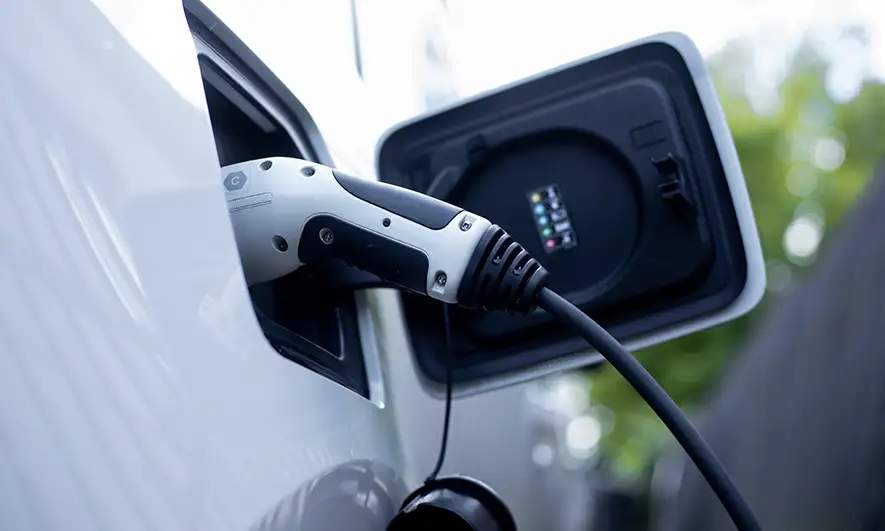



From the electrification of cars to the installation of massive data centers, energy needs across the world continue to accelerate. In the United States alone, demand on the electrical grid system is expected to increase 25% as soon as 2030 and 78% by 2050.1
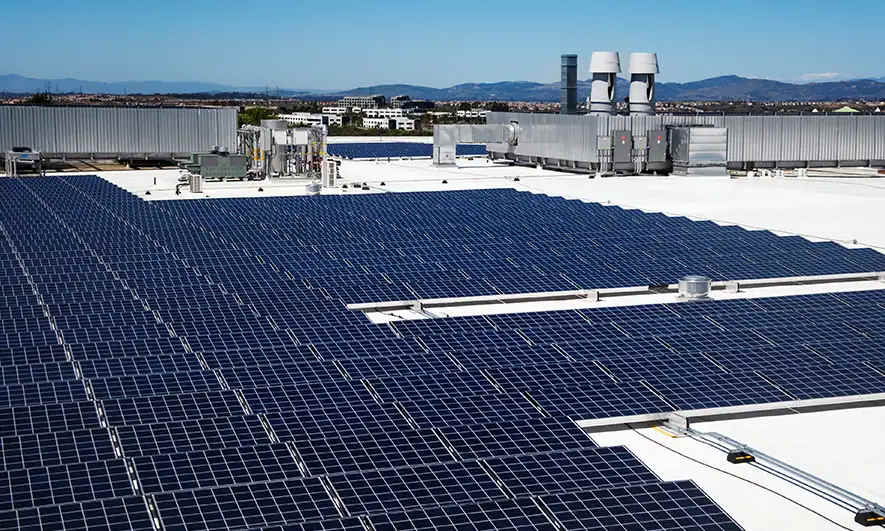
As renewable energy sources like solar and wind gain popularity to meet that demand, the use of battery energy storage systems will grow. This rapid expansion brings both opportunity and risk, especially when it comes to fire safety.
What Are BESS?
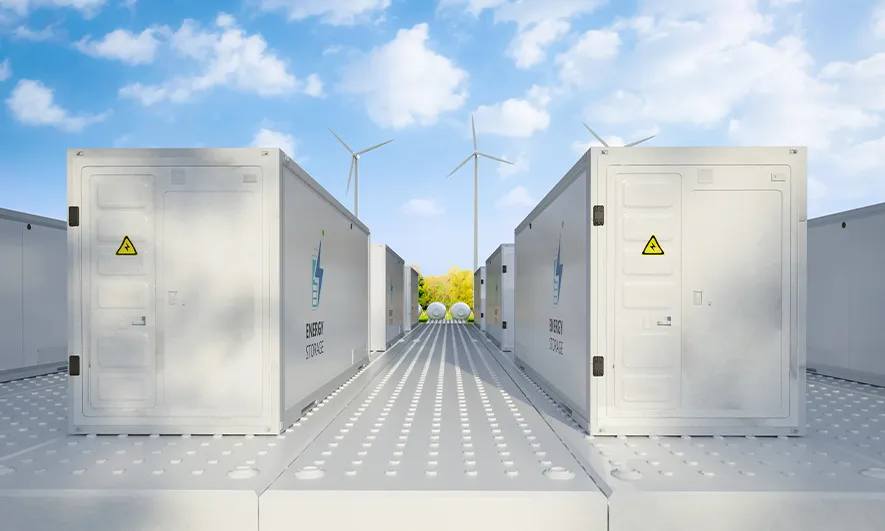
Battery Energy Storage Systems (BESS) are secondary sources of electricity. These electrochemical devices collect energy from a power grid, power plant or renewable source, hold it, and then discharge that energy later to provide electricity on demand.
“When battery energy storage systems first appeared in the market over a decade ago, they were primarily used for utility scale application,” says Kenneth Travers, technical manager for risk engineering at The Hartford. “We are now seeing this technology expand to local commercial occupancies, such as large box stores, hospitals, warehouses, data centers and even residential buildings. It’s increasingly important for companies to understand the fire risks involved.”
How To Reduce Fire Risk in BESS
Most BESS units today are powered by lithium-ion batteries that carry certain risks. This includes thermal runaway, a phenomenon that causes rapid fire intensification due to a flammable electrolyte within the cells. It can quickly spread to adjoining battery modules and packs,
In 2024, a large-scale California storage fire continued for nearly a week. The next year, another California fire caused a precautionary evacuation of 1,200 nearby residents.3 Safety standards developed by state and local governments, first responders and industry associations aim to reduce these exposures.
Travers encourages companies with BESS to follow National Fire Protection Association (NFPA) 855, which applies to the design, construction, operational maintenance and installation of the storage systems.
We’ve outlined eight key ways to safely integrate BESS into your business operations.
1. Follow Best Practices for Installing BESS Containers
- Unless they’re UL listed or FM approved for reduced clearances, place all new BESS containers on the exterior of critical buildings. They should be configured at a minimum of 25 feet from the nearest exterior wall or roof overhang, avoiding any building openings, such as windows, doors and vents. Keep at least a horizontal distance of 25 feet from the far edge of the container.
- Place additional BESS containers at a minimum distance of 10 feet between other battery energy storage system units/containers.
- When called for, enhance exterior walls, doors, windows and other structures with fire resistance measures.
2. Outfit BESS With Proper Exhaust Ventilation
- Install exhaust ventilation to release off-gasses caused by a developing lithium-ion battery fire and to reduce potential for excessive heat that can lead to thermal runaway.
- Small rooms, enclosures or containers where flammable gas can exceed 25% of the lower flammable limit (LFL) should be protected with either explosion suppression or deflagration venting. These should be designed and installed within the requirements of NFPA 69 Standard on Explosion Prevention Systems and NFPA 68 Standard on Explosion Protection by Deflagration Venting.
3. Install Proper Detection Systems
- Install continuous combustible gas detection within the enclosure to activate the mechanical exhaust system upon detection of methane, benzene, ethane, ethylene, hydrogen, hydrogen sulfide and carbon monoxide. All of these are common off-gases from an early thermal runaway event associated with lithium-ion batteries.
- For larger capacity units, you can integrate smoke and fire detection, in accordance with NFPA 72, using very early warning smoke detection (VESDA) or radiant-type detection within the container.
4. Install Sprinkler Protection Systems
- Consider protecting larger BESS capacity units with automatic fire sprinkler protection to enable adequate cooling and reduce the potential for the battery arrays from reaching thermal runaway.
- Some BESS units now have a pre-piped deluge sprinkler system with a connection on the unit exterior that allows the responding fire department to connect and provide the water supply for the deluge system.
- Where sprinkler protection is not feasible, BESS can be protected with an approved clean agent fire suppression system to control lithium-ion battery fires through reduction of oxygen in an enclosed and unoccupied space.
5. Follow National Standard Electrical Guidelines
All electrical wiring, lighting and components incorporated within portions of the BESS enclosure should be designed and installed in accordance with Article 500 of NFPA 72, National Electrical Code.
6. Set Up Proper Inspection for BESS
Follow NFPA 855 requirements for inspection, testing and maintenance of BESS units. De-energize each unit and conduct a “system-off” inspection at least annually on all components within the BESS. Assure that a system shut-off inspection includes a check of:
- All equipment and components
- Spacing between racks, cabinets and trays
- Equipment grounding conductors
- Battery modules and arrays
- Connections and terminations
- Monitoring and charge control
- Disconnecting means
- Interconnection with other energy sources
- Signage
- Ventilation
7. Conduct a Hazard Mitigation Analysis
Follow new NFPA 855 requirements for a hazard mitigation analysis to be conducted for the intended BESS installation.
8. Assure Unit and Installation Testing
Assure new BESS installations meet new NFPA 855 requirements for unit and installation testing in accord with UL 9540A or equivalent large scale fire testing. This test ensures that if a BESS unit creates a thermal runaway, it does not result in a similar incident in adjacent units.
With renewable energy sources projected to generate 44% of all power in the U.S. by 2050, BESS technology will continue to evolve rapidly.4 Adhering to the latest NFPA 855 standards, implementing robust engineering controls and maintaining vigilant inspection protocols are essential to minimizing fire risks as the industry grows.
“The popularity of BESS is easy to understand. It’s renewable, becoming more affordable to install, is resilient, efficient and quickly transfers energy from charge to discharge as needed,” says Todd Wilson, head of domestic energy casualty at The Hartford. “And yet, it’s important that anyone installing and using BESS understands the risks and how to mitigate them.”
For further risk management strategies, consult our latest technical information paper series or explore our energy business solutions.
1,2 The Pew Charitable Trusts, “With U.S. Electricity Demand Set To Skyrocket, the Call for Solutions Accelerates,” viewed January 2026.
3 U.S. Environmental Protection Agency, “Battery Energy Storage Systems: Main Considerations for Safe Installation and Incident Response,” viewed January 2026.