
According to the Solar Energy Industries Association, in 2024, a new solar project was installed every 54 seconds across the United States.2 As solar-powered energy continues to grow across the country, an increasing number of installers will need to be hired and trained to keep up with that demand. In fact, the United States Bureau of Labor and Statistics projects employment growth at 48% through 2033.3 As companies move forward with installations, they will want to mitigate risks with best practices for employee safety.
Installation Safety Practices Should Be a Priority
Quality photovoltaic panel (PV) installers play a crucial role in solar powered systems. They work with high voltage systems, often in crawl spaces or at great heights outdoors, so attention to safety is especially important as they risk:
- Electrocution and other electrical hazards
- Severe falls
- Power tool accidents
- Repetitive stress injuries
- Additional dangers when working alongside large-scale construction projects
“When you think about workers in the solar industry who are working with large, heavy panels and tools from very high off the ground, the list of things that can go wrong is endless,” says Todd Wilson, underwriting officer for energy business insurance at The Hartford. “It can be a tough industry, and that’s why businesses installing PV panels or other kinds of systems need to make sure safety guidelines are followed.”
Preparation Is Key
Because of the dangers that solar businesses and workers face, the Occupational Safety and Health Administration (OSHA) requires employers to have safety training and protection for their employees. Many solar installation companies have taken OSHA’s requirements a step further and created their own manuals.
“It’s essential to perform due diligence for each unique worksite,” says Wilson. “Project managers and lead installers should visit the site, identify safety risks and develop specific plans to address them.”
There are many safety risks for solar installations, but putting preventive measures in place can help mitigate on-the-job injuries.
Understand and Address Electricity Risks
A solar PV system includes several components that conduct electricity. This includes the PV solar array, the inverter and other essential parts. When these parts are live with electricity generated by the sun, they can cause serious injuries from electric shock or arc-flash. Even in low-light conditions, systems can create enough voltage to cause injuries such as burns.
Be aware that electricity comes from two sources with PV systems: the utility company and the solar array absorbing the sun’s light. Even if the building’s main breaker is shut off, the PV system continues to produce power. This requires solar workers to be extra careful. Some of the ways you can keep your workers safe include:
- Covering the solar array with an opaque sheet to block the sun’s light.
- Treating wiring coming from a solar PV system with the same caution as a utility power line. Assume all wires are live.
- Using a meter or circuit test device to ensure circuits are de-energized before working on them.
- Locking out “power on” systems that can be locked out. Tag all circuits you’re working on at points where that equipment or circuit can be energized.
- Never disconnect PV module connectors or other associated PV wiring when it’s under load.
Provide Personal Protective Equipment for Solar Workers
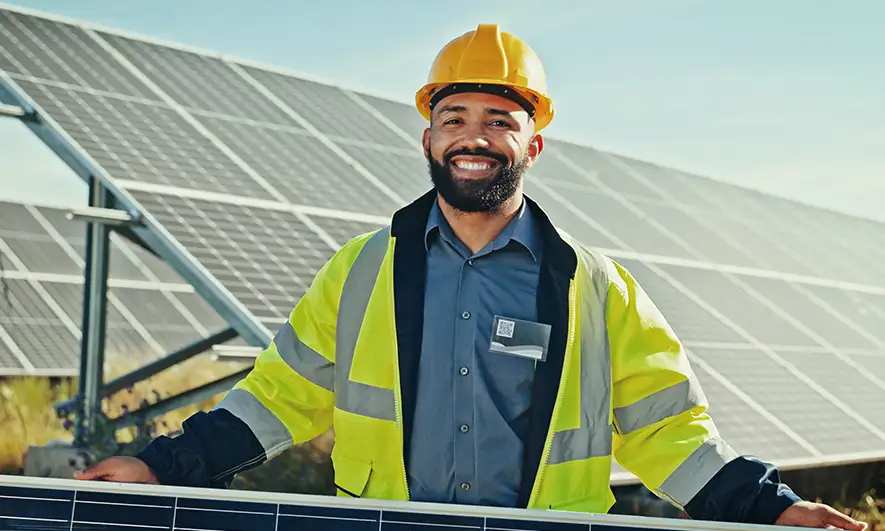
Personal protective equipment (PPE) is essential during every solar installation. Employers must assess workplaces for hazards and make sure they provide workers with the necessary PPE for their safety, including:
- Hard hats
- Gloves
- Steel-toed shoes with rubber soles
- Eye protection, like glasses or goggles
- Vests
- Harnesses
- Electrical insulated gloves
Make sure employees know how to use the PPE, as well as how to maintain it so it is kept in a safe and reliable condition. Workers should know the process to request replacement PPE if needed. Documentation on safety training and use of safety equipment should be maintained.
Encourage Proper Lifting and Handling of Solar Panels
Solar panels are heavy and awkward to lift and carry. Loading and unloading panels from trucks and onto roofs can cause:
- Strains
- Sprains
- Muscle pulls
- Back injuries
Solar panels also heat up quickly when exposed to sunlight. If PPE isn’t worn or panels aren’t handled correctly, they can cause burns. When it comes to solar panel safety, workers can reduce their risk of injury by:
- Having two people lift panels with the correct lifting technique.
- Using mobile carts or forklifts to transport panels onto and around the work site.
- Never climbing ladders while carrying solar panels.
- Using properly inspected cranes, hoists or ladder-based winch systems to get panels onto roofs.
- Covering uncovered panels with an opaque sheet to prevent heat buildup.
- Always wearing insulated gloves when handling panels.
Stress Ladder Safety
Solar installations often involve working on roofs from ladders. Having the right type of ladder and using it correctly are essential to worker safety.
- Select the best ladder for the access you need: This can include a stepladder, straight ladder or extension ladder. Be aware that straight or extension ladders should extend a minimum of 3 feet above the rung that the worker will stand up on.
- Choose the right ladder material: Aluminum and metal ladders are commonly used, but they’re a hazard near power lines or electrical work. Instead, a fiberglass ladder with non-conductive side rails may be a better option near power sources.
- Place the ladder on dry, level ground: Make sure the feet of the ladder are away from walkways and doorways and at least 10 feet from power lines. Secure the ladder to the ground or rooftop for added stability.
Prevent Trips and Falls
Nearly 38% of construction injury deaths are due to falls, slips and trips.4 Rooftop solar installations can pose an even higher fall risk, because there’s less workspace as more panels get installed.
To help keep workers safe while installing solar panels and systems:
- Keep work areas dry and clear of obstructions.
- If employees are working six feet or higher, install guardrails around ledges, sunroofs and skylights. It may be a good idea to also use safety nets.
- Provide workers with a body harness anchored to a solid, non-movable rooftop component to stop a potential fall.
- Cover holes on rooftops, including skylights, as well as ground-level work surfaces.
“As more systems get installed and companies find ways to use solar energy, it’s essential to protect the businesses and people who work in this industry to help support its growth,” says Wilson.
1 National Solar Jobs Census 2023, IREC, viewed August 2025.
2 Solar Market Insight Report, Solar Energy Industries Association, viewed August 2025.
3 Occupational Handbook, Solar Photovoltaic Installers, Bureau of Labor Statistics, U.S. Department of Labor, viewed August 2025.
4 The Economics Daily, A Look at Falls, Slips and Trips in the Construction Industry, Bureau of Labor Statistics, U.S. Department of Labor, viewed August 2025.
The information provided in these materials is intended to be general and advisory in nature. It shall not be considered legal advice. The Hartford does not warrant that the implementation of any view or recommendation contained herein will: (i) result in the elimination of any unsafe conditions at your business locations or with respect to your business operations; or (ii) be an appropriate legal or business practice. The Hartford assumes no responsibility for the control or correction of hazards or legal compliance with respect to your business practices, and the views and recommendations contained herein shall not constitute our undertaking, on your behalf or for the benefit of others, to determine or warrant that your business premises, locations or operations are safe or healthful, or are in compliance with any law, rule or regulation. Readers seeking to resolve specific safety, legal or business issues or concerns related to the information provided in these materials should consult their safety consultant, attorney or business advisors. All information and representations contained herein are as of September 2025.
The Hartford Insurance Group, Inc., (NYSE: HIG) operates through its subsidiaries, including the underwriting company Hartford Fire insurance Company, under the brand name, The Hartford®, and is headquartered in Hartford, CT. For additional details, please read The Hartford’s legal notice at www.thehartford.com.