As the number of family caregivers continues to grow, there is increasing attention on approaches that support the well-being of both people living with dementia and the individuals who care for them.
Today, millions of Americans are living with Alzheimer's disease or another form of dementia. That number is expected to increase as the population ages. As a result, more families will find themselves navigating the challenges and opportunities of supporting a loved one experiencing cognitive changes.
Historically, dementia care has often focused on losses and limitations. In some cases, individuals have been overmedicated or their remaining abilities overlooked. Increasingly, however, researchers, clinicians and caregivers are taking a different approach. Rather than concentrating solely on what has changed, they are exploring ways to build on strengths, preserve meaningful connections and create opportunities for engagement and purpose.
Research suggests person-centered approaches can help reduce agitation, depression and other behavioral symptoms while improving quality of life for people living with dementia. These approaches also encourage meaningful engagement and social connection. Caregivers may benefit from increased support, access to resources and opportunities to connect with others facing similar experiences. For caregivers, the goal is not simply to provide assistance but also to find new ways to connect, communicate and continue shared experiences.
John Zeisel, author of I'm Still Here: A New Philosophy of Alzheimer's Care, captured this shift in thinking when he wrote, "We need to focus on what our loved one with dementia can do, not what they cannot do." This perspective recognizes that even as abilities change, opportunities for purpose, joy and connection remain.
Person-Centered Care
This approach focuses on the individual rather than the diagnosis. It seeks to understand a person's history, preferences, strengths, relationships and routines while supporting opportunities for choice, meaningful engagement, dignity and quality of life.
Animal-Assisted Interventions
While research is still evolving, animal-assisted interventions, including therapy dogs and other structured interactions with animals, are receiving growing attention in dementia care.
Research suggests these approaches can provide companionship, promote a sense of purpose, support mental well-being and help people remain socially engaged.
Creative Expression
Creative expression programs, including art, music, storytelling and dance, are becoming increasingly common in dementia care. While research continues to evolve,
studies suggest these approaches can support emotional well-being, encourage social connection and provide meaningful opportunities for self-expression. Perhaps most importantly, creative activities focus on what remains possible, helping people living with dementia continue to experience purpose, enjoyment and connection with others.
Virtual Reality
Virtual reality technology is increasingly being explored as a way to support engagement, reminiscence and social connection for people living with dementia. Using immersive 360-degree videos and virtual environments, individuals may be able to revisit meaningful places, experience favorite destinations, attend virtual events or share experiences with family members and caregivers. Early
research suggests these experiences can promote enjoyment, emotional well-being and meaningful engagement while offering new opportunities for connection.
From Programs to Everyday Practice

Not every family will have access to specialized dementia programs, but the underlying concepts can be applied at home. Many of today's person-centered approaches share a common goal: focusing less on what has changed and more on what continues to bring meaning, comfort and joy. Whether through music, pets, conversation, familiar routines or shared activities, caregivers can use these principles to support connection and quality of life.
A person-centered approach encourages caregivers to think beyond tasks and focus on the person.
Rather than asking, "What does my loved one need help with?" it can be helpful to ask:
- What brings them comfort?
- What brings them joy?
- What interests or strengths remain?
- What activities feel familiar and meaningful?
- How can we spend time together rather than simply complete tasks?
The goal is not to correct, test memory or restore abilities. Instead, it is to support connection, purpose, enjoyment and a sense of identity.
Dementia changes abilities, but it does not eliminate a person's need for meaning, relationships and self-expression.
Consider ways to build on current strengths:
- If conversation is difficult, enjoy music together.
- If reading is no longer enjoyable, look through photographs.
- If cooking a meal feels overwhelming, help stir batter or set the table.
- If driving is no longer possible, take a scenic drive together as a passenger.
- The activity matters less than the opportunity to participate and feel included.
Follow Their Interests
Think about the person's lifelong interests and passions.
Someone with a lifelong interest in:
- Gardening may enjoy watering plants or arranging flowers.
- Animals may enjoy spending time with a pet or watching birds outside.
- Sports may enjoy watching a favorite team and talking about memorable games.
- Music may enjoy listening, singing or dancing to favorite songs.
- Travel may enjoy looking through vacation photos or exploring places through videos and virtual experiences.
Familiar activities often spark engagement and positive emotions, even when memory changes are present.
Many meaningful experiences do not require remembering facts or carrying on lengthy conversations.
Try activities that engage the senses:
- Listening to favorite music
- Looking through old photographs
- Baking familiar recipes
- Spending time outdoors
- Holding hands during a walk
- Enjoying a favorite meal together
- Watching birds, sunsets or nature
Moments of comfort and enjoyment can be meaningful, even if they are not remembered later.
A person-centered approach often means adapting expectations. Instead of focusing on whether an activity is completed correctly, focus on the experience itself.
For example:
- Folding towels together may be more important than perfectly folded towels.
- Painting may be about enjoyment rather than creating a masterpiece.
- A conversation may be successful because it brought comfort, even if the details were confused.
Maintaining choice and independence remains important.
Whenever possible, offer simple choices:
- Would you like tea or coffee?
- Would you like to listen to music or go outside?
- Would you like the blue sweater or the green one?
Small choices can help support independence, dignity and a sense of control.
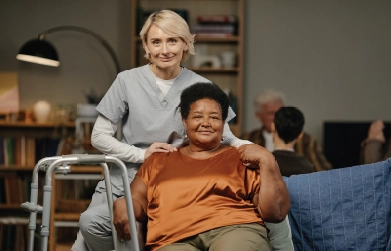
One of the most helpful mindset shifts for caregivers is recognizing that connection often matters more than correction. Rather than focusing on what has been forgotten, focus on the feelings being expressed.
Ask yourself: "What is my loved one communicating through this behavior, question or concern?"
Responding to the emotion behind the words can often be more supportive than trying to orient someone to facts or correct inaccuracies.
Person-centered dementia care is rooted in a simple but powerful idea: Focus on the person, not the diagnosis. While abilities may change over time, the desire for connection, purpose, comfort and meaningful relationships remains. By building on strengths, honoring preferences and creating opportunities for engagement, family caregivers can continue to share meaningful experiences with their loved ones while supporting dignity, autonomy and quality of life.
Resources for Further Support
- Alzheimer’s Association: Offering information, educational resources, care guidance and support services for individuals living with dementia and those who care for them.
- ALZConnected: An online community with forums, message boards and live chat rooms for caregivers and those living with Alzheimer’s Disease or other forms of dementia.
- Alzheimer’s Foundation of America: Helpline at 866-272-3900 (9 a.m.-9 p.m. EST) answered by licensed social workers who can answer questions about available resources and provide support to caregivers.
- Eldercare Locator — U.S. Administration for Community Living: Click on “Alzheimer’s” under topic, type your zip code or city and state, and you will be taken to local resources, like booklets, statistics, long-term care, and advance planning information.
- Alzheimers.gov Government: Comprehensive list of resources and dementia organizations.
- U.S. Department of Veteran Affairs: Support services, resources and information for caregivers of veterans.