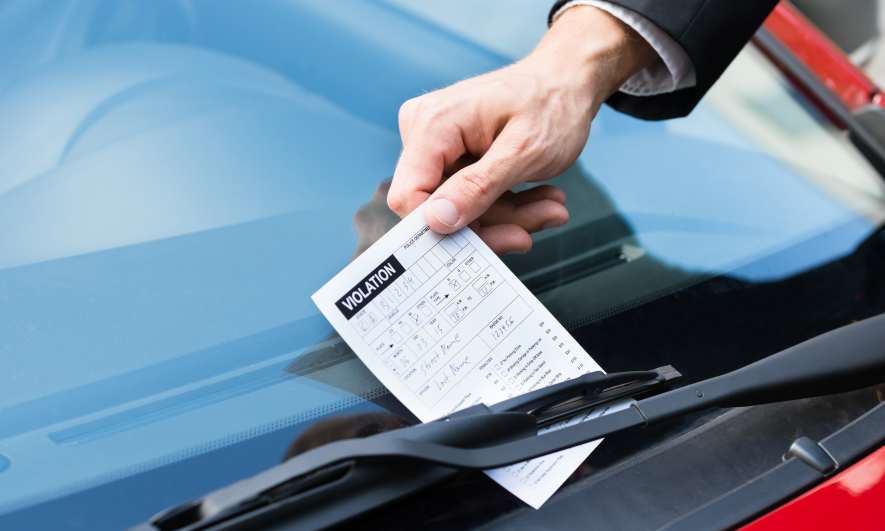
Generally, the more severe the traffic offense, the longer the points will remain on your record.
In addition to having unique guidelines for the number of points assigned for each violation, states also have differing policies regarding the length of time points remain on your record.
As points or violations (if your state doesn’t use the point system) accumulate, your state may take a
variety of actions, including:
- Fees and fines, which might be as high as several thousand dollars
- Warning letters
- Mandatory driving classes
- In-person hearings
- License suspensions
If your license is suspended, your driving privileges are taken away for a certain period of time. After, you are allowed to drive again without having to obtain a new license (although you may be required to pay a suspension termination fee).
However, if you are caught driving with a suspended license, your license can be fully revoked. This means that after a certain period of time, you will have to apply for a new license and pass the DMV exams before your driving privileges are reinstated.
Other scenarios that can result in license revocation include:
- Driving under the influence of drugs (including alcohol)
- Street racing or other forms of reckless driving
- Leaving the scene of an accident that resulted in an injury or fatality
Additionally, your license can be revoked if you are convicted of a non-driving offense, such as failing to answer a traffic summons, or a drug-related offense other than driving under the influence.
The accumulation of moving violations and points can have wide-ranging effects, from hefty fines to losing your driving privileges. Therefore, it’s in your best interest to keep your driving record as clean as possible.
Depending on your state, you can work towards removing points from your record. This can help you avoid a potential suspension, as well as the other problems that can arise if you are not allowed to drive.
Some states remove points from your driver’s license if you manage to keep a clean driving record for a specific period of time after receiving a ticket.
Another common way to have points deducted is to complete a driver safety course, which is allowed in many states. Your state’s DMV will strike a certain number of points from your record if you complete a course at an approved school. Keep in mind, though, that some states only allow drivers to deduct points this way a limited number of times within a given period.
Insurance companies take your driving record into account when determining your premiums. Almost all insurance providers check their current customers’ driving records on a regular basis, as well as the records of those who apply for a new policy.
The general rule is that the more traffic violations you have, the higher your premiums will be. An exception to this is being ticketed for a non-moving violation, which rarely results in increased insurance costs.
If you are convicted of a major moving violation, such as driving under the influence or reckless driving, you will certainly see increased premiums. Insurers consider drivers with such violations to be high-risk drivers, who are more likely to be involved in a collision and file a claim than drivers with cleaner records.
Regulations regarding the period of time insurance providers are allowed to look back at customers’ driving records when calculating their premiums vary from one state to another, but it’s generally between three to five years (although it can be longer). This means that any ticket you received prior to that will not affect your insurance costs.
While some accidents are unavoidable, there are many ways you can practice safe driving or increase your skills (which may also help you save money!), including:
According to the latest data from
Consumer Affairs, “it’s estimated that there were over 243 million licensed drivers in the U.S. in 2023, and about 89% of Americans ages 25 and older have a driver’s license.” It’s up to each and every one of us to do our part to make the roads as safe as possible.