
Severe Winter Weather Prep
Managing Risk Weather

Winter-Proof Your Small Business: A Practical Preparation Guide

3 min read
Protect your property, keep your business running and bounce back faster with practical steps to take before winter’s first big storm hits.
Learn More About Business Insurance
Explore business insurance options tailored to your needs.
Learn More
Winter weather can disrupt a small business quickly — from frozen pipes and roof damage to power outages, unsafe roads and temporary closures. A thoughtful plan can help business owners protect their property, support employees and resume operations sooner after a storm.
 
Here are practical steps small business owners can take before severe weather arrives.
Key Takeaways

  • Winter weather preparation helps small businesses avoid costly damage from frozen pipes, roof snow buildup and power outages.
  • A business continuity plan with clear employee roles, data backups and customer communication steps can help you reopen sooner after a storm.
  • Review small business insurance, including business income coverage, with your agent or broker before winter weather arrives.

Protect Your Property

Small maintenance steps taken before the first freeze can help prevent some of winter’s costliest property damage. Start with these steps:
 
  • Insulate exposed pipes, especially those in basements, attics, exterior walls and other unheated areas.
  • Seal gaps around doors and windows to reduce drafts and help maintain a stable indoor temperature.
  • Schedule heating-system inspections and address needed maintenance before temperatures fall.
  • Clear gutters and downspouts so melting snow and ice can drain away from the building.
  • Monitor snow and ice accumulation on roofs. Heavy or uneven buildup may require evaluation by a qualified professional.
  • Consider water-detection sensors near plumbing, water heaters and other areas vulnerable to leaks.

Strengthen Business Continuity

Winter weather and storms may affect utilities, transportation, suppliers and employees even when the business itself is not damaged. To help safeguard your business:
 
  • Create or update a business continuity plan that addresses severe weather, power loss and temporary closures.
  • Identify essential operations and determine how they can continue remotely or from another location.
  • Assign employee responsibilities and maintain an up-to-date emergency contact list.
  • Back up critical business records and store copies securely off-site or in a protected digital environment.
  • Review supplier dependencies and identify alternatives for essential products and services.
  • Establish a process for communicating with employees, customers and business partners during a disruption.
“In Small Business, we see that some of the most disruptive winter losses can begin with preventable issues — a frozen pipe, an overloaded roof or a power interruption without a continuity plan. Small business owners can strengthen their resilience by addressing vulnerabilities before temperatures fall, having a clear plan to keep critical operations moving and ensuring they have adequate insurance protection. Preparation doesn’t eliminate every risk, but it can make a meaningful difference in limiting damage and accelerating recovery.”
 
–  Pete Hill, Small Business Chief Underwriting Officer

Review Insurance Before a Storm

Small business owners should speak with their insurance agent or broker before winter weather arrives — not after damage occurs. Be sure to ask about:
 
  • Property coverage for winter-related damage
  • Business income and extra-expense coverage
  • Protection for off-premises power or utility interruptions
  • Flood coverage
  • Coverage limits for inventory, equipment and building improvements
  • Any location-specific risks or policy exclusions
Maintain a current inventory of business property, including photographs, receipts and serial numbers where available. If damage occurs, document conditions when it is safe to do so and report the loss promptly.

A Simple Winter Readiness Checklist

Before the next storm:
Property coverage for winter-related damage
Inspect heating equipment
Clear gutters, drains and walkways
Monitor forecasts, roof conditions and snow accumulation
Back up records and update the property inventory
Confirm employee roles and emergency contacts
Review remote-work and customer communication plans
Check insurance coverage with an agent or broker
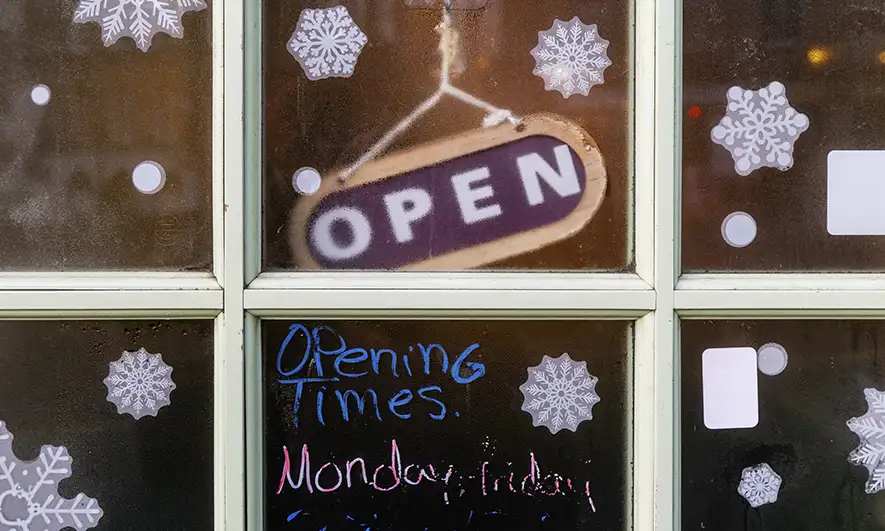
an open sign in a festive store window

Prepare Now, Recover Faster

Preparation cannot prevent every loss, but it can reduce avoidable damage and help a small business recover more efficiently. Taking a few practical steps now may make a meaningful difference when winter weather arrives.

Help Your Business Grow and Succeed

Subscribe to our newsletter and receive articles and tools to help with all your small business needs.
 
Business Owner's Playbook

Learn More

Explore our resources for entrepreneurs ready to launch their business, providing expert guidance on business formation, strategy, finance, risk management and more. 
 

Related Articles

Brought to you by The Hartford. The content displayed is for information only and does not constitute an endorsement by, or represent the view of, The Hartford.
 
The Small Business Insights Center is a small business information blog site from The Hartford. We may receive compensation from companies we endorse on our blog. Any company we affiliate with has been fully reviewed and selected for their quality of service or product. If you're interested in learning specifically which companies we receive compensation from, you can check out our Affiliates Page.
 
Information and links from this article are provided for your convenience only. Neither references to third parties, nor the provision of any link imply an endorsement or association between The Hartford and the third party or non-Hartford site, respectively. The Hartford is not responsible for and makes no representation or warranty regarding the contents, completeness, accuracy or security of any material within this article or on such sites. Your use of information and access to such non-Hartford sites is at your own risk. You should always consult a professional.