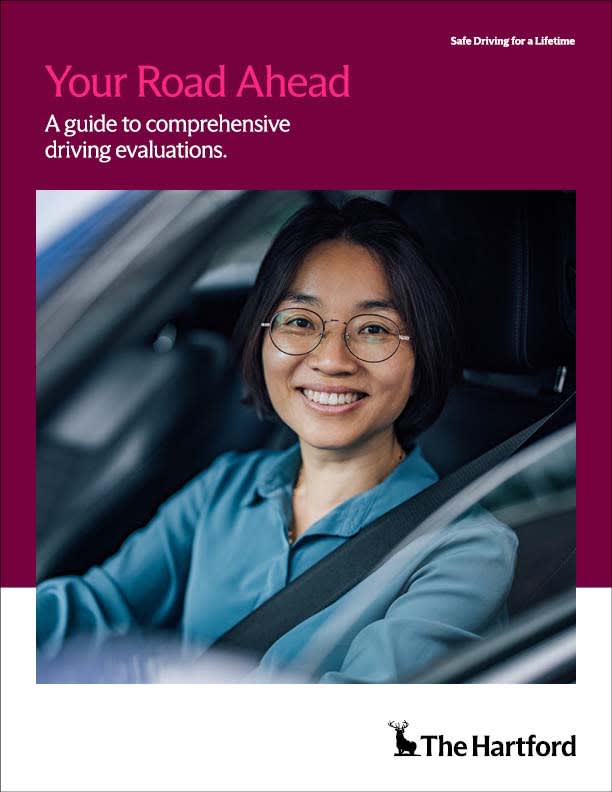
Should You Get a Driving Evaluation? A Guide for Older Drivers
Aging Driving Safety

Should You Get a Driving Evaluation? A Guide for Older Drivers

7 min read
Changes in health, vision or driving habits can raise questions about driving safety. Learn how a comprehensive driving evaluation can help older adults assess their skills, build confidence and make informed decisions about driving.
Get an Auto Quote
Enjoy exclusive benefits with AARP Auto Insurance from The Hartford.

Key Takeaways

  • A comprehensive driving evaluation can help you better understand your driving abilities and identify ways to continue driving safely and confidently.
  • Older adults experiencing changes in health, vision, mobility or memory may benefit from a professional assessment of their driving skills.
  • Evaluations may lead to recommendations such as driver retraining, vehicle modifications or driving strategies that support independence and safety.
Driving is often closely tied to independence, freedom and the ability to stay connected with the people and activities that matter most. As we age, changes in health, vision, mobility or confidence may raise questions about driving safety. A comprehensive driving evaluation can provide objective information about your driving abilities and help you make informed decisions about staying on the road.
 

Understanding Driving Evaluations

A driving evaluation is a professional assessment designed to evaluate the skills and abilities needed for safe driving. Rather than relying on assumptions or self-assessments, it provides objective feedback about areas such as vision, cognition, physical abilities and overall driving performance.
 
Many people think of driving evaluations only when someone is considering giving up driving. In reality, they can be useful for anyone who wants a better understanding of their driving abilities or wants reassurance that they're driving safely. For some people, the evaluation confirms they're doing well. For others, it identifies opportunities to improve safety and confidence behind the wheel.
man happily driving

Signs It May Be Time to Consider a Driving Evaluation

Changes in driving ability can happen gradually, making them difficult to recognize. While occasional mistakes can happen to any driver, a pattern of challenges may signal it's time for a professional assessment.
You may want to consider a driving evaluation if you:
 
  • Have been involved in a recent crash or close call
  • Family members or friends have expressed concerns about your driving safety.
  • Find yourself feeling nervous or less confident behind the wheel.
  • Have difficulty seeing traffic signs, signals or vehicles around you.
  • Notice slower reaction times while driving.
  • Avoid certain driving situations, such as highways, night-time driving or unfamiliar routes.
  • Have experienced a significant illness, injury or medical event that may affect driving.
A driving evaluation can provide objective feedback and help determine whether adjustments, retraining or other strategies may help support continued safe driving.
 

Who Can Benefit From a Driving Evaluation?

A driving evaluation may be beneficial for people experiencing health changes that could affect driving performance. These changes do not necessarily mean it's time to stop driving. In many cases, identifying challenges early can help you develop strategies to remain safe and independent.
 
You may benefit from a driving evaluation if you:
 
  • Are noticing changes in vision, flexibility or reaction time.
  • Have arthritis that affects strength, comfort or range of motion.
  • Have diabetic neuropathy or another condition that affects sensation in your hands or feet.
  • Are recovering from a stroke.
  • Have Parkinson's disease, multiple sclerosis or another neurological condition.
  • Have concerns about memory or cognitive changes.
  • Have been diagnosed with early-stage dementia or Alzheimer's disease.
  • Are returning to driving after a period of illness, injury or recovery.
  • Recently became the primary driver in your household after a major life change.
For people living with early-stage dementia or Alzheimer's disease, a driving evaluation can provide information about current driving abilities and help families begin planning for future transportation needs. A diagnosis does not always mean someone must stop driving immediately, but regular assessment can help support safe decision-making over time.
 
The evaluation can also be valuable for older adults who simply want reassurance. Understanding your driving strengths and areas for improvement can provide confidence and peace of mind.
woman adjusts rearview mirror in car

Who Performs a Comprehensive Driving Evaluation?

Comprehensive driving evaluations are often conducted by occupational therapists who have specialized training in driving and community mobility. These professionals understand how medical conditions, aging-related changes and physical limitations can influence driving performance.
A specially trained occupational therapist may:
 
  • Evaluate physical, visual and cognitive abilities.
  • Assess reaction time and driving knowledge.
  • Conduct behind-the-wheel evaluations.
  • Recommend adaptive equipment or vehicle modifications.
  • Suggest driver retraining or rehabilitation programs.
  • Help individuals prepare for future driving transitions.
Because safe driving relies on many different skills working together, evaluations take a broad look at how a person interacts with their vehicle and driving environment.
 

What Happens During a Driving Evaluation?

Many people are unsure what to expect during a driving evaluation. While programs may vary, comprehensive evaluations typically take two to three hours and include both a clinical assessment and an on-road evaluation.
 
The clinical portion may assess:
 
  • Vision and visual processing
  • Memory and cognition
  • Strength and flexibility
  • Coordination and reaction time
  • Understanding of traffic rules
The on-road portion evaluates how you handle real-world driving situations, including turning, changing lanes, navigating traffic and responding to potential hazards.
 
The purpose of the evaluation is not simply to determine whether someone should drive. Instead, it provides information that can guide future decisions and identify steps that may improve current driving safety.
man happy to drive

Understanding Your Results and Next Steps

Following the evaluation, you'll typically receive recommendations based on your individual abilities and driving performance. Those recommendations can vary from person to person.
Possible outcomes may include:
 
  • Continuing to drive without changes.
  • Continuing to drive with certain limitations.
  • Participating in driver retraining.
  • Using adaptive equipment or vehicle modifications.
  • Developing a plan for future transportation needs.
For many drivers, the evaluation provides reassurance and practical guidance. Even small changes, such as adjusting driving habits, improving vehicle fit or participating in additional training, may help support safe driving for longer.
 

Driving Safely and Confidently as You Age

Growing older does not automatically mean giving up driving. Many older adults continue driving safely by adapting to changes in their health, abilities and lifestyle.
 
Some drivers choose to avoid night driving, heavy traffic or poor weather conditions, while others may benefit from driver retraining, adaptive equipment or recommendations from a driving specialist. These adjustments can help support both safety and independence.
 
Because age alone is not a reliable measure of driving ability, it's important to understand how physical, visual or cognitive changes may affect your driving. A professional driving evaluation can provide objective feedback and personalized recommendations to help you make informed decisions with confidence.


Related Articles

The content displayed is for information only and does not constitute an endorsement by, or represent the view of, The Hartford.