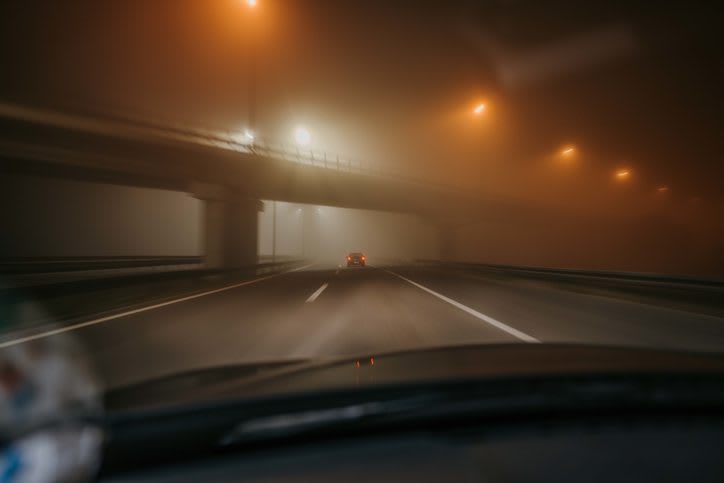

When you slide behind the steering wheel for a nighttime drive, you face a different driving experience than you would on a morning commute or during an afternoon running errands. Lower visibility, poor street lighting and inadequate lighting at crosswalks and intersections all contribute to traffic and pedestrian accidents after dark.
The nighttime driving fatality rate is three times the daytime fatality rate, according to the Federal Highway Administration. One reason for the increased nighttime risk is that cars—especially those driving at high speeds in the dark—may not be able to stop by the time their vehicle’s headlights illuminate road hazards, curves, construction and warning signs or cones. Other risks of night driving include driver drowsiness and ultra-bright headlights from oncoming cars.
At The Hartford, we’re here to equip you with the information (and coverage) you need to drive with confidence the next time you buckle up after dark. Here are seven tips for a safer nighttime driving experience.
1. Get an Annual Eye Exam
Having good eyesight and wearing prescription glasses to correct vision can help you avoid accidents during the day or night. Night driving especially requires excellent vision, since drivers can only see about 200 to 250 feet ahead using normal headlight beams and up to around 500 feet using high beams.
Visual acuity (the measurement of how sharply you see distant objects) and visual field (the width your eye is able to see when focused on a central point) are two of the most important factors for safe driving, according to the American Academy of Ophthalmology. Your eye doctor can measure both and let you know of any medical conditions—such as glaucoma, cataracts, macular degeneration or diabetic retinopathy—that can make night driving more dangerous.
2. Inspect Your Vehicle
Before you hit the road for a nighttime drive, inspect your car’s exterior. Make sure tires are aired up properly and headlights, taillights and brake lights are clean and working properly so you and other drivers can see one another’s vehicles in the dark. The last thing you want is an auto accident due to burned-out bulbs or to get stranded at night because you didn’t notice a tire was going flat.
If headlights or rear lights are dirty, clean them with a soft, damp cloth. If bulbs are out, replace them. When a tire is low, fill it and keep an eye on it, checking air pressure again after you arrive at your destination or somewhere on en route on a longer trip.