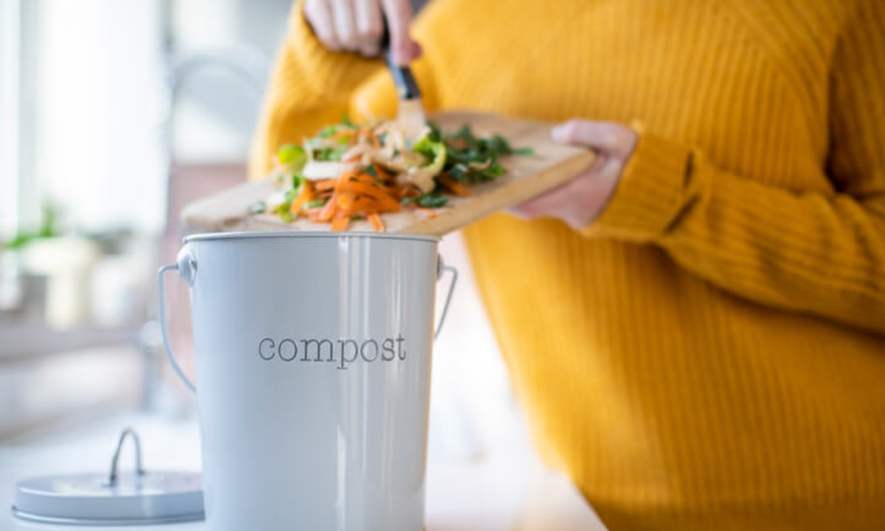
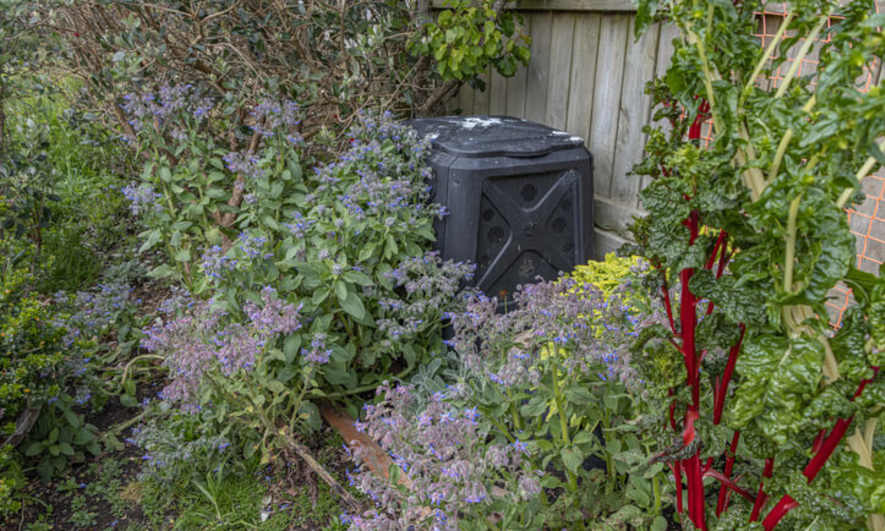
- Onsite composting works for small-scale compost production because it occurs on the same site it was generated. For example, a family with a kitchen-counter composter or backyard compost bin is using the onsite composting method.
- Vermicomposting uses red worms to accelerate the composting process and produce high-quality potting soil and fertilizer. Worm farms sell these and you can add them right into your household compost.
- Aerated static pile composting refers to loosely layering organic matter in a heap, including layers of bulking agents like wood chips or shredded newspaper to allow air to pass through the pile to help the composting process. It’s easy to set up an aerated static pile (often known as a compost heap) in a corner of your backyard, and even easier to add to your compost each evening. However, an open pile can attract wildlife and might even break the by-laws of your region or state.
You can buy a compost bin for your kitchen counter or backyard online or from a local building supply or hardware store. Some cities and municipalities also offer compost bins to residents at a low cost to encourage composting in their areas.
You could even make your own simple outdoor compost bin using a large plastic storage container. Cut off the bottom of the tote and drill air holes in the sides and on top to allow oxygen into the compost. Place it in a corner of your garden and add your food and yard waste to it regularly.
The best way for you to compost at home depends on several things, including where you live, the amount of organic waste your household generates, how much hands-on work you’ll want to do, and the type of organic waste you produce. You’ll also need to consider the climate and wildlife in your area.
While an open compost heap or bin is simple to maintain, it might attract bears, coyotes and raccoons. And these critters can quickly make a mess of your property.
To get started composting at home, you’ll need to make sure you’re complying with the laws in your area. Find out about your state’s composting laws and regulations by looking through the
U.S. Composting Council’s free list.
Next, decide on the type of composting set up best suited for your household.
Location and Food Waste Generation
Choosing the best composting method for you depends on a few things. First, do you prefer to compost indoors or outdoors? Second, look at how much household waste you produce daily, like:
- Vegetable and fruit scraps
- Coffee grounds
- Eggshells
- Grass clippings
- Leaves
- Brush
- Plain paper waste
A large family might need daily trips to a large compost bin or heap outdoors in the backyard.
On the other hand a single person or couple might do just fine with a kitchen countertop (or under-the-counter) compost bin with a charcoal filter to keep the smell down. This can also be a good solution for condo owners or apartment dwellers who might not have easy access to a backyard.
If you like the idea of composting your food waste and organic matter but don’t want the resulting compost, consider donating it to your local community garden. Some urban and suburban areas even offer city-wide compost pickup. With this service, compost gets collected regularly and composted in one large municipally-run
aerated or turned windrow area. The compost might be used for area parks and gardens or sold back to the community at a nominal price.
What to Compost
Many of the food items typical American families buy or produce can be added to compost. These include:
- Vegetable peelings and scraps
- Fruit peelings, scraps and cores
- Coffee grounds
- Teabags
- Eggshells
- Plain paper
- Wood shavings
- Cardboard egg cartons
- Grass clippings
- Dry leaves
- Small twigs and branches
- Wood ash from a fireplace or wood stove
- Nutshells and seeds
- Livestock manure (including chickens and rabbits)
- Straw
- Hay
What NOT to Compost
It’s just as important to know what shouldn’t get added to your compost. Including the wrong ingredients can inhibit the organic matter from breaking down into humus, the brown soil-like matter that can help your garden. Don’t add any scraps that include:
- Dairy products
- Meat
- Synthetic oils
The wrong ingredients can also attract animals and increase odor.