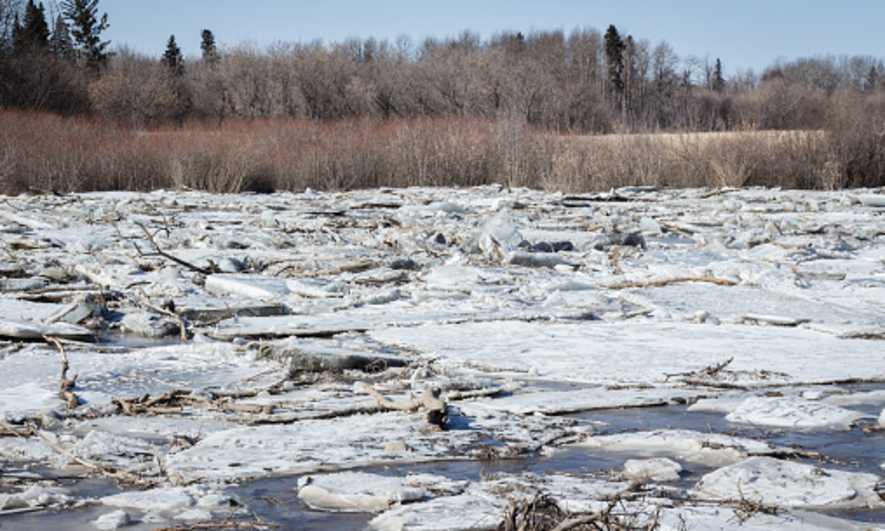
Ice jams can form wherever winter is cold enough to cause rivers to freeze – mostly in the Northeast, the Midwest and Alaska, and mostly during early spring months when warming temperatures cause melting snow and ice that raise the level of still frozen rivers and streams.
Ultimately, however, ice jams can occur anytime winter conditions are right.
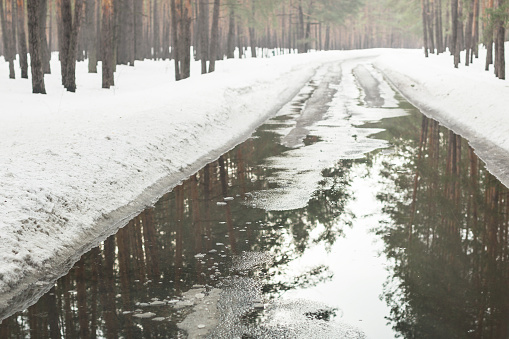
While most ice jams occur when a thaw causes surface ice to break up, they can also occur when extremely cold air causes open water to rapidly freeze up. Freeze-up jams are more typical in early winter and usually result in little if any flooding. Break-up jams are more destructive, causing flooding that has been known to push entire houses off their foundations.
Once an ice jam is formed, there is little to be done about it until it melts enough to break up. However, afflicted areas have been known to call in boats to break up the ice, or use heavy equipment to try to pick up the ice from shore.
Where ice jam flooding is common and causes serious flooding, municipalities may invest in ice-control structures. A relatively low-cost approach is to install big cement pillars at 10 to 15 foot intervals spanning the river that effectively catch and hold the biggest slabs of ice upstream of town where they will do no harm.
But even this can be a prohibitive proposition where ice jam flooding is infrequent. For most people who live near a river that has the potential of forming ice jams, mitigation is the same as for any other kind of flood.
Ice jams can cause flooding with little or no warning. If you live near a river and conditions are ripe for an ice jam:
- Monitor the river’s ice conditions and water level.
- Follow emergency management postings on social media, and listen to local news outlets for flood warnings and states of emergency. Sign up for emergency text alerts.
- Plan an emergency escape route in advance.
- Develop a calling tree of neighbors to notify if a flood emergency occurs so everyone can safely escape.
- Have ready an emergency kit complete with supplies you’ll need to sustain you and family members should you need to leave your home. Your kit should include water, flashlights, batteries, a backup cell phone charging system, food, blankets, and dry clothes.
- If flooding is predicted, shut off your water, gas, furnace and electrical services if you can do so safely. Leave home if evacuation orders are issued, or if floodwaters near your home.