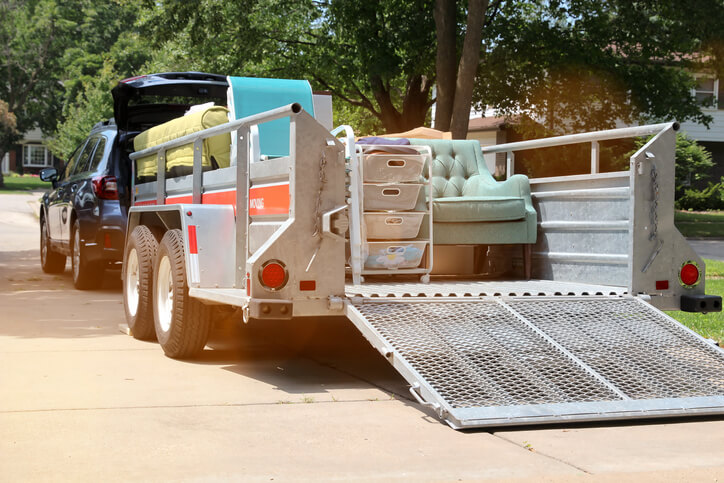

Moving to a new home across the country can be overwhelming. Relocation comes with all kinds of stress, but with a few moving across country tips, you can streamline your move cross country.
Spend less time planning and transporting, and more time loving your new home. If you’re confused about renting a moving truck, tipping, or transporting your household across the country, these moving across country tips will save the day!
Long Distance Moving Tips
The moving across country tips in this section address relocation several states away. If you’re moving even farther, don’t worry – we have additional tips relating to the best way to move cross country below.
Determine If Your Furniture Will Be Moving to New Location
One constant dilemma of moving is the choice between bringing your bulky, heavy furniture with you (which usually involves professional movers) or leaving it behind and starting fresh in your new home. There are numerous factors that go into determining which choice is cost-effective and right for you. Consider:
- The price of hiring movers compared to that of renting a truck or traveling light and taking only what you can fit in your own vehicle(s).
- What you could realistically get for your used furniture , and how much any new furniture you’d want for your new place would cost.
- Whether you will need the same items in your new place as you do now (a smaller home or different climate might mean different furniture anyway.)
Of course, if you love your décor and can’t imagine parting with it, the choice is easier, unless the cost of transporting is prohibitive.
Determine If You’ll Drive or Fly for Your Long Distance Move
One of the best ways to move cross country is to determine whether you will fly and ship your car or drive to the new location.
- Do you have a free week for a semi-leisurely cross-country drive, or would you have to make the trip in three rushed days?
- Beyond plane tickets versus gas and hotel stays, add up transportation to and from the airport and the price of having someone move your car.
- If you decide to fly, you can have your car shipped by a company that specializes in moving vehicles or driven by an individual with time to make the trip.
- Keep in mind that your car will arrive days after you do.
- Make sure you’re properly insured for either option.
Schedule Appointments Into Your Timeline
When planning the timeline of your move, factor in any appointments you need to make and people you want to see one last time before you go. If you need to see your current doctor, or get together with friends, schedule this ahead of time or else you might run out of time in the whirlwind of the moving process. You might want to plan a going away gathering, or simply set aside some downtime to spend with family and friends prior to moving. Put these meetings on your moving calendar and arrange for them to take place about a week before you leave.
Work-Related Relocations May Be Tax Deductible
This is true even if you are self-employed. It’s a good idea to hang on to moving-related paperwork like bills, receipts, and proof of mileage driven. If your move meets IRS requirements relating to the timing of the relocation and distance from your workplace, you can deduct some of the costs of your travel, the transportation of your belongings, insurance, setting up new utilities, and more. Because tax laws change, check with the IRS or your accountant for updated information before you file.
Research Local Resources in Your New Community
Start with your municipality’s website as well as local newspapers, blogs, and social media groups. Your town might have an official (or unofficial) Welcome Wagon-type outreach program for new residents; if not, local meetup groups are another popular way to find out what’s happening in your neighborhood or town once you’re settled in.
Manage Your Pet’s Long Distance Move
- Prepare an overnight kit with everything your pet will need during the move.
- If you’ll be driving long distance with your pet, keep your pet safe while driving; begin acclimating them to driving, being in their carrier or crate, and so on in the months and weeks leading up to the move. Keep your pet secured along the way to prevent escapes in unfamiliar places during your road trip.
- Before you leave, obtain your pet’s health records from your vet. When you arrive at your new home, establish a relationship with your new vet and get your pet’s information updated.
- Familiarize yourself with your new state’s laws and local ordinances regarding pets; for example, you may need health certificates, rabies tags, or permits.