
More and more people are choosing solar for their home’s electricity needs. Some switch to renewable energy to help protect the environment. For others, the main goal is to achieve energy independence and avoid potential outages from an overburdened power grid. Many homeowners also hope to save money over time by reducing their energy bills and taking advantage of tax incentives.
Is Solar Power Right for Your Home? Factors to Consider
While solar panels come with many benefits, they’re not a fit for every home. To decide whether solar power is a good decision for your home’s energy needs, consider the following factors.
How Long You Expect to Stay in Your Home
While solar panels can help you save money over time, they can be costly to install and maintain. Estimates vary on how long it takes to break even on the cost of residential solar panel installation. Some expect it to take between 10 and 20 years, while others estimate between five and 10 with an average of about nine years.
Relocating solar panels to a new home can be difficult and expensive, if not altogether impossible. If you don’t plan to stay in your current home for at least eight years, you may want to forgo installing solar panels. Of course, depending on your location and local market preferences, solar panels can increase your home’s value, though not usually by the full amount of their cost.
Your Average Electricity Usage and Energy Costs
If your main reason for installing solar panels is to save money, make sure to calculate potential cost savings. Homeowners with high energy bills are more likely to benefit from installing solar panels. Gather your past energy bills to calculate your average monthly energy usage and cost. Your average monthly usage will help you determine the size and cost of the system you would need. (To determine how many solar panels you might need based on your energy usage, try using an online solar calculator.) Then you’ll be able to compare that cost to your average electric bill to determine potential savings and see how long it would take you to break even.
As you review your bills, you may find that your energy usage is low. This could be due to your home size, a small household, energy efficient lighting and appliances, efficient insulation or simply living in an area with low utility rates. Whatever the reason, according to Boston Solar, a residential solar contractor based in Massachusetts, if your energy costs less than $50 per month on average, then solar panels may not save you much money. That said, average residential energy bills below $50 are quite rare—all state averages are currently above $80 per month.
Your Eligibility for Rebates and Incentives
Find out if you’re eligible to receive a federal solar investment tax credit for installing a residential solar system. Depending on where you live, you may also qualify for a state incentive, so check the database of state renewable energy incentives.
You may also live in an area where utility companies compensate homeowners for surplus energy that flows back into the grid. This is called net metering. If your solar panels generate more energy than you need on sunny days, they’ll send the surplus to the grid, building up a bank of credits to use at night and on cloudy days. To learn more about net metering rates in your area, contact your local electric utility.
Your Home’s Physical Characteristics and Insurance Needs
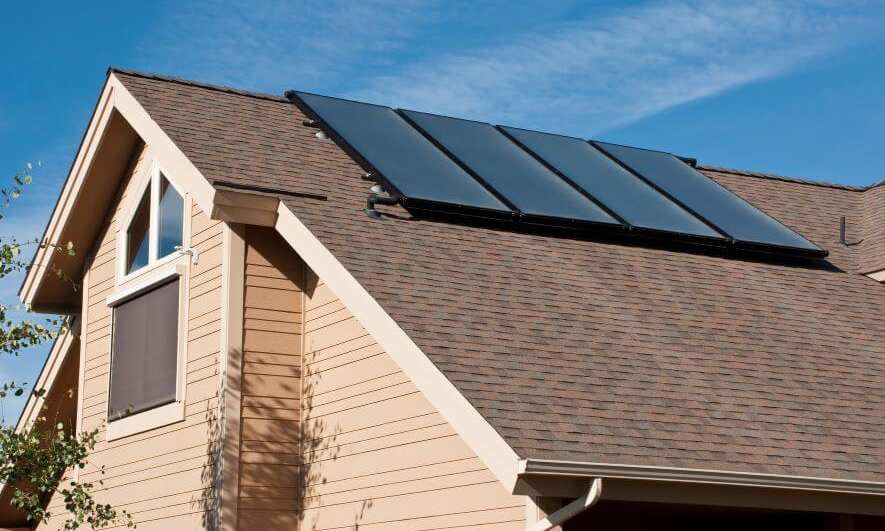
Homes in sunny locations with little to no shade are typically good candidates for solar panels. Your roof also matters. Its layout, size and condition affect whether solar panels will work well for your energy needs. Consider these factors to determine whether your home is suitable for solar energy.
- Geographic Location: If you reside in Arizona, or another of the sunniest states, you’re more likely to benefit from a home solar system than someone in the cloudy states of Washington or Vermont.
- Shade: If your home is shaded by large trees or other buildings, solar panels won’t capture and generate as much energy. On the plus side, your shady yard likely makes it easier and cheaper to keep your house cool in the warmest months of the year.
- Roof Condition: Is your roof strong enough to bear the weight of a solar system? If you need to replace your roof anytime soon due to damage or age, you may want to hold off on solar panels until after a new roof is installed. You may even be able to coordinate your roofing and solar contractors.
- Roof Size: The average American home needs between 15 and 19 solar panels to generate the right amount of electricity—and those panels take up space. To install 15 panels, you’d need about 264 square feet of roof space. But a small roof isn’t necessarily a deal breaker. You may be able to install additional panels on other structures such sheds, carports, gazebos or pergolas. You could also consider ground mounting panels in sunny spots of your yard, if it complies with local regulations.
- Roof Orientation: The Department of Energy recommends installing solar panels on south-facing slopes for optimal energy production. If most of your roof faces a different direction, you may need to install more panels, which requires more space.
- Roof Warranty: Look into whether installing a solar power system will void your current roof warranty. If it will, you may want to ask solar installers whether they take responsibility for the warranty.
- Insurance: Homeowners may need to adjust their insurance coverage when they install solar panels, both to cover the panels and to protect against any liability exposures that may be associated with the panels. Contact your insurance company to ask what you might need to adjust and how much additional coverage will cost.