Woke up to a midnight call and can’t fall back asleep? Shuffling grandkids from point A to B? Trying to get more steps in? Enter: digital books. They go with you! Whether you’re at home or on the go, your book is there, too.
When caring for your antiques, “the main thing is to stay away from furniture polishes like Pledge that contain silicone,” says Young.
Hillmann agrees: “Those products collect more dirt, which then causes your piece to collect more dirt.” Instead, Young recommends the following:
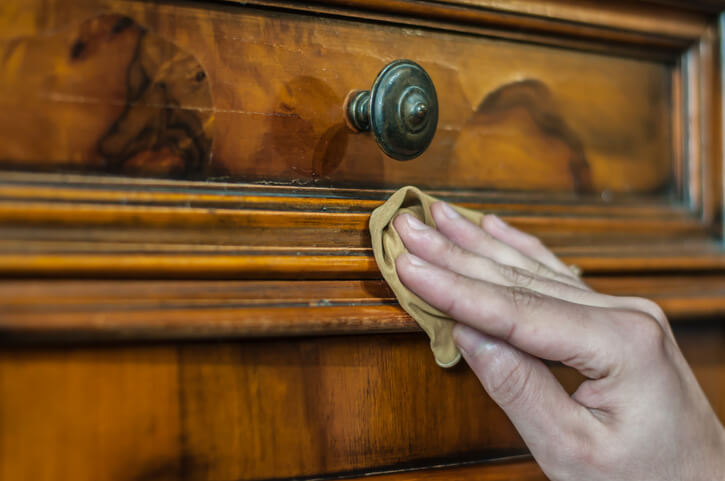
- Choose an inconspicuous spot on your piece – like the side or back of a chest of drawers. Then wipe with a simple damp rag. Check to make sure you’re wiping away dirt, and not a finish. The goal is always to maintain the integrity of the original piece, whenever possible.
- If the damp rag is insufficient and you need more power, add a drop or two of Dawn dish soap in a bucket of water.
- If your project requires an even stronger agent, add a small amount of mineral spirits to the bucket. This helps to get rid of grease. Be sure to rinse your cloth between each use.
- For tougher dirt, consider a Scotch-Brite pad or a magic eraser – ”something non-abrasive,” says Young. “Once you start in on cleaning the piece, you can tell how hard you can scrub without removing any finish.”
- Once your piece is clean, apply a light coat of paste wax. This will add sheen to solid wood furniture without doing any damage (as silicone-based sprays can).
When to Use a Professional Restorer
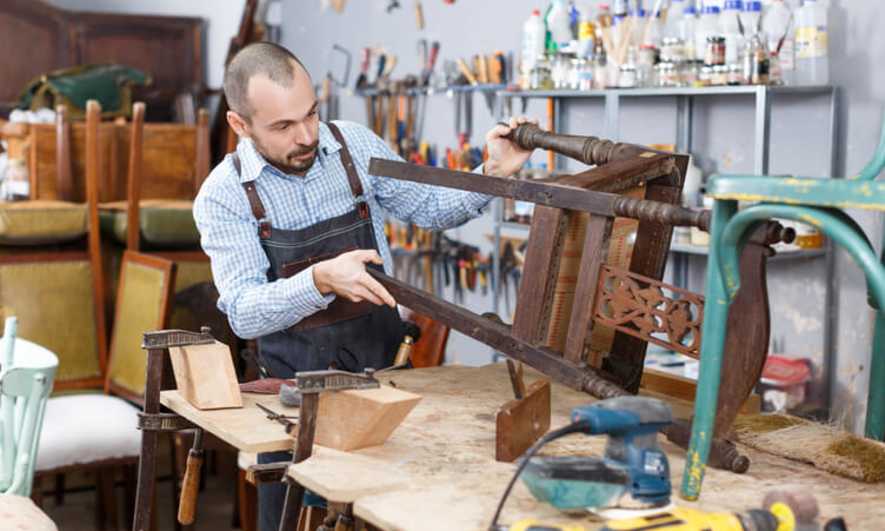
For more challenging antiques projects, Young says success often comes down to a restorer or refinisher’s skill level and availability of materials and tools. For DIYers, “I don’t mind if someone wants advice on what to do. I don’t mind answering questions. There’s so much information out there, on YouTube and online, that it can be scary for a novice. If a hobbyist gets in too deep, they can always come in for help.”
Professional restorers have access to workshop space and tools that aren’t available to the typical weekend warrior. “I have a spray gun and a spray booth,” says Young. “If someone is at
home, brushing on a finish, it takes a lot of skill to make sure you don’t have a bunch of brush streaks on the finished piece. You also need a space that’s dust free while you work and also while the piece cures.” A dusty work space, he warns, can lead to a good deal of rework, including unexpected sanding and buffing, to eliminate the dust from a finish.
Hillmann also warns that some stripping agents can only be bought commercially, so they aren’t available to antiques refinishing hobbyists. “Some of the chemicals used in the restoration process can also be harmful,” he warns. “Safety gear should be worn, including masks and gloves. Also, make sure there is proper air flow within your environment.”
Young loves what he does but he does want hobbyists to know: “It’s a lot of work.” That doesn’t mean someone can’t do this at home, but “they should know what they’re in for.”
You can find a professional antiques restorer through an online trade site, like
Professional Restorers International. To DIY, look for online tutorials created by antiques restoration masters, who have been in the business for at least a decade.

 Woke up to a midnight call and can’t fall back asleep? Shuffling grandkids from point A to B? Trying to get more steps in? Enter: digital books. They go with you! Whether you’re at home or on the go, your book is there, too.
 Woke up to a midnight call and can’t fall back asleep? Shuffling grandkids from point A to B? Trying to get more steps in? Enter: digital books. They go with you! Whether you’re at home or on the go, your book is there, too.