Learning how to write a corporate letter correctly helps you communicate clearly, set the right tone, and make a strong impression. Whether you’re following up with a client, making a formal request, or sending a thank-you note, following the correct format of a business letter helps ensure your message is both received and respected.
Sender’s address
You don’t want the recipient to have to look up your address to write a response, so your return address should appear at the top of the page, aligned to the left margin. Include your full name, company name (if applicable), street address, city, state, and ZIP code. Including a phone number and email address with the sender address is optional, but can make it easier for the recipient to respond quickly.
Date
What is the standard format for a business letter date? Use the full date format — like “August 4, 2025” — and place it one line below the sender’s address. If you’re using a modified block style, the date may be aligned with the center point or right-hand side of the page. Using the correct business letter style makes it immediately apparent when the letter was written. That way, the recipient is aware of its urgency, especially if it revolves around a particular event or business situation.
Recipient’s address (inside address)
You don’t want your assistant to have to look up the address to send the letter (or you don’t want to have to look up the address again yourself). This section goes one line below the date and includes the recipient’s full name, job title, company name, and business address. The inside address should match what appears on the envelope, helping ensure the letter reaches the right person.
Salutation
Opening with a generic phrase like “Dear Madam” or “To whom it may concern” is a surefire way to get your letter lining a wastepaper basket. The most effective format for business letters includes a name in both the address and salutation. You may have to call up the company or do some searching on LinkedIn to find out who the letter should go to. If you can’t find a name, use a professional alternative like “Dear Hiring Manager.”
Body
This is where you get to the main point. As with any communication, being clear and concise tends to reflect best on the writer. The first paragraph should explain why you’re writing. The paragraphs that follow should expand on your request, idea, or feedback clearly and professionally. Use a new body paragraph for each main idea, and keep the message focused. Your last body paragraph should restate your purpose and invite follow-up if needed.
Closing/signature
The signature gives a personal touch to the letter, shows exactly who it’s from and demonstrates that you approve of the content. End with a courteous phrase such as “Best regards” or “Sincerely.” Wondering if there should be a space between sincerely and your name? Yes! Leave at least one blank line (or four if printing and signing by hand) between the closing and your typed name. If printing the letter, use blue or black ink for your handwritten signature. For clarity, include your job title and company name below it.
Enclosures
How should a business letter typically end? If you’re following the best form for a business letter, you should include a list of any additional documents
enclosed with the business letter, in case the recipient misplaces them. Mention each one under the word “Enclosures” after the last line of the last paragraph. For example, “Enclosures: résumé, brochure.” This helps the recipient know what to expect and track items if something goes missing.
A formal business communication can be the first impression that perspective clients, employees and other stakeholders have of you, so it’s important to make sure it’s a good one. Having the right formatting in a business letter will display your professionalism and your respect for the recipient. So, how do you format a letter for business? Follow the recommendations below.
Spacing
Letters should be single-spaced between sentences in order to maximize space on the page. Include four line breaks between the letter’s closing sentence or paragraph and your printed name to leave space for your signature. The rule of thumb here is that utility and readability trump individuality.
Alignment
All proper business letter styles are left-aligned. The common wisdom over the decades is that such alignment is best for readability.
Font
The standard font style is Times New Roman, size 12, though other commonly used fonts such as Arial and Helvetica are acceptable. Readability is crucial when it comes to fonts, so avoid getting creative and using hard-to-read gothic or cursive fonts. If your letter’s body is running out of space on a single page, it’s better to cut it down than reduce font size.
Margins
Most experts agree that 1″ margins are the best for business letters because they maximize space, though you may have to make room for a letterhead if you’re using it.
Letterhead
You might also consider using a business letter format with letterhead for your company’s letters because it offers a professional appearance and is also informative. The letterhead should display the company’s mailing address, phone number and any other contact information. If using letterhead, you will need to remember to adjust the margins and formatting accordingly.
Tone
The right company letter format balances professionalism with approachability, helping ensure that you are taken seriously. Here are some important tips when it comes to setting the appropriate tone in the letter:
- Stay professional, but write in a natural, conversational tone.
- Be clear and direct by stating your main point early.
- Avoid sounding boastful or aggressive.
- When delivering bad news, soften the message with empathy and keep the door open for continued dialogue.
- For complaints, express concerns politely and offer a constructive solution.
- For memos, use a crisp, no-frills tone focused on internal communication.
A well-composed tone helps your letter feel purposeful and productive, making it more likely you will accomplish your business goals.
Word Choice and Grammar
Impact is greatest when the right format of a business letter is paired with strong word choices that build trust and reinforce credibility. But good writing isn’t about big words — it’s about clarity. Here are a few top tips:
- Keep your message sharp and simple.
- Avoid filler words, like “just,” “maybe,” or “probably.”
- Steer clear of jargon.
- Choose words that reflect action and ownership.
- Use an active voice. For example, “We can schedule your installation by Friday,” instead of “Your installation will be scheduled by Friday.”
And remember: proofreading is key. Grammatical errors come off as careless. For important messages, ask another person to review your draft or run a grammar check online.
Punctuation
Proper punctuation helps your message land clearly. Here are a few quick tips to follow:
- Use a colon after the salutation (e.g., “Dear Mr. Lee:”), not a comma.
- End your last paragraph with a period, even in short sign-offs.
- Use commas to separate items in a list.
- Don’t overuse exclamation points. One per letter is plenty, if at all.
- Check for misplaced apostrophes and quotation marks.
From the first word to the last, clean punctuation shows attention to detail, helping your letter stand out for the right reasons.
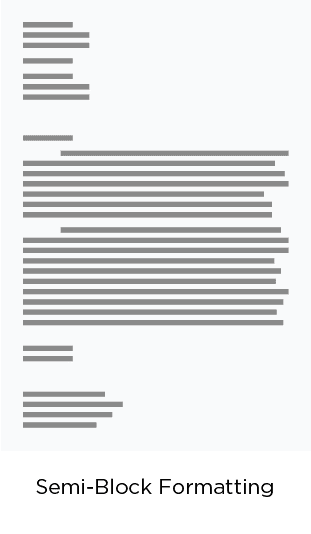
To indent or not to indent? That is the question. This is really a matter of how formal you want the letter to look. You might want a block format to convey formality if you’re complaining about something, but a semi-block might communicate a nice, “formal light” look in a thank-you letter, especially if it’s someone you already know. So, what are the three main layouts of a business letter? Let’s take a look at each.
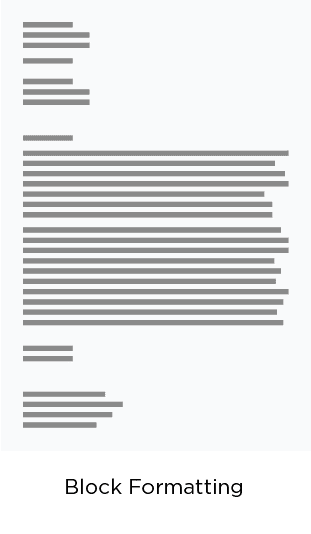
1. Block Formatting
If you don’t know which format of a business letter to use, block format is often the best option. Block format is mostly used in industries like business and law, but it can also be great for cover letters and reference letters. The entire letter is justified left and single-spaced except for a double space between paragraphs. With a simple font like Times New Roman and black ink, you can’t go wrong with this classic format.