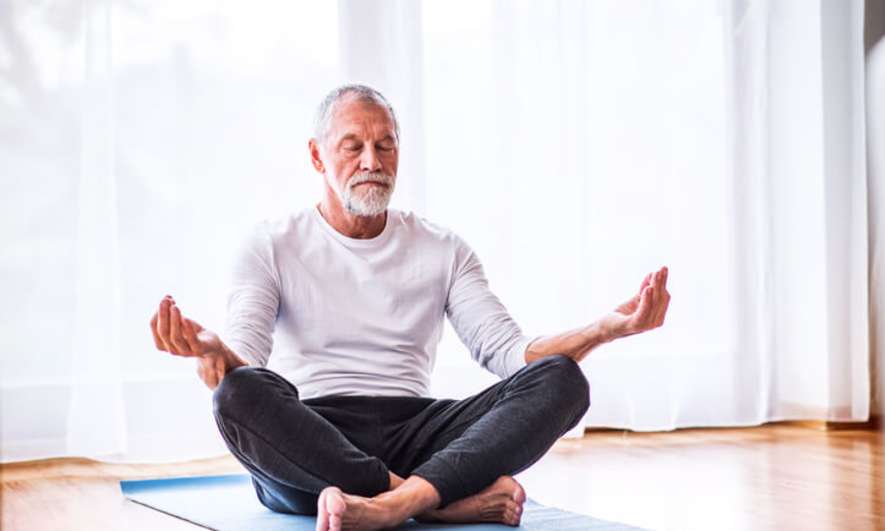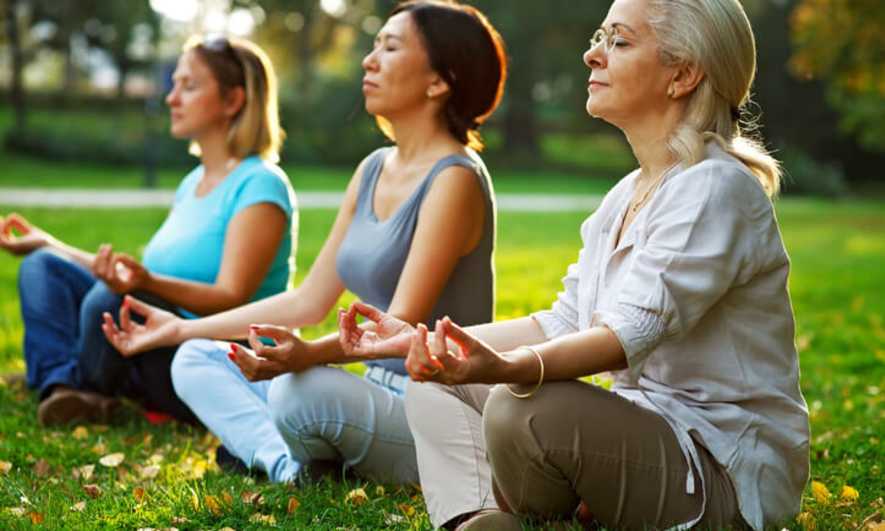

Meditation may bring to mind images of spirituality and solitude – of quiet, candlelit rooms in sacred spaces with music playing softly in the background. But the beauty of meditation is in its simplicity and accessibility. The benefits touch people of all ages, wherever they are able to find time and space to practice it.
The increasing popularity of this ancient mind-body practice likely correlates to the real-life stresses of the modern older adult. Empty nest, retirement, caring for aging parents, chronic pain, losing friends and family to illness or disease: The difficult life transitions in which many older adults find themselves tend to spark an inner conflict and unrest that’s hard to silence.
And, if you once threw yourself into work but are now retired – or used to busy yourself with the kids’ schedules but are now an empty nester – the old methods of distraction are no longer a viable option. Without the pressing needs of children or a career in the forefront, your mind may quickly drift to the past – Did I do a good job as a parent? Should I have worked longer? Why didn’t I travel more? – or to future fretting: What if I get Alzheimer’s? What if my money doesn’t last? What if my grandkids never visit?
Instead of these counterproductive wanderings, learn how to focus on the present in this new chapter of your life. And, be fully aware of – and mindful in – the present moment.