
As the weather turns cooler and days get shorter, you may be taking steps to stay warm and cozy this winter – from stocking up on firewood to pulling the electric blanket out of the closet.
Staying warm doesn’t have to be daunting, but it’s important to keep safety top of mind as you crank up the heat. Heating is the second most common cause of home fires and home fire injuries, according to the National Fire Protection Association (NFPA). In fact, heating causes over 44,000 U.S. home fires every year. These blazes injure over 1,350 people a year and cause over $1 billion in property damage.
But taking the time to learn a few tips for safe home heating and scheduling a few easy heating action items can keep you warm and safe. And by being savvy about energy use, you may even be able to save money – without sacrificing comfort. (No, we won’t tell you to put on a thicker sweater and sit there with your teeth chattering).
Want to learn how to heat your home safely and efficiently this winter? Here are five steps for safe home heating, with action items for each.
1. Make Sure Your Furnace Is in Good Working Order
To keep carbon monoxide (CO) gas from leaking into your home, make sure your furnace is exhausting properly, says Danny Lipford, home improvement expert and host of the Today’s Homeowner television and radio shows. CO gas can be fatal and, because it’s odorless, homeowners may not even know they have a problem until it’s too late.
Safe Home Heating Action Items for Your Furnace:
- Get your furnace serviced by a professional: Schedule a furnace cleaning and inspection with a knowledgeable technician who can make sure your system is running as safely and efficiently as it should. The pro should follow a furnace inspection checklist, like the ones published by Energy Star, to make sure your furnace is in good working order. Items on the list include looking for leaks and blockages, examining electrical connections and checking the system’s air filter.
- Make sure the inspector checks for leaks: Ask the tech to inspect the vent pipe – both where it’s connected to the furnace and where it protrudes through your roof. If any of the deadly gas has built up in your home, the tech should release the gas. For that, they’ll need access to your attic.
Homeowners can “bump something loose” when moving stored items in or out of the attic and roofers can inadvertently damage furnace exhaust vents, Lipford says. The moral? A CO leak can come from areas of the home many homeowners wouldn’t even know to consider.
2. Make Fireplace Safety a Priority
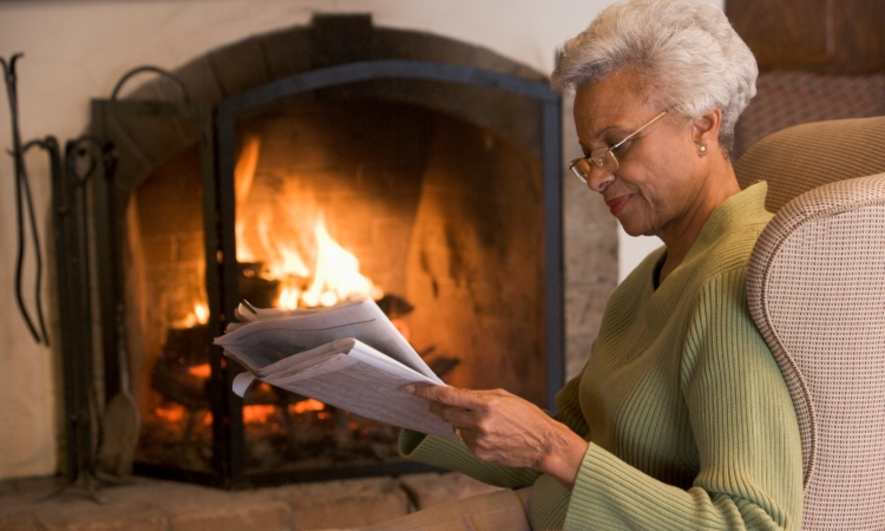
When temperatures drop, it’s nice to cozy up to the fire with a warm beverage in hand. But it’s important to do so safely – whether your fireplace burns wood or gas. Regular safety inspections and cleaning are key for both types of fireplaces.
Rust buildup and cracks can lead to carbon monoxide and smoke leaks in gas units. And in their wood-burning cousins, creosote buildup can combust. Either scenario could cause a chimney fire.
A chimney fire can be scary and dangerous. “It sounds like a freight train in your house,” says Mark Scott, owner of Mark IV Builders in Cabin John, Maryland. If you’ve ever been in that situation, he adds, “you’ll pay a lot more attention after that.”
Safe Home Heating Action Items for Your Fireplace:
- Get your fireplace cleaned and inspected: Before you snuggle in by the dancing flames, make sure your fireplace has been cleaned and inspected, suggests Lipford. “Most people don’t realize their gas unit needs just as much cleaning and inspecting as does a wood-burning stove,” he adds.
- Know your wood: If your fireplace burns wood, it’s important to know what kind to use. If you cut your own wood, choose oak and avoid pine. Let it sit for at least a year before burning to avoid heavy smoke. And don’t throw that old wood from your deck project into the fire as it’s probably been pressure – or creosote – treated. “It’s tempting to use scrap wood, but if you do, you’re burning chemicals within the confines of your home,” says Lipford.
- Get a fuel-friendly fireplace: Is it time to swap out your old fireplace for a new one? Making a good choice can save you money. There are more efficient models – wood, gas and pellet – that use a motor to circulate air behind the firebox and then blow it back out into the room. Check the efficiency rating on your fireplace to get a gauge on whether you’re losing energy.
While a fireplace is great for ambiance, it’s often not the most efficient heating source for your home. Your chimney pulls “so much heat out of your home by exhausting the hot air you’re gaining by using the fireplace,” Lipford says.
3. Be Careful With Portable Heaters
“A portable space heater can potentially save you some energy, even though space heaters are pretty notorious for using a fair amount of electricity,” Lipford says.
If you live in a large space and you’re home alone, or if your family is gathered together in one room, a space heater can give you the freedom to turn down the heat in the rest of the house. It can also be ideal for drafty rooms that don’t heat as evenly as the rest of the house. But an improperly used portable heater can be unsafe.
Safe Home Heating Action Items for Portable Heaters:
- Use only safer space heaters: Make sure all the portable heaters in your home have been tested and certified by an independent laboratory like UL (Underwriters Laboratory), ETL (Intertek) or CSA (Canadian Standards Association). Also, be sure your heaters have an automatic shut-off option that will kick in if the heater is knocked over or hits a higher-than-normal temperature.
- Take steps to avoid heater fires: First, keep a three- to four-foot radius around the heater. Make sure there’s no combustible material, like curtains, blankets or furniture, nearby. Always turn the unit off when you leave the room, whether or not you have pets or young children in the home. Accidents can happen, even if the unit isn’t bumped. Finally, don’t use an extension cord. Instead, plug the cord directly into the wall outlet.