
Electricity buzzes along in the background of your life from morning to night. It charges your phone to keep you connected, runs your appliances so you can whip up a smoothie or scramble an egg, and provides light to read by (or power to binge your favorite series!) after the sun sets.
But electricity also comes with risks: It’s the third leading cause of home fires in the United States. Every year, there are 51,000 electrical fires, along with 1,400 injuries and 500 deaths in this country, according to the Electrical Safety Foundation International. And these fires are costly, causing over $1.3 billion in property damage a year.
The good news is that many mishaps can be avoided by learning and practicing a few electrical safety basics. It’s important to know the warning signs of electrical danger as well as electrical safety do’s and don’ts. Read on to spark ideas for how to keep your home and life humming along safely.
Watch for These Electrical Warning Signs
Flickering lights. Lights that randomly flicker on and off may seem like a scene from a scary movie, but the danger is real. The issue could be as simple as a loose light bulb. Other common causes of flickering lights include corroded sockets, aging light switches or voltage fluctuations that may indicate a more serious problem with the electrical system in your house. For example, your electrical panel may not have enough capacity to handle your needs. Most newer homes have panels with a capacity of at least 200 amps, but that’s not always the case for older ones that haven’t had an electrical upgrade.
Old wiring. Homes built before the mid-1900s may have knob-and-tube wiring, which wasn’t designed to handle the electrical demands of modern appliances. Older wiring may be more likely to have exposed live wires, which can pose a risk of fire and electric shock. Knob-and-tube systems also lack grounding, a modern safety feature that helps prevent burns and shocks. If you suspect you have old wiring in your home, contact a licensed electrician for an inspection, and consider getting a quote to have your home rewired.
Fuse box problems. While newer homes have breaker boxes with switches that can be flipped on and off, many older homes have a fuse box: an older technology that can present problems. Fuse boxes may not be able to handle the electrical needs of modern homes, and fuses may blow and need to be replaced when a circuit gets overloaded. Some homeowners mistakenly use a fuse of the wrong size, which can cause electrical surges. If you have a fuse box, make sure you’re using the correct fuse size and consider upgrading to a breaker box.
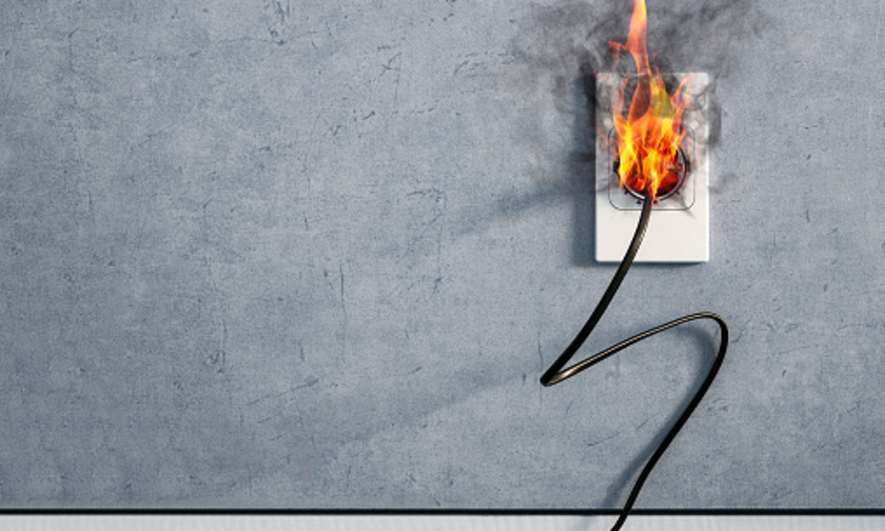
Warm or sparking outlet. If you notice that a light switch or electrical outlet feels warm to the touch or an outlet is discolored or emits sparks, this signals a problem and possible fire hazard. Turn off the switch (if it’s on) and contact an electrician to diagnose and fix the problem right away.
Problems with appliances. If an appliance repeatedly blows a fuse or trips a circuit breaker; if you feel a shock while using it; or you get a whiff of melting plastic or a burning smell—these are danger signs. Stop using the appliance immediately and contact an electrician. You may need to replace the appliance or upgrade your electrical system.