Step 3. Use Natural Light
The rays from the sun can provide an energizing light source that’s impossible to mimic with any lamp or light bulb. If your windows face east or west, then you should definitely consider placing your workstation on a north or south wall. And make sure your windows have good curtains or light filtering shades that you can draw to block any distracting or headache-inducing glare from the sun in the morning or afternoon hours.
It’s important to feel comfortable in your new space. So if your office chair or desk causes you any pain or discomfort in your back, legs or wrists, look into ergonomic solutions. Ideally, the top of your computer monitor should be level with your eyebrows while you’re sitting down. This will help ensure that you are not tilting your head down or up and straining your neck.
Deciding on a Desk
Start by making sure you have a desk that fits you. A flat surface that sits 28 to 30 inches above the ground
works for most people. But if you’re looking for a stylish and comfortable desk that doesn’t require you to spend a lot, check out these
DIY desk ideas. For example, a long table you already own or even a door placed across two short bookcases or end tables could work. Another option is to make a desk from a piece of wood and four table legs, all of which are available at any home improvement store.
You can personalize your desk and add a pop of color to your office by painting it in the color of your choice. To make your work surface ergonomically correct, consider adding a pullout keyboard tray to your desk (or getting a desk that has one) so you can type comfortably and keep your wrists in a neutral position. This may
reduce your risk of carpal tunnel syndrome and other injuries that could cause pain.
Choosing a Chair
Also, consider a chair with wheels on the bottom. This can help you move closer to and away from your desk and prevent hunching forward. Your feet should be able to rest flat on the floor, and your knees should be bent at 90° angles when you’re sitting in your chair. For safety purposes, make sure the flooring underneath the chair allows for easy movement. For example, a throw rug under your desk may become a bother when your chair keeps getting hung up on the corner every time you move.
Your chair should also have armrests. If you relax your shoulders, the armrests should be at a low level. This way, your forearms can lie flat on the armrests and your shoulders can relax. Your keyboard and desk should be roughly the same height from the ground as the tops of your armrests.
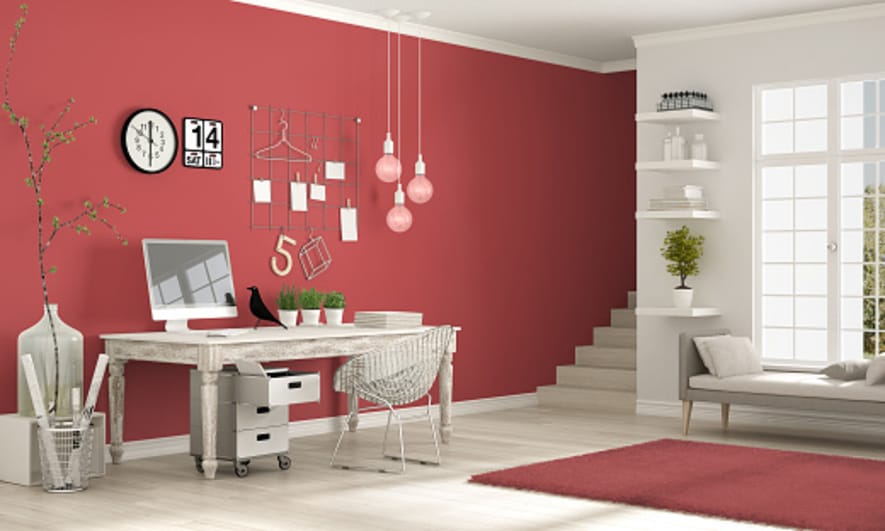
Hanging art can transform your walls by adding texture and depth. Adding bright hues to your space can help you feel more creative. You can also incorporate neutral tones accompanied by an accent color can help you feel more relaxed.
It’s always a good idea to pick colorful pieces of art to help add some life and personality to your office space. If you don’t have the funds to invest in costly art right now, consider downloadable art from Etsy and other sellers that can be printed at your local copy shop and put in inexpensive frames.
Another easy way to liven up your space is to create a family photo gallery on a cork board or stencil an inspirational quote on your wall in large letters. There are plenty of ways to add pizzazz and personality to office walls without breaking the bank.
You can also add a few throw pillows to deepen the texture of the room and highlight accent colors. A throw rug or window treatment can also help to pull the room together. Accessories that express your personality are a great way to connect with the space and make it your own.