
Old Man Winter has a nasty habit of blowing into town when we least expect him, which means we may not always be able to prepare for a storm before it strikes. But even after the snow has stopped falling, there are still steps you can take to stay safe and prevent further damage.
Look After Yourself and Your Loved Ones
If you or someone you’re with needs medical care during or after a winter storm, you can access the Red Cross’s First Aid app for advice while you wait for medical professionals to arrive. It offers interactive guidance on how to deal with many emergency situations, which can help you make informed decisions to help either yourself or the person you’re looking after. If you can download it, do so. It comes preloaded with content, so if your internet connection goes out, you’ll still be able to get the help you need.
If there’s a local evacuation or widespread damage, the Federal Emergency Management Agency (FEMA) can help you decide on next steps. Visit their website or download their app to get access to:
- Maps
- Directions to disaster recovery centers
- A portal where you can apply for federal disaster assistance, if necessary.
Clear Ice and Snow From Your Roof
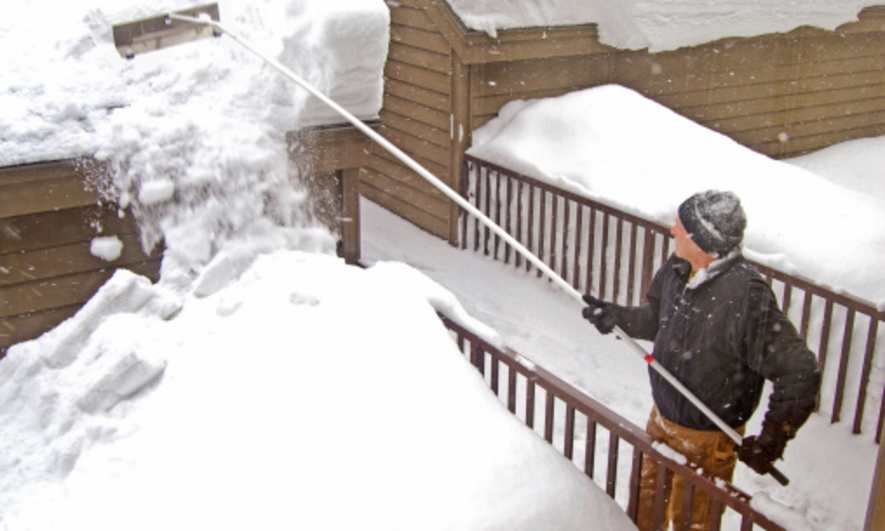
After a winter storm, snow and ice can place significant strain on your roof, gutters and eaves. It’s important to treat this snow before any damage occurs. You can use a specially-made roof rake from the ground to clear snow from the lower three to six feet of your roof. This is where ice dams are most likely to form and damage your home. (Note: Do not scale your roof, especially in wet or icy conditions!)
If you don’t have a roof rake, avoid the temptation to use the garden rake or the shovel that you have lying around your shed. Asphalt shingles, in particular, become more brittle when the weather turns cold. A blow from one of those blunt tools can split or shatter the shingles, which can lead to more extensive (and costly) damage than the storm alone.
If ice dams have formed and you’re able to safely reach your roof, fill a few nylon stockings with calcium chloride ice melt. Place the packets across the ice dam and the gutter so that a series of channels melts through the ice. By thawing the ice dams, you may be able to avoid leaks that could lead to ceiling and wall damage.
Shovel Snow to Keep Your Air Clean
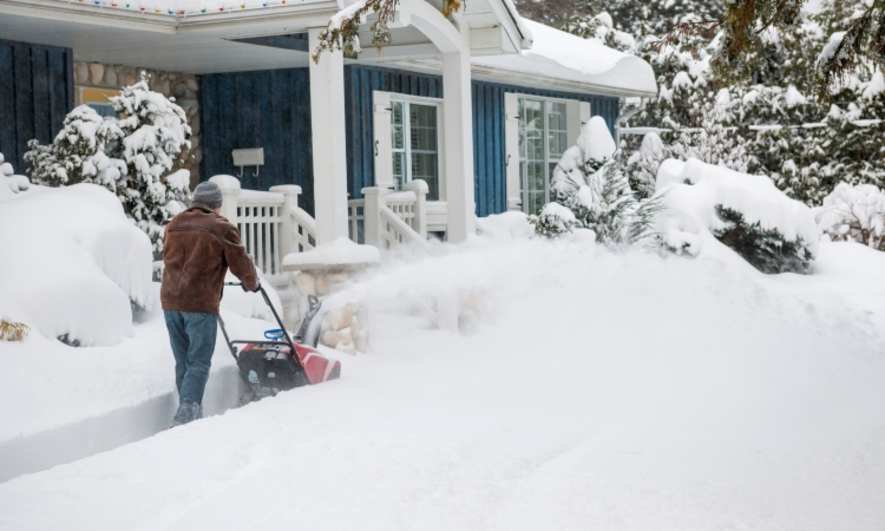
It’s tempting to snuggle up in front of a fire on a snow day. But before you do, be sure your chimney isn’t blocked, warns Peter Duncanson, director of business operations with ServiceMaster Restore, one of the largest disaster restoration companies in the country.
“That snow build-up alongside and on top of a home can block heating vents and lead to carbon monoxide build-up inside,” he explains. Before you light a fire, be sure that your chimney flue, as well as your roof vents and fresh air intake pipes—those white plastic pipes that come out the side of your home—are free from snow.
 When water in pipes freezes, it also expands, which can lead to a crack or a break. Unfortunately, most homeowners don’t realize that they’ve experienced damage until after an inconvenient and often expensive leak crops up. The good news, says Duncanson, is that homeowners often have a window of time during which they can act to mitigate that potential damage.
 If you’re like many people, you may still have to drive to work after a winter storm hits. To stay safe, you’ll want to take the right precautions. You should also prepare to encounter unexpected ice, even if the plows have already come through. It’s a good idea to drive slowly and make sure there is at least