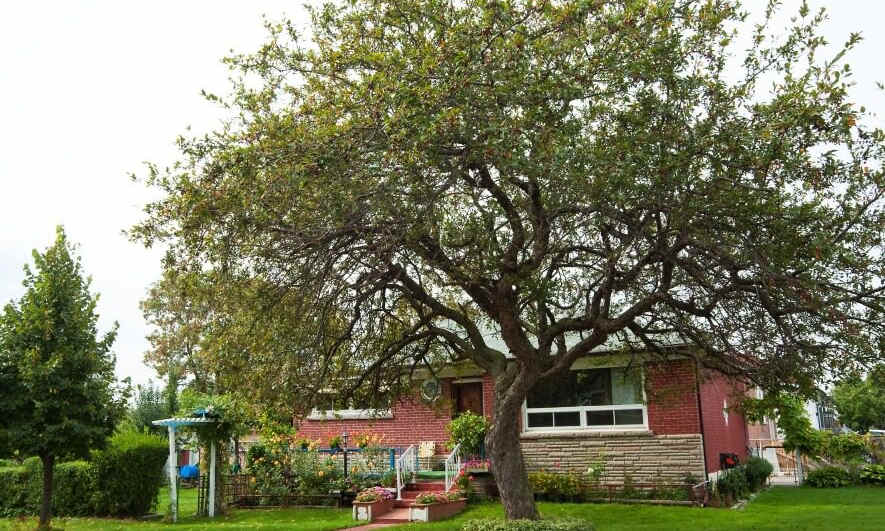
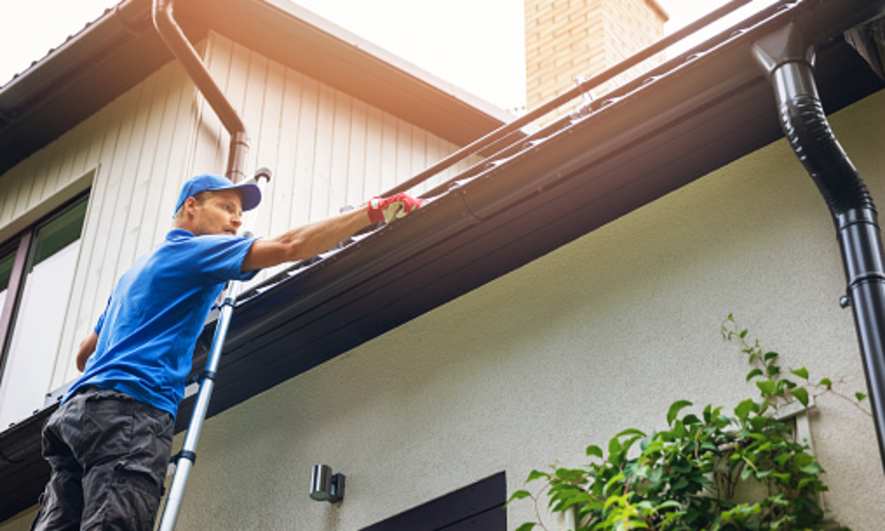
Although there are some tasks specific to the material of your roof, all homeowners should regularly sweep, blow or wash debris off their roof. Leaves, sticks and trash that accumulates on your roof can cause a variety of problems. This includes allowing algae to grow, damaging shingles or clogging your gutters. You should also trim tree branches away from your roof to minimize the possibility branches causing damage during a storm and of animals getting into your house.
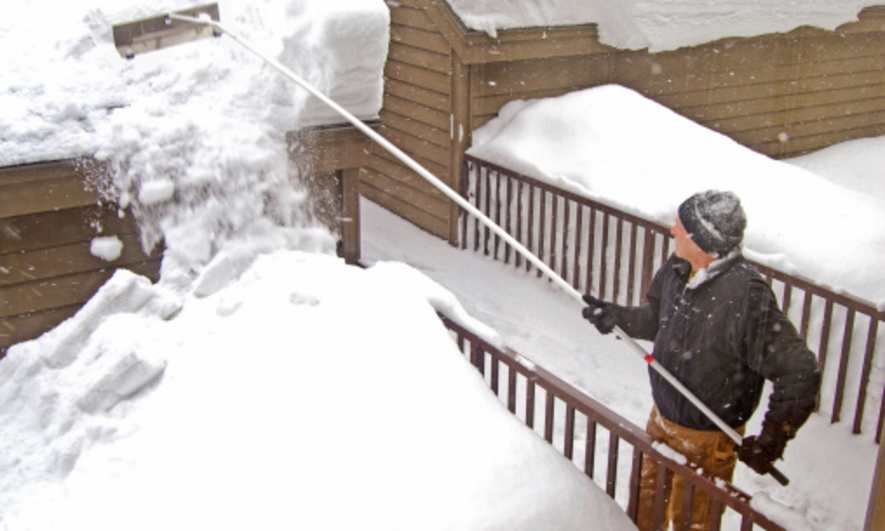
If you live in an area that gets snow, watch out for too much
snow accumulating on your roof. To avoid a roof collapse, buy a roof rake and pull some of the snow off your roof.
Some tasks are specific to your roof type:
- Metal Roof: Check for rust and use a wire brush to prime and paint the rusted area. Keeping your gutters clean is particularly important for a metal roof, which needs to dry after rain or snow to avoid corrosion.
- Asphalt Roof: Remove debris at least three times per year and repair or replace loose or damaged shingles immediately. Make sure tree branches aren’t scraping the roof, which could cause additional wear and tear on the asphalt shingles. Check to see if any of your shingles are curling or buckling, which could mean they need to be replaced.
- Slate Tile Roof: Schedule an annual inspection each spring to look for broken or slipped tiles and repair them.
- Wood Roof: Use a garden house to wash away debris and check for moss, mildew and mold. If you find mold, scrape it away. Then clean with a mix of one quart of bleach, one ounce of detergent and three quarts of warm water.
- Clay Tile Roof: Clay tiles can crack or leak, so inspect them annually for leaks or broken tiles. Do an inspection with binoculars and a ladder rather than walking on the roof. Walking could be dangerous and cause more cracks. Use a power washer with warm water and mild dish detergent to clean the roof, but use low pressure to avoid cracking the tiles.
Remember, if you are uncomfortable doing any of these tasks, call a repair person to help with this.
In addition to checking the roof itself, you should also:
- Investigate the flashing, which is the material that seals your chimney to the roof. Also check mortar or caulk, which is used to seal roof joints, for cracks or deterioration that could allow water into your home or allow moss or algae to grow on your roof. If you find signs of deterioration, remove the debris and clean the area before resealing.
- Check for moss or algae when you inspect your roof. If you find some, install (or hire someone to do this) zinc or lead control strips. You can make strips yourself or buy them and tuck them between your shingles to prevent moss and algae growing back.
- Look at your ceiling and attic interior for dark or damp spots or mold. Then try to identify where the leak has occurred. Check your attic to see if you can see any daylight filtering through from the roof. A professional roof inspection and repair is far less costly than waiting until the leak gets worse.
According to the National Roof Certification and Inspection Association, 39 percent of all homeowner insurance claims are for roof issues. You should check your
homeowners insurance policy annually to make sure your coverage is up to date and that serious roof damage is covered.
Although a roof repair or replacement required because of storm damage is generally covered, a roof replacement required simply because of the age of your roof and normal wear and tear usually won’t be covered. However, if you have interior damage because of your aging roof, such as
water damage from a leaky roof, the costs of repairing that damage may be covered even if you must pay for your own roof replacement.
Roof Value Schedule Option
When you review your homeowner’s insurance policy to check your roof coverage, you can check to see whether you have specific deductibles for wind, hail or hurricane damage, which could vary by state. If you do not have a specific deductible for wind, hail or hurricane damage your all peril policy deductible would apply. Typically roofs are covered under the dwelling portion of your policy.
Another option is the “Roof Value Schedule” endorsement, which is available from The Hartford. The RVS endorsement provides an upfront schedule of the percentage of replacement cost that The Hartford will cover, which depends on the age and materials of your roof. The benefit of the RVS schedule for consumers is transparency: you’ll know how much you can expect to receive if you have a covered roof loss. The coverage will gradually reduce over time based on the roof’s age and material.
The RVS endorsement applies only to damage caused by windstorm or hail. If you have an RVS endorsement and your roof is damaged by a fire, you’ll have your full repair or replacement costs covered – minus only your deductible.
When you evaluate your homeowner’s insurance, be sure to estimate your potential out-of-pocket costs and your other financial needs to see if an RVS could be helpful to your individual circumstances. Your insurance company can provide a personalized discussion about your roof coverage based on the age and materials of your roof as well as the risk profile for your area.
Hopefully, between routine maintenance and regular inspections, the roof over your head will protect you and your home for its full expected lifespan and beyond. The more you know about your roof and how to care for it, the more likely it is to provide you with lasting protection.