
Water damage is not always caused by storms or flooding. In fact, many of the most common and costly incidents come from inside the home in the form of leaky pipes, broken appliances or clogged HVAC lines. The good news? Most of these are preventable.
Taking simple steps to prevent water damage—like inspecting appliances and installing leak detectors—can save you thousands in repairs and insurance claims. And if damage does occur, knowing how to respond quickly and correctly helps protect your home, your belongings and your peace of mind.
Here’s how you can stay ahead of non-weather water damage with smart habits, simple tools and some planning.
A Deep Dive on Water Non-Weather Damage
Water non-weather damage is exactly what it sounds like. It’s usually caused by:
- Plumbing leaks (under sinks, behind walls)
- Appliance failures (washing machines, water heaters)
- HVAC issues (clogged condensate lines)
- Sewer backups and sump pump failures
Non-weather water damage can lead to thousands of dollars in repair costs, temporary displacement, and long-term property devaluation for homeowners. For insurers, water damage events can lead to increased claim activity and resource demands, which is why prevention and early action are so important—for everyone’s peace of mind and protection.
Non-Weather Water Damage Prevention Tips That Work
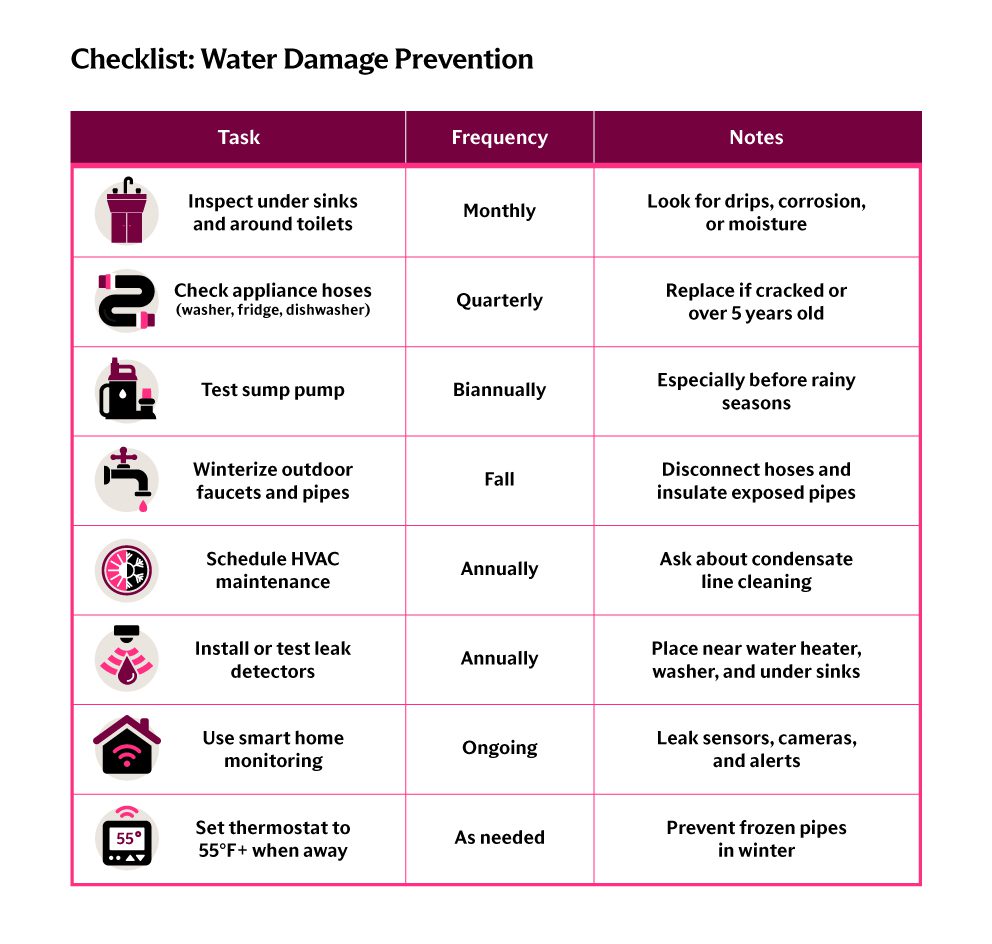
- Inspect regularly – check under sinks, around toilets and behind appliances, including refrigerator supply lines and icemaker water lines
- Upgrade smart – install leak detectors and automatic shut-off valves
- Maintain seasonally – winterize pipes, disconnect outdoor hoses and keep your thermostat at safe temperatures when away
- Use tech – smart home tools like leak alarms and cameras can alert you early
- Plan ahead – use a home maintenance calendar or subscribe to a service plan for routine HVAC and plumbing checks
Print this checklist and keep it somewhere handy, like on your fridge or in your garage, for more frequent reminders.
More Ways to Keep Dry: Staying Ahead of Water Non-Weather Issues
Resources for Home Safety Checks
Homeowners may not realize that some local fire departments offer community outreach programs that include home safety visits, especially for older adults or high-risk households. Check your city or county fire department’s website.
Proactive Inspections and Repairs
Hiring a contractor for inspections and preventative maintenance can help prevent costly mistakes and ensure your home is safe and secure.