Technology for Managing Health Information
Apps can help you safely and securely manage your loved one’s health information, such as insurance coverage, medical files, and medications — even emergency response, organ donation, and advance directive information.
If you
share caregiving duties with others, such cloud-based apps can allow you to share access to your loved one’s information and sync events on your calendars to make sure everything is covered. Consider these:
- CareZone(free) allows you to store medication information, insurance information and online account credentials; document symptoms; keep track of appointments; access timely tips and relevant health information; and share securely with others.
- FollowMyHealth(free) allows you to communicate securely with your loved one’s healthcare team, schedule appointments, view test and lab results, request prescription refills, and pay outstanding bills.
- MyDirectives(free) allows you to record and share your (or your loved one’s) organ donation status and healthcare directives information in case of an emergency.
Patient Monitoring Apps
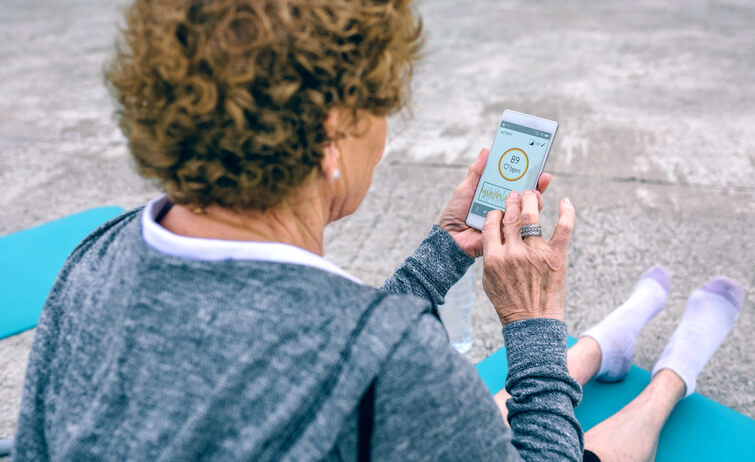
As the caregiver, you have to get away from time to time. When you do, mobile apps can provide round-the-clock patient monitoring.
- eCare21 (free) is used in conjunction with wireless monitoring devices, such as your loved one’s smart phone, allowing you to track their glucose, heart rate, calorie intake, medications, activity, and sleep from wherever you are.
Medication Monitoring Apps
Similarly, a number of apps allow you to stay posted on whether your mom or dad has taken medications at the right time and in the right dosage.
- Medisafe (free) tracks medications and reminds your loved ones to take them at the right time and in the right dosage.
- PillDrill (free) will also remind your parent when to take their meds and notify you when they’ve done so. It’s an easy way to keep tabs when you can’t be with them all the time.
Location Sharing Technology
GPS technology on your smartphone or mobile device allows you to keep up with family members (and allows them to keep up with you).
- Life360 allows users to check in and see where their loved ones are located at any time of day or night, helping increase both your peace of mind and your family’s ease of communicating with each other.
More than 90% of adults ages 50 and up own a computer or laptop, and 70% own a smartphone,
according to AARP research. If you have one of these devices, you also have access to a growing assortment of emerging technologies focused on personal safety and wellness.
Personal Safety Technology
When you don’t have to worry about personal safety, you can be free to shop, travel, visit friends and do whatever you like without fear. These apps and technologies allow you to stay active, do the things you enjoy, and feel secure.
Emergency Alert Apps
Apps like
Noonlight (formerly SafeTrek) allow users to discreetly call for help if they’re in a situation that feels unsafe. When you hit the alert button, you have a short amount of time to enter your PIN to show you’re safe. If you don’t enter your PIN, local police will be alerted and given your location.
Home Security Technology
A number of apps and technologies are available to help users
keep their homes safe. Beyond the standard alarm systems, there are affordable security cameras like
Ring.com, which offer companion apps to allow you to see who’s at your front door from wherever you are — whether inside your home or away on vacation.
Safe Driving Technology
As we age, it can be increasingly important to monitor our driving habits for safety. Telematics is a branch of technology that uses GPS and onboard diagnostics to gather information about a driver’s on-road activity, such as:
- braking and cornering speed or acceleration
- the amount of time spent behind the wheel
- the time of day when driving
This information assesses your driving habits — and you may qualify for auto insurance policy discounts because of your safe driving practices.

 The
The  If you’re caring for an aging parent or other relative while continuing to manage your own household, career, and life, technology may help you find balance and keep all your bases covered.