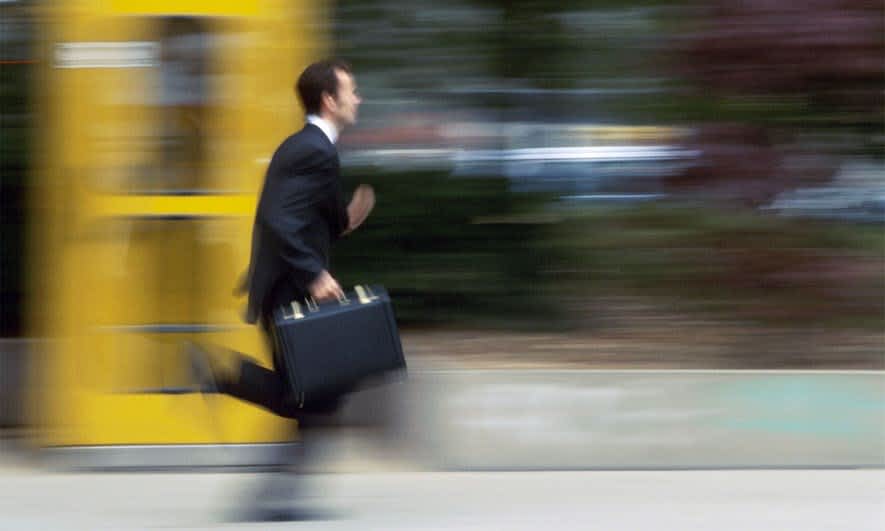

Whether it’s bad traffic, oversleeping or caring for a sick pet, employees offer up lots of different excuses when they show up late for work. As the manager, you may overlook it the first time. But what if it becomes a pattern?
One day, it’s 10 minutes late. The next, it’s 30 or 50 minutes.
Employee lateness is a widespread problem that managers and business owners often have to deal with. A 2023 Harvard Business School study analyzing more than 25 million employee shifts found that lateness and absenteeism were widespread, occurring in roughly 16% of all shifts, and that even small increases in lateness had measurable impacts on productivity and sales.
Employees who rarely arrive late to work should probably be given the benefit of the doubt — as there are valid reasons for being late. (Tires really do go flat!) But it’s generally in a manager’s best interest to confront employees who are frequently or always late.
Late employees can reduce business productivity, especially if they aren’t making up for lost work time at the end of their shifts. Moreover, employee tardiness hurts the morale and work ethic of other employees who might resent that the late arrivers aren’t getting called out or disciplined for their lateness. It might even encourage other employees to start showing up late to work if they see no consequence for the bad behavior.
But don’t despair. Businesses have many opportunities to boost the odds that employees will show up when they’re supposed to. So if you want to learn more about how to deal with employee tardiness in the workplace and discourage employees from arriving late, keep reading.
Use a time clock.
Wondering how to motivate employees to come to work on time? It may seem old-fashioned or like you’re micromanaging, but a time clock holds people accountable. Employees will feel more compelled to show up on time if they know they’re being monitored with a time-tracking system or time clock. Time-tracking with a time clock or virtual program can help serve as a tool to record when employees check in and out for the workday. Time clocks can also help inform your employees about when they come and go.
Companies can buy a physical time clock that requires employees to punch in and out each day or, if the employees work at computers, time-tracking software can be installed that records when employees log in and out of their workstation.