
“I have just been to the dentist and need not return for another six months! Is it not the most beautiful thought?” These words came from the mouth of beloved mystery writer Agatha Christie, who clearly did not enjoy her time in the chair.
Maybe that’s you, or maybe you’re among the small percentage of people who enjoy going to the dentist—for reasons like the feeling of fresh, clean teeth or the free bag of dental supplies.
But the main reason Americans avoid seeing the dentist isn’t about fear, it’s about finances, per this ADA and Health Policy Institute report on oral health.
Cost is what keeps 59% of Americans from regular dental visits (regardless of age, income or source of dental benefits), followed by fear at 22%. And as Medicare does not cover routine dental care, the cost concern is valid.
But here’s the good news: There are a number of practical, low-cost things you can do to maintain oral health in your 50s, 60s and beyond.
Teeth Health Q&A With Dental Hygienist Julie Fritz
Julie Fritz, RDH, is a dental hygienist at Royal Oak Dental Group in High Point, North Carolina. Here, she offers interesting insights and practical tips for a healthy smile.
What Changes Happen Naturally in Your Teeth Over Time?
Depending on how your teeth come together, you may have natural wear patterns that occur from grinding and clenching your teeth, Fritz explains. You may also find that as your teeth age, small hairline fractures can occur, and those become susceptible to decay and breakage, she says.
What Dental Health Screenings and Cleanings Are the Most Important?
It’s important to have a teeth cleaning and exam appointment every six months, Fritz says. “Dental x-rays are taken at these appointments to help us see between the teeth so we can look for decay (cavities) and to monitor for build-up and bone loss, which occurs underneath the gums.”
If you have healthy teeth, gums and bone, a cleaning every six months is best, says Fritz. “Your dental practitioner will let you know if you need to increase the frequency of these appointments to maintain the health of your mouth.”
What Changes or Concerns Should You Keep an Eye Out For and When Should You Call a Provider About Them?
“Pain is a pretty good indication that something isn’t right in your mouth,” says Fritz.
You may experience this as hot or cold sensitivity, discomfort when biting, or even a dull ache that occurs out of nowhere. Bleeding is a sign of active bacteria and may indicate changes to the health of your gums and bone. These are all good reasons to see your dentist, Fritz advises.
What Are the Most Important Things You Can Do To Foster Teeth Health as You Age?
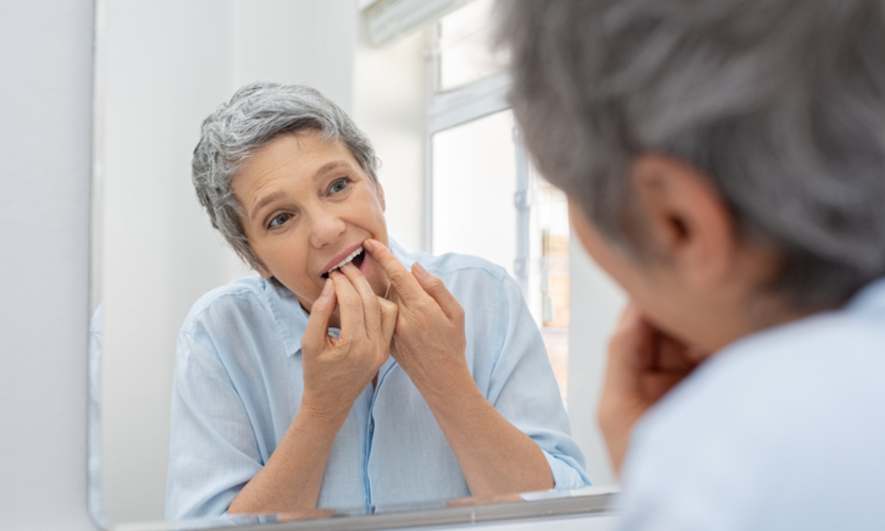
Daily brushing is a given. Regular cleanings should also be part of your oral health routine. But perhaps the simplest and most effective way to maintain your teeth as you age? Fritz says it in one word (though in all caps for emphasis!): FLOSS!