Workers’ Compensation Insurance — Delaware

Key Takeaways

  • Delaware requires most businesses with one or more employees, including part-time and seasonal employees, to carry workers’ compensation insurance.
  • The Hartford’s small business customers in Delaware pay an average of $911 per year, or about $76 per month, for workers’ compensation insurance.**
  • Farm workers, independent contractors and certain business owners may be exempt.
  • Injured employees may receive medical benefits and wage replacement equal to 66.6% of their average weekly wage.
  • Employers must file a First Report of Injury within 10 days of being notified of a work-related injury or illness.

Workers’ Compensation Insurance in Delaware

Delaware requires most employers to have workers’ compensation insurance. This coverage can help pay for medical expenses and replace a portion of lost wages if an employee is injured or becomes ill due to their job duties. Most businesses with one or more employees must carry coverage, and employers cannot pass the cost of premiums on to employees.
 
The Hartford has spent more than 200 years helping small business owners manage workplace risks and keep their operations moving forward. You can learn how workers' compensation insurance works or start a workers' compensation insurance quote to find out what you might pay for coverage.
 

Why You Might Need Delaware Workers’ Comp Insurance

Workers' comp does two jobs at once for Delaware employers: It gives injured employees a clear path to medical care and income support, and it keeps your business on the right side of state law. Carrying a policy helps you handle costs and obligations like:
 
  • Workplace injury protection: Gives employees access to benefits after a work-related injury or illness without having to prove fault.
  • Medical care: Helps pay for hospital treatment, doctor visits and other medical services tied to the injury.
  • Wage replacement: Helps cover a portion of lost income while an injured employee is unable to work during recovery.
  • Employer liability protection: Can help protect your business if it's sued by an employee or their family over a work-related injury or illness.
  • State compliance: Helps keep your business aligned with Delaware's coverage requirements, with fines for uninsured operations starting at $250 per day.
  • Death and dependent benefits: Provides benefits to a worker's family if a workplace injury results in death.

Is Workers' Compensation Insurance Required in Delaware?

Yes. Delaware workers' compensation requirements apply to any business with one or more employees, and coverage must be active before the first day of work. The Office of Workers' Compensation within the Delaware Department of Labor administers the rule.
 
A few specifics shape how the rule applies:
 
  • One-employee threshold: Coverage starts with your first hire, with no minimum payroll.
  • Worker classifications: Full-time, part-time, seasonal and temporary employees all count.
  • Agricultural worker exception: Farm workers fall outside the statute, though farm employers can opt in.
  • Construction industry rule: Workers in construction cannot be classified as independent contractors to avoid coverage.
  • Out-of-state employers: Businesses based elsewhere need a Delaware policy or endorsement covering Delaware work.

Who Is Exempt From Workers’ Compensation in Delaware?

Delaware exempts a small set of workers and business owners from mandatory coverage, though most workers' comp exemptions require formal filings or specific classifications. Misclassifying someone to skip coverage can trigger fines and the collection of back premiums.
 
Delaware's exemption categories include:
 
  • Agricultural workers: Farm employees are exempt, though farm employers can opt in.
  • Independent contractors: True 1099 workers fall outside the rule, but construction businesses cannot use this classification to bypass coverage.
  • Sole proprietors: Owners without employees are not automatically included but can elect coverage.
  • Partners: Business partners are excluded by default and can opt in for personal protection.
  • Corporate officers and LLC members: Up to eight corporate officers or eight LLC members may elect to exempt themselves from coverage through a written agreement.

What Happens if You Don’t Have Workers’ Compensation in Delaware?

Operating without workers' compensation in Delaware exposes your business to civil fines, personal financial liability for any injured employee's costs and possible suspension of operations until you secure coverage.
Consequences include:1
 
  • Fines based on unpaid premiums: Penalties can reach three times the premiums you would have paid during the uninsured period.
  • Daily penalties: After notice from the Department of Labor, fines run $10 per employee per day, with a $250 daily minimum.
  • Personal liability: Owners can be held personally responsible for an injured employee's medical bills and lost wages.
  • Business shutdown: The Department of Labor can seek a court injunction to suspend operations.
  • First Report fines: Missing the 10-day filing window carries a separate $100 to $250 fine per incident.2
  • Criminal exposure: Willful or repeated refusal to carry coverage can lead to criminal penalties.3

Who Might Need Workers’ Compensation Insurance in Delaware?

Almost every Delaware employer with at least one employee needs a workers' compensation policy before that employee’s first day. The requirement applies across industries and worker classifications.
 
Industries that might need coverage in Delaware include:
 
  • Construction and contracting
  • Retail
  • Restaurants and food service
  • Healthcare
  • Manufacturing
  • Professional services
 

What Does Workers’ Compensation Insurance in Delaware Cover?

A Delaware workers' compensation policy pays for medical treatment, partial wage replacement and related benefits when a job injury or illness happens. Workers' compensation coverage applies whether the injury is sudden or develops over time.

Coverage Type What It Helps Cover
Medical Treatment Pays for doctor visits, hospital care, surgery and prescriptions tied to the injury.
Lost Wages Provides partial wage replacement during recovery.
Rehabilitation Services Helps cover follow-up treatment, physical therapy and other recovery services.
Repetitive Injuries Covers conditions like carpal tunnel and other repetitive stress injuries.
Disability Benefits Pays compensation for permanent partial or permanent total disability.
Disfigurement Benefits Provides up to 150 weeks of compensation for serious and permanent disfigurement.
Death Benefits Pays benefits to the family of a worker who dies from a job-related injury or illness.
Employer Liability Helps protect your business if it's sued by an employee or their family over a covered workplace injury or illness.
For example, Delaware workers’ compensation can help if you have an employee who:
 
  • Strains her back while lifting a box and needs to go to an urgent care center.
  • Has severe burns from spilling boiling water and needs physical therapy.
  • Develops carpal tunnel syndrome after performing repetitive computer work over time and needs ongoing treatment.

What Benefits Does Delaware Workers’ Compensation Insurance Provide?

Delaware workers' compensation provides wage replacement and other state-regulated payments when a job-related injury or illness keeps an employee from working. Amounts and durations are set by state law:4
 
  • Wage replacement rate: Employees receive 66.6% of their average weekly wage during total disability, with annual maximums and minimums set by the Secretary of Labor.
  • Waiting period: No wage benefits for the first three days. If disability lasts seven days or longer, payment is retroactive to day one.
  • Partial disability benefits: Employees returning at reduced pay can receive two-thirds of the wage difference for up to 300 weeks.
  • Permanent impairment duration: Delaware uses a state schedule to determine how long benefits are paid for permanent impairments. The number of weeks varies based on the type and severity of the injury.
  • Disfigurement benefits: Workers can petition one year post-accident for up to 150 weeks of payments at 66.6% of wages.
  • Ongoing medical care: All reasonable and necessary treatment is covered with no time cap.

How Does Delaware Workers’ Compensation Work?

Delaware workers' compensation runs through a structured claims process, with the Industrial Accident Board stepping in only when disputes arise. The system moves injured employees from notification to benefits without requiring proof of fault.
 
A claim moves through five steps:
 
  1. Injury occurs: A work-related injury or illness happens on the job.
  2. Employee reports the injury: The worker notifies the employer in writing within 90 days, or six months for an occupational illness.
  3. Employer files the First Report: The employer submits a First Report of Occupational Injury or Disease to its carrier and the state within 10 days.
  4. Insurance company reviews the claim: The insurance company reviews the claim and contacts the employee to acknowledge or deny coverage.
  5. Benefits begin or disputes go to hearing: Acknowledged claims trigger payments. Denied claims can go to the Industrial Accident Board, which may lead to mediation or a workers' comp settlement.
Existing policyholders can file a workers' compensation claim directly with The Hartford.
 

How Much Does Delaware Workers’ Comp Insurance Cost?

Workers' compensation costs in Delaware vary based on your business, number of employees and claims record.
Key cost factors include:
 
  • Industry classification: The Delaware Compensation Rating Bureau (DCRB) assigns a class code to each role, setting the base rate.
  • Payroll: Premiums are calculated per $100 of payroll, so larger payrolls drive larger premiums.
  • Claims history: Frequent or severe past claims raise your rate. A clean record lowers it.
  • Experience modification factor: This multiplier compares your claims to similar businesses, with 1.0 as the baseline.
  • Coverage limits: Higher employer liability limits and broader terms add to premium.
  • Geographic location: Local injury data and medical costs influence rates across the state.
Workers’ Comp Costs Vary by Business: Workers’ compensation insurance costs in Delaware depend on various factors, so there’s no one-size-fits-all rate. The best way to find out your workers’ comp insurance cost is to get a quote.
 

How Are Workers’ Compensation Insurance Rates Calculated in Delaware?

Insurance companies can use different factors to determine workers’ compensation rates in Delaware, such as payroll and class codes.
 
Other factors can include:
 
  • Claims history
  • Years in business
  • Location
  • Risk mitigation strategies or programs
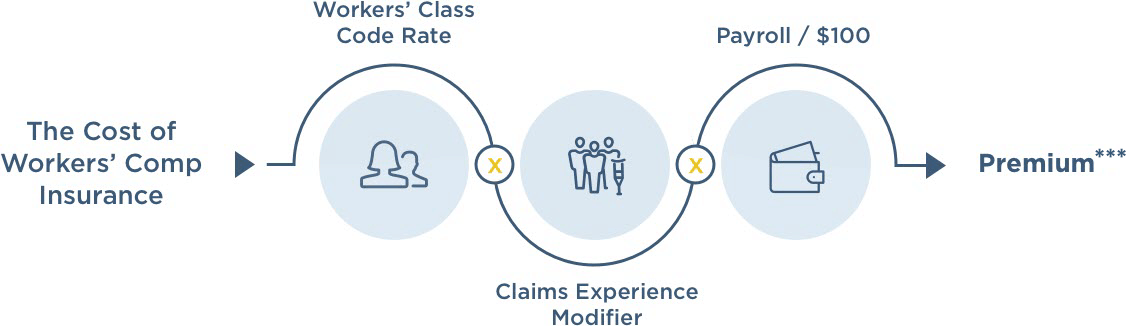
You can use this formula to help estimate your workers’ comp rate:
 
Workmen's Compensation Calculation
Here's how each component shapes your premium:
 
  • Classification codes: The DCRB assigns each role a workers' compensation class code based on industry and job risk, setting the base rate.
  • Payroll: Premiums are calculated per $100 of payroll, so larger payrolls drive larger premiums.
  • Experience modification factor: This multiplier reflects your claims history versus similar businesses. Fewer claims lower your rate.

What Are Delaware’s Workers’ Compensation Insurance Rules for Employers?

Delaware employers must follow specific reporting and recordkeeping requirements under the state's workers' compensation laws. These responsibilities apply whether employees work on-site or remotely.
 
These rules include:
 
  • Employees must report a workplace injury within 90 days, or six months for an occupational illness.
  • Employers must file a First Report of Occupational Injury or Disease within 10 days of being notified.
  • Reports go to the Office of Workers' Compensation and the employer's carrier.
  • The Industrial Accident Board hears disputes and conducts formal hearings.
  • Employees can choose any certified provider under the Healthcare Payment System (HCPS).
  • Employers must keep a record of all employee injuries.
  • Remote employees are covered if they are injured from their work.
 

Why Trust The Hartford for Workers’ Compensation Insurance in Delaware

For more than 200 years, The Hartford has helped small businesses protect what they’ve built. Our Delaware workers’ compensation insurance is designed to help you support your employees after a workplace injury or illness — while making claims easier to manage.
 
Here’s what small business owners in Delaware get with The Hartford:

Care and Support for Injured Employees

Employees have access to a nationwide network of over 1 million experienced providers, plus nurse case managers who help coordinate care and support recovery.

Convenient Prescription Coverage

Employees can fill prescriptions at thousands of pharmacies nationwide, often with little or no out-of-pocket costs.

Tools To Help You Manage Claims

Our digital platform, My Workers’ Comp Connection, helps keep you and your employees informed throughout the claims process.

Billing and Payment Flexibility

With payroll billing, your premium is based on your actual payroll, not an estimate, which can help make payments more accurate.
 
Whether you’re hiring your first employee or growing your team, our specialists can help you stay compliant with Delaware workers’ comp laws while supporting your people when they need it most.
small business employee protected by delaware workers compensation

Get Delaware Workers’ Compensation Insurance You Can Trust

Protect your employees and help keep your business compliant with Delaware workers’ compensation requirements. Get a quote today and see coverage options designed for your business.
 

Frequently Asked Questions About Workers’ Compensation Insurance in Delaware

It depends on whether the LLC has employees. A single-member LLC with no employees doesn't have to carry coverage, though the owner can opt in. Coverage becomes mandatory once the LLC hires its first employee.
Yes. Employers can apply to self-insure with approval from the Delaware Department of Labor, but they must meet strict financial requirements.
Yes. Delaware workers’ comp rules cover full-time, part-time, seasonal and temporary employees from their first day on the job.
Benefit duration depends on the type and severity of the injury or illness. Temporary disability benefits run until recovery or maximum medical improvement, while permanent impairment and death benefits follow set durations under state law.
You can buy a policy from any private insurance company licensed in Delaware, like The Hartford. If coverage isn't available on the open market, the Delaware Compensation Rating Bureau can place you in the assigned risk pool.
Workers' comp typically doesn't cover injuries outside the course of employment, intentional or self-inflicted injuries or injuries to workers who fall under a statutory exemption.
** Costs, premiums, and coverages mentioned are estimates and are not guaranteed. Actual cost, premium, and coverage are determined at the time of quote or issue and are specific to an individual risk. Premiums are based on information provided to The Hartford, including, but not limited to, underwriting and rating criteria. All examples included on this website or in an advertisement are intended for informational purposes only and are not an offer or a guarantee of premium or coverage. Coverage and products described are subject to the terms and conditions found in the policy contract. Any educational information provided about available coverages does not modify the policy language or imply that any claim is covered. Products are not available in all states or for all businesses.
*** The simplified workers’ compensation premium calculation is for reference purposes only. Actual premium calculations can be more complex. Experience mods are subject to state requirements and do not apply to every policy.
 
1 Delaware Code Online, "Title 19 §2374 — Proof of Compliance With Insurance Requirements; Liability on Failure of Compliance; Defenses Unavailable; Injunction," viewed July 2026.
 
2 Delaware Business First Steps, "Workers Compensation — Insurance Requirement," viewed July 2026.
 
3 Delaware Department of Labor, Office of Workers' Compensation, "Can Criminal Charges Result From Noncompliance With Delaware Workers' Compensation Laws?" viewed July 2026.
 
4 Delaware Code Online, "Title 19, Chapter 23, Workers' Compensation, Subchapter II: Payments for Injuries or Death and Incidental Benefits," viewed July 2026.
 
Additional disclosures below.
The Hartford shall not be liable for any damages in connection with the use of any information provided on this page. Please consult with your insurance agent/broker or insurance company to determine specific coverage needs as this information is intended to be educational in nature.
 
The information contained on this page should not be construed as specific legal, HR, financial, or insurance advice and is not a guarantee of coverage. In the event of a loss or claim, coverage determinations will be subject to the policy language, and any potential claim payment will be determined following a claim investigation.
 
Certain coverages vary by state and may not be available to all businesses. All Hartford coverages and services described on this page may be offered by one or more of the property and casualty insurance company subsidiaries of The Hartford Insurance Group, Inc. listed in the Legal Notice.
 
The Hartford Insurance Group, Inc., (NYSE: HIG) operates through its subsidiaries under the brand name, The Hartford, and is headquartered in Hartford, CT. For additional details, please read The Hartford’s Legal Notice.
 
* Customer reviews are collected and tabulated by The Hartford and not representative of all customers.