
Sure, you prep your classic car for winter, but don’t forget to do the same for spring and summer driving. This is true even for cars you keep garaged during the winter. Cold weather brings a myriad of issues that can damage your car and steer you into unsafe conditions.
Here’s how to jump-start your classic car prep for warm weather driving:
Head-to-Toe Winter Recovery Inspection
Carefully examine your car’s exterior, under the hood and inside the cabin. Jot down any safety or appearance concerns.
Exterior
- Note any nicks or chipped paint.
- Check that windshield wipers are sturdy and whole and that they aren’t peeling and need to be replaced.
- Make sure headlamps or rear lamps aren’t dull.
- Confirm that the windshield is free of cracks or chips.
- Make sure the side mirrors are clear and easy to adjust.
Use a tire gauge and measure the air pressure. You will likely need to adjust it as extreme temperatures impact tire pressure. You can find the correct tire pressure in the owner’s manual or on the inside edge of the driver’s side door. If you don’t see it there, check inside the trunk lid, near the fuel door and inside the glove box.
Look Under the Hood
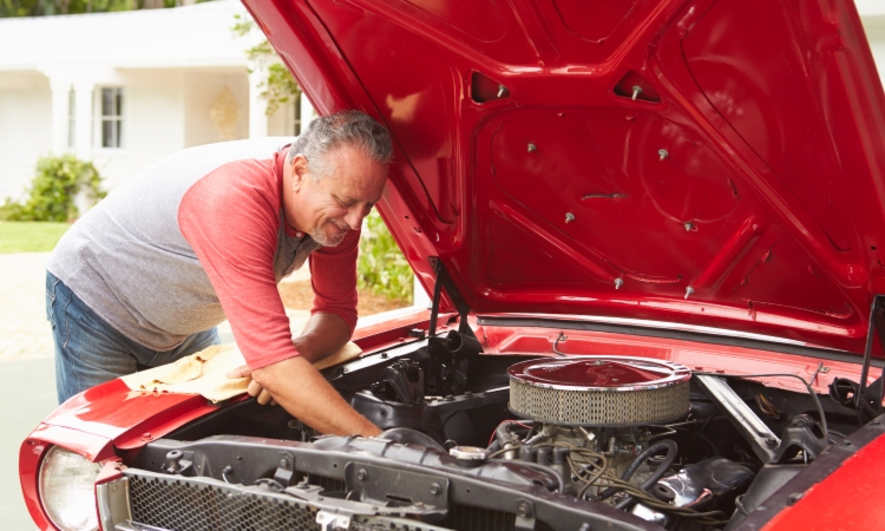
Lift the hood and inspect your engine. Squirrels, mice and small animals seek shelter near car engines during cold weather. Check for holes, bite marks and other damage on belts, hoses, cords and other critical components. Also remove any shells or other debris.
Then check your fluids. You will want the oil and perhaps other fluids changed, but it’s important to make sure that driving your car — even a short distance — is safe. Don’t forget to have your battery checked, too.
Examine the Inside
Once inside the car, make sure there is no water leakage, like from a cracked windshield. Start the car (provided the fluids are adequate). Sniff the air. Does the car cabin have an odd odor? It might be time to change the cabin air filter. Switch on the air conditioner. Does it blow and cool well?
Take It for a Spin
If your car is safe to drive, take it for a short spin and listen for any odd sounds such as grinding, pinging or squealing. Those noises may indicate mechanical issues.
Once you complete your personal inspection, take your list of concerns and go to a trusted auto technician or car care center. Don’t be surprised if the technician has other recommendations. Winter is tough on cars.