4. Mass Airflow Sensor (MAF) Malfunctions
The mass air flow sensor measures the air entering the engine so the computer knows how much fuel to inject. A dirty or faulty MAF sensor can cause stalling, rough idling and reduced fuel efficiency.
What To Do: Cleaning may help, but in many cases, replacement is required. Driving with a failing sensor leads to reduced engine performance due to too much fuel being burned.
5. Worn or Failing Spark Plugs/Ignition Components
Faulty spark plugs, worn spark plug wires or failing ignition coils can all be reasons that your “check engine” is on. These issues cause cylinders to misfire, which disrupts combustion and puts extra strain on your engine.
What To Do: Replacing spark plugs and related parts is a relatively easy and inexpensive fix, and speedy resolution helps avoid a more serious problem down the road.
6. Engine Misfires
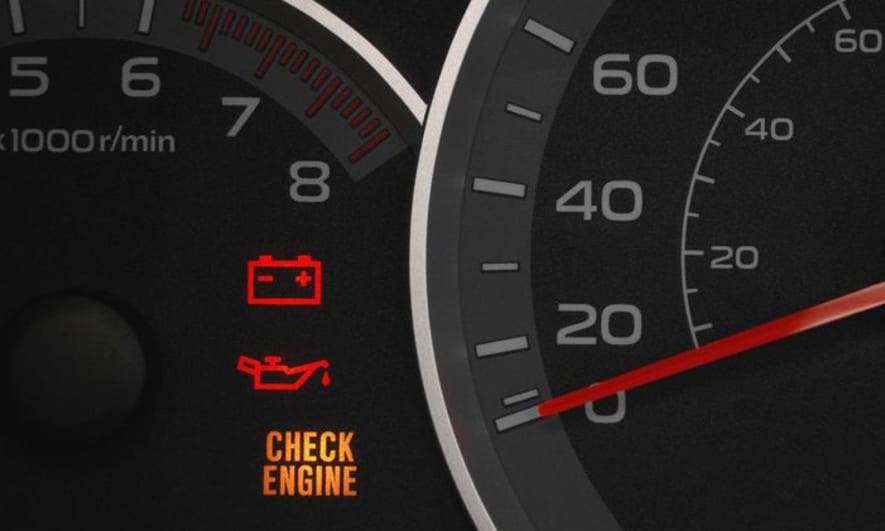
An engine misfire happens when fuel in one or more cylinders fails to ignite at the right time. This can be linked to ignition issues, clogged injectors or compression problems – all of which require immediate attention.
What To Do: Because misfires can stem from several potential issues, your mechanic will likely use a diagnostic code reader to assess the root cause before recommending the necessary repairs.
7. Vacuum System Leaks
Your car’s vacuum system helps regulate air pressure. If a hose cracks or loosens, unmetered air enters the engine, throwing off the air-fuel balance and triggering the light.
What To Do: Minor leaks may only cause rough idling, while bigger ones can lead to stalling. Either way, it’s best to schedule service as soon as possible to prevent further damage.
8. Exhaust Gas Recirculation (EGR) Valve Issues
The EGR valve lowers pollution by routing some exhaust back into the intake so it recirculates gasoline vapors instead of releasing them outright. The check engine light usually comes on if the valve becomes clogged or stuck.
What To Do: Cleaning the valve can sometimes help, but if it’s fully blocked or broken, replacement is the best way to fix the problem and restore performance.
9. Aftermarket Electronics or Alarm Systems
Non-factory electronics like custom alarms, remote starters or stereo systems can sometimes interfere with your vehicle’s sensors and wiring or confuse the computer.
What To Do: If the light came on soon after an aftermarket installation, have the system checked by a professional to confirm the exact problem and make the necessary adjustments.
10. Contaminated or Poor-Quality Fuel
Bad gasoline or contamination in the gas tank can make your engine run unevenly, triggering a warning, though it’s less common. In such cases, it’s normal to notice rough idling or hesitation when accelerating.
What To Do: If the issue stems from fuel quality, running the tank low and refilling with clean gas may be enough to ensure your car runs fine again. Otherwise, a mechanic will have to flush the system.
11. Reduced Engine Power
Have you ever noticed your engine power drop, even when everything else seems to be running fine? The reason could be as simple as an air filter that needs replacing. But the light may also indicate low oil pressure, leaks in hoses or multiple other issues.
What To do: Take your vehicle to a mechanic for a proper diagnostic test. The diagnostic trouble codes will reveal the check engine light reasons.