When it comes to calculating cash flow and determining what goes into a cash flow statement, there are three types of cash flows you will want to break out in order to gain the most value and insight from your cash flow statement:
- Operating activities cash flow. This is the money your business generates and spends on typical, day-to-day operating activities, such as selling products and services or paying rent and employees. Cash flows from operations are integral to your cash flow statement.
- Investing activities cash flow. This is the money spent on and generated from market securities, long term assets, and other financial instruments over the reporting period. It could be from buying or selling major equipment or property, or other related purchases or sales, for example.
- Financing activities cash flow. Financing activities include the money that moves between a company and its owners, investors, and creditors, such as by issuing equity or debt.
You also may want to include an “other activities” section for any type of cash flow that doesn’t fit into these three main activities. Each section should include line items that break out the various types of cash flow pertaining to that activity, so no cash payments are missed.
Before you start working on your statement, determine whether the indirect method or the direct method to prepare a cash flow statement makes the most sense, given your needs. Keep in mind that the method you select will only affect the operating activities section of your statement — as the investing and financing activities sections will look the same regardless of the method used.
Each method has its advantages and disadvantages. The indirect method is more common, for example, because it’s generally simpler and less time-consuming to perform. But the direct method provides greater detail about your company’s cash situation and, in turn, more potentially valuable insights.
Indirect Cash Flow Method
The indirect method is based on accrual basis accounting — which means revenues and expenses are counted when they are incurred, not when money actually changes hands. Most companies use the accrual basis of accounting method, which is partly why this method is so popular.
For the operating activities section of the cash flow statement, the indirect method involves first showing the company’s net income (which should be found easily on your company income statement). You then show any noncash inflow or outflow adjustments that need to be made in order to calculate the total operating activities cash flow. Common adjustments, for example, include:
- Depreciation (which must be added back to the net income because it does not count as cash flow)
- Accounts payable
- Accounts receivable
- Inventory expenses (which must be subtracted from the net income because they are considered a cash outflow)
- Working capital changes
Direct Cash Flow Method
The direct method relies on cash basis accounting — meaning revenues and expenses are counted when actual cash receipts and payments are made during the reporting period.
The direct method generally takes more time and number-crunching because you are subtracting actual cash outflows from inflows rather than simply adjusting the net income. Common line items using the direct method include:
- Customer receipts
- Payments to suppliers
- Payments to employees
- Interest and dividends received
- Income tax payments
While breaking out each type of cash receipt or payment takes time, this method offers more detail and visibility into your company’s finances. For example, it can show how much cash was spent during the reporting period on employee payroll or merchandise — or the exact dollar value of customer sales — rather than having those individual cash flow sources grouped together in “net income.”
That said, there are additional potential complexities to choosing the direct method to prepare cash flow statements. For one, since most companies use accrual basis accounting, the indirect method more naturally fits with their current accounting practices. Moreover, the Financial Accounting Standards Board (FASB) requires companies using the direct method to also provide a “reconciliation” that shows how their net income would be adjusted to net cash (essentially using the indirect method) on a separate schedule.
Most accounting standard-setting entities (including FASB) prefer the direct method, though, because of the higher level of insight it provides. If you choose to go the direct method route, you’ll want to start regularly tracking your cash inflows and outflows in the way you’ll be reporting it — so that putting together the cash flow statement won’t be too much of a burden.
You can use accounting software such as Intuit QuickBooks, Zoho, or FreshBooks to keep tabs on your cash flow and more easily assemble the cash flow statement.
How to Interpret a Cash Flow Statement
Your cash flow statement not only provides insight into how cash is flowing in and out of your operation. It also tells you what stage your business is in, whether you’re a startup or in a growth phase. Analyzing and comparing your year-over-year cash flow statements can help you get insight into the risk of your company. This helps you determine which areas of your small business are contributing to the growth of your company.
It’s also important to note that if you recently made a large investment, you may have a negative cash flow for a certain amount of time.
Positive Cash Flow
If your company has a positive cash flow, that means more funds are coming in than going out. Ideally, this is what you want for your business. Positive cash flows allow you to pay off debts and invest back into your business easier. It’s also important to note that a positive cash flow doesn’t always mean your business is making a profit.
Negative Cash Flow
Negative cash flows mean your cash outflow is higher than your cash inflow. This doesn’t always mean your small business lost profits. For example, an acquisition of another company that creates future growth can cause a negative cash flow from operations for a certain period of time.
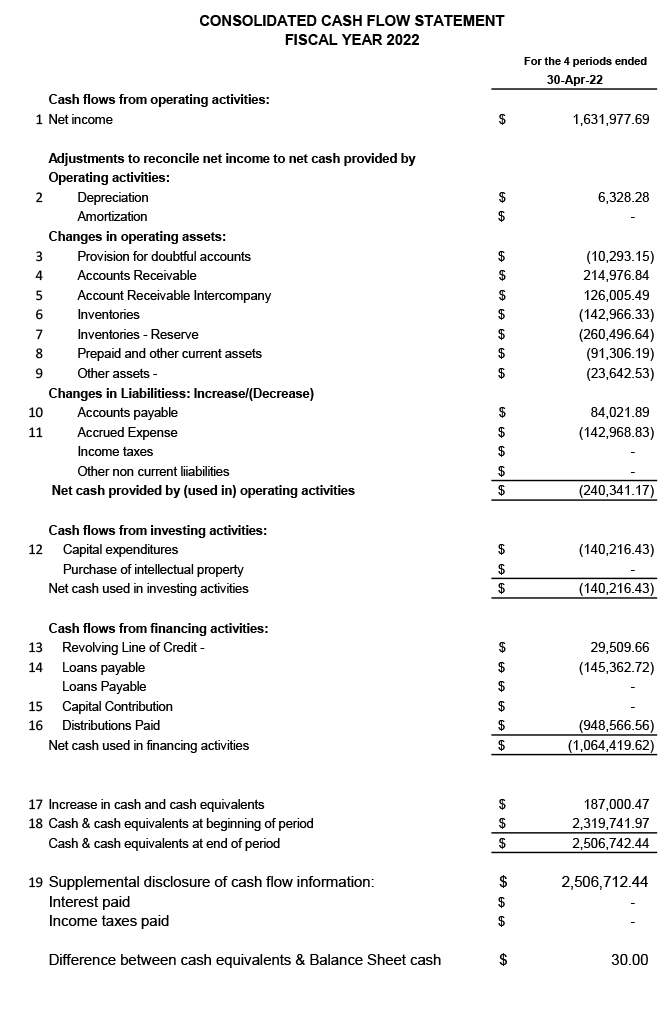
You can learn more about cash flow statements by looking through the example below. This statement shows $1,631,977.69 in income, with cash only increasing $187,000.47. Why is that? This report reconciles what a company shows as net income to what’s ending up in their bank account because there is a significant difference between the two. That’s because there are a number of transactions (capital expenditures, loan payments, distributions, etc.) that impact cash but are not reflected in an income statement.