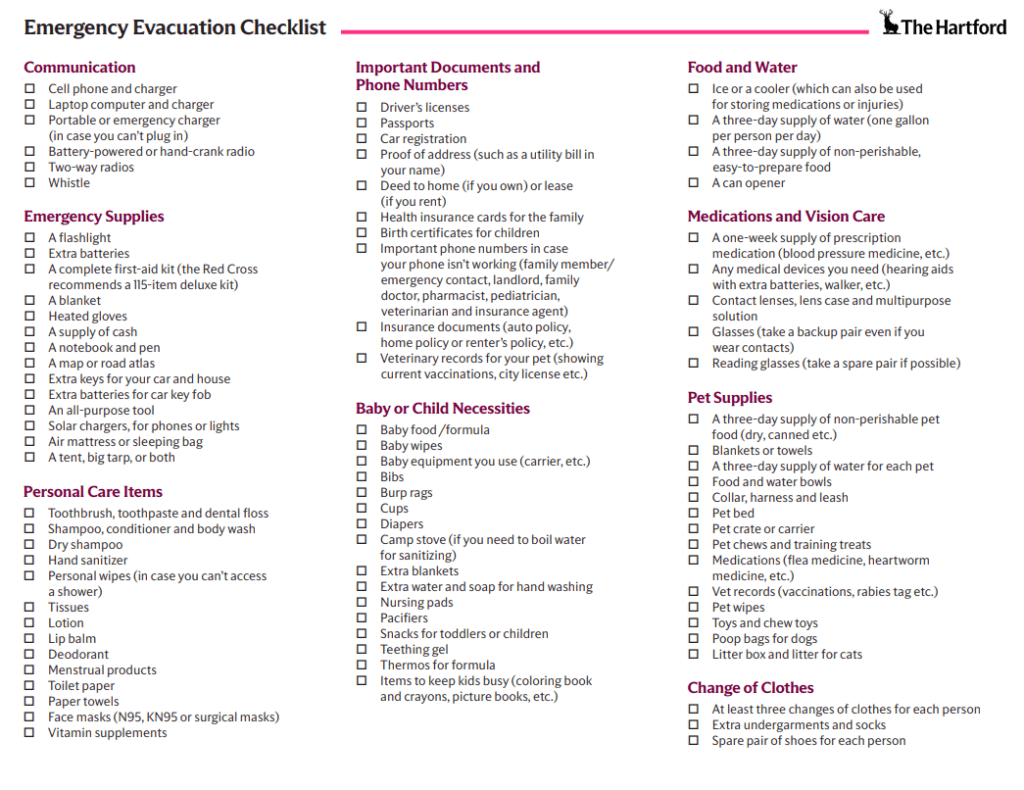
Start by making sure each family member has a backpack or other bag that’s sturdy, water-resistant and easy to carry, with pockets or compartments for finding items quickly. You may also want to get a container you can easily grab and place in your car for documents and other paper items.
Here are the things you may want to include when making your list of what to take with you if you evacuate your home.
Communication is essential when you evacuate in a
hurricane, a
tornado or other disaster. You may need to call for help, reach family members if you get separated and let faraway loved ones know how you’re doing. Here are the communication essentials to take when you evacuate:
- Cell phone and charger
- Laptop computer and charger
- Portable or emergency charger (in case you can’t plug in)
- Battery-powered or hand-crank radio
- Two-way radios
- Whistle
You’ll also need emergency supplies should you face unexpected or unusual situations such as cold or lack of electricity. Keep in mind that some of the things you usually rely on, such as ATMs, credit card machines and even your smartphone, may not be working. Pack these emergency items:
- A flashlight
- Extra batteries
- A complete first-aid kit (the Red Cross recommends a 115-item deluxe kit)
- A blanket
- Heated gloves
- A supply of cash
- A notebook and pen
- A map or road atlas
- Extra keys for your car and house
- Extra batteries for car key fob
- An all-purpose tool
- Solar chargers, for phones or lights
- Air mattress or sleeping bag
- A tent, big tarp, or both
It’s wise to have your important documents stored digitally so you can access them if physical copies get damaged. Here are some important documents to take:
- Driver’s licenses
- Passports
- Car registration
- Proof of address (such as a utility bill in your name)
- Deed to home (if you own) or lease (if you rent)
- Health insurance cards for the family
- Birth certificates for children
- Important phone numbers in case your phone isn’t working (family member/emergency contact, landlord, family doctor, pharmacist, pediatrician, veterinarian and insurance agent)
- Insurance documents (auto policy, home policy or renter’s policy, etc.)
- Veterinary records for your pet (showing current vaccinations, city license etc.)
Pack so that you and your family have enough food and water to get through at least three days. If you’re wondering what kind of food to put in an evacuation kit, experts recommend crackers, nut butter, dried fruit and nuts and seeds, juice boxes, energy bars, canned beans, canned fruit, canned meat and canned vegetables. Here’s what to pack to sustain you and your family:
- Ice or a cooler (which can also be used for storing medications or injuries)
- A three-day supply of water (one gallon per person per day)
- A three-day supply of non-perishable, easy-to-prepare food
- A can opener
If you or someone in your family takes medication or wears contacts or glasses, make sure to consider that when you pack. Your evacuation kit should include these vision and medical supplies:
- A one-week supply of prescription medication (blood pressure medicine, etc.)
- Any medical devices you need (hearing aids with extra batteries, walker, etc.)
- Contact lenses, lens case and multipurpose solution
- Glasses (take a backup pair even if you wear contacts)
- Reading glasses (take a spare pair if possible)