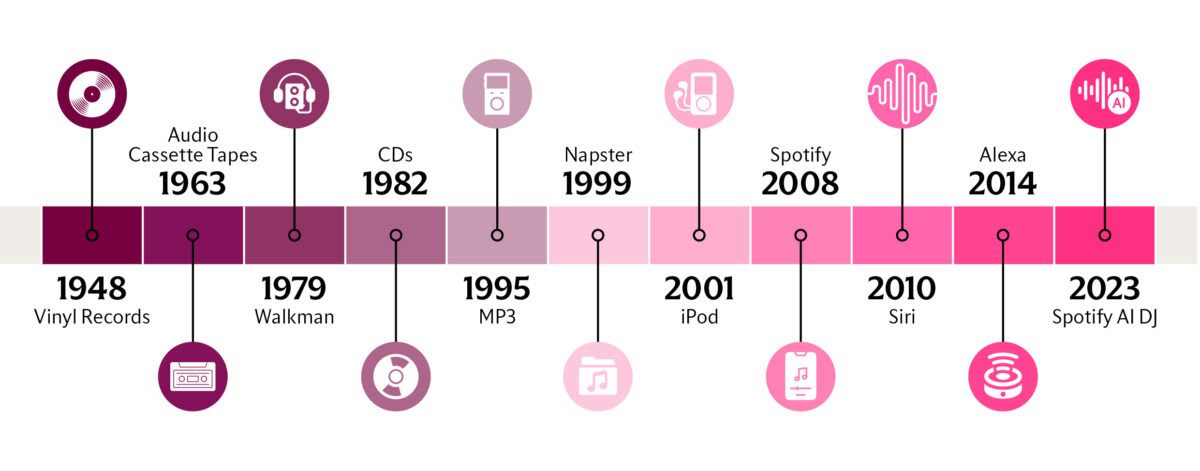

You’ve experienced the evolution of music over your lifetime — maybe you remember spinning vinyl in a friend’s basement, making mixtapes for a crush, buying your first CD and witnessing the debut of streaming.
Now that we have more ways to listen to music, it’s easier than ever to experience its benefits. These include boosting cognitive health, improving emotional wellbeing and motivating movement — whether you’re doing household chores like spring cleaning or sweating it out at the gym.
So, here’s a tribute to how music consumption has changed over the years, and how it keeps us young today.
Benefits of Music at 50 and Beyond
Music can bolster your wellbeing in a variety of ways. Here are a few ways listening to or making music can improve your mental acuity, social connections and physical vitality.
Cognitive Health
Music supports cognitive health by activating and synchronizing various parts of the brain, starting near the ears and spreading to brain regions associated with memory, emotion and motor skills. This strengthens neural networks, essentially giving your brain a workout.
And adding music to your bedtime routine can help to you to get a good night’s sleep, which is crucial for cognitive function. For example, one study showed listening to calming music before bed helped participants fall asleep much faster. Instead of taking almost 30 minutes to an hour plus to get to sleep, participants reached the land of nod in just six to 13 minutes after adding music to their bedtime routine.
Emotional Wellbeing
Music may bolster emotional and mental wellbeing, whether you’re alone or in a group — jamming with a band, for example, or attending the symphony (or a rock concert) with friends.
Research is beginning to show that music can help to build social connections and increase emotional skills. And music therapy may help to lessen stress, improve mental wellness and even reduce pain, according to the American Psychiatric Association.
Listening to nostalgic music may even bring back vivid memories and foster a sense of wellbeing if linked to positive past experiences. Scientists have found an effect called the “reminiscence bump” where adults have stronger memories of life events that took place from ages 10 to 30 or so. That means you may be drawn to songs that were popular during your teen and young adult years, and they may elicit especially powerful emotions. Science shows that deliberately evoking nostalgia around good memories — such as through music — can have a positive effect on emotional wellbeing that may include greater optimism, self-esteem and a sense of meaning in life.
So consider checking out some of the spaces in your community where people gather to listen to music, and invite friends or family members to attend a concert, show or music class with you.
Physical Vitality
Finally, music can enhance physical vitality. It’s no secret that cranking up a tune on your phone can boost motivation and get you moving faster at the gym, for example. In fact, studies show music can help improve performance if you listen before or during exercise.
If you’re not a gymgoer, music can still help to get your heart pumping. Even quick bursts of dancing in the kitchen or living room are good for longevity. In fact, one study showed that moving for as little as two minutes at a time (15 minutes a week) may cut your risk of heart disease, cancer and early death — no formal commitment to attend a Zumba class required.