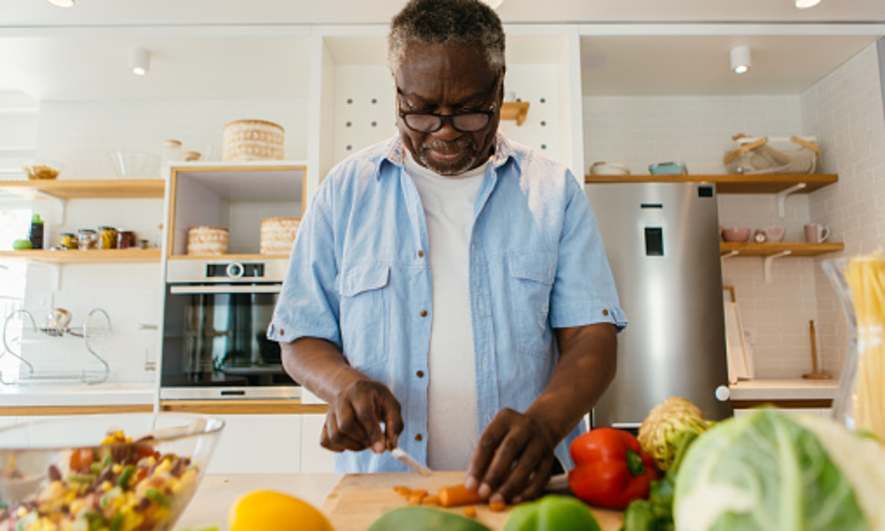
1. Eat a Nutritious and Balanced Diet
Experts recommend a balanced diet full of protein and fiber that incorporates these categories:
- Fruits and veggies
- Whole grains
- Legumes
- Protein-rich foods, such as fish, eggs and nuts
- Healthy fats from ingredients like olive oil or avocado
One fun way to incorporate more fruits and veggies into your diet? Shop what’s in season!
2. Keep Satisfying Snacks Around
We all get hungry between meals, and not snacking is not the sustainable or recommended answer. Instead, pick choices that will actually satisfy your hunger and cravings. To do this, opt for high-protein treats that will leave you fuller longer, like whole-grain crackers with hummus or Greek yogurt with banana and granola.
3. Pair for Success
Sometimes, all we want is a cold Reese’s from the fridge or a decadent spoonful of Nutella. And while there is nothing wrong with that, regularly grabbing those treats without anything accompanying them won’t leave you actually nourished, meaning you’ll be unsatisfied. Plus, they can lead to a spike in blood sugar. But instead of removing, try adding – which will help with both. For example, if you’re craving Nutella, add berries to get more essential vitamins and good-for-you ingredients. Or, if all you want is a cozy bowl of mac and cheese, add broccoli to the boiling water for the last two minutes to round out the meal a bit more.
4. Plan, But Make it Fun!
Set yourself up for success and enjoy the process. Crack open some cookbooks or search for online recipes to build a weekly shopping list and meal/snack plan. Follow dietitians online who specialize in heart-healthy eats to get inspired. Try new kitchen hacks and utensils. Pass along recipes to your friends or family, and ask for theirs. You can even create a shared online cookbook! Make every aspect of planning and executing a good-for-you menu something to look forward to.
5. Build Momentum
It’s a proven fact that most diets fail. According to a
recent study by healthline, “Most diets lead to weight loss and lower blood pressure, but these desired effects largely disappear after a year.” Why? Largely because the changes being made are not sustainable. But eating foods that benefit your heart, which usually also benefit your entire being, shouldn’t be thought of as a diet. In fact, they should be viewed as a non-negotiable. But how do we make lasting lifestyle changes when it comes to food? Some tips include:
- Making small, sustainable swaps or enhancements and building upon that momentum, rather than making large, sweeping changes that aren’t realistic to maintain.
- Viewing eating well as a privilege, not a punishment.
- Giving yourself grace when you don’t follow your plan 100%. It’s better to show up imperfectly than not at all, and you deserve to show up for yourself.