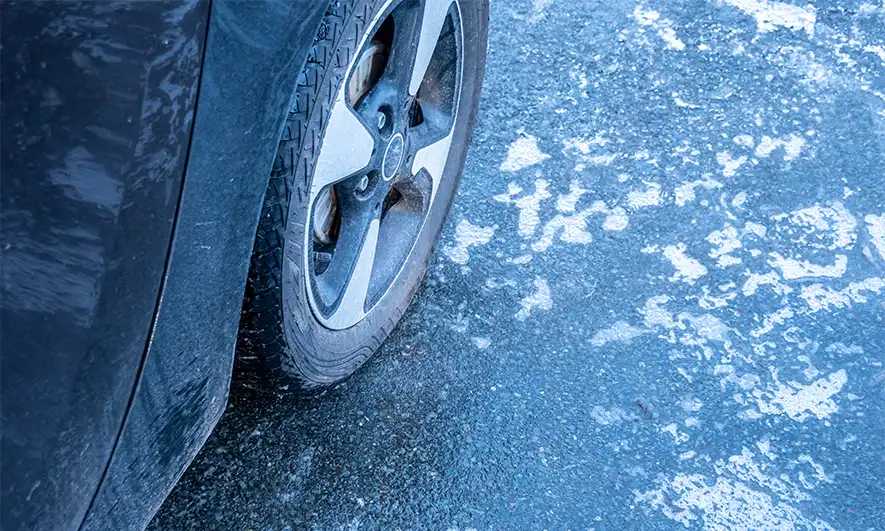
According to the latest data, black ice may have some favorite hiding spots.
From a geographic standpoint:
- About 70% of U.S. roads are located in snowy or icy regions
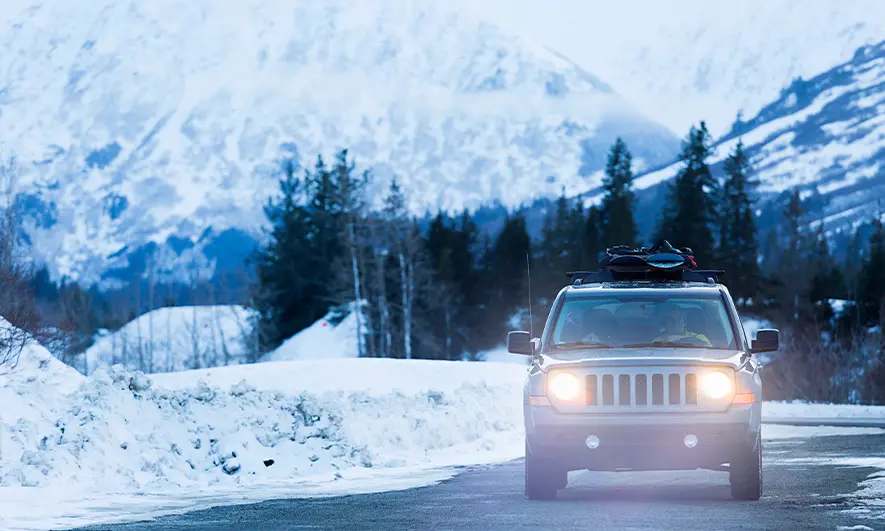
Northern states, including the Northeast, Midwest and Mountain West, are especially vulnerable due to frequent freeze thaw cycles. That said, black ice can form anywhere temperatures dip near freezing, even in regions that don’t see heavy snowfall.
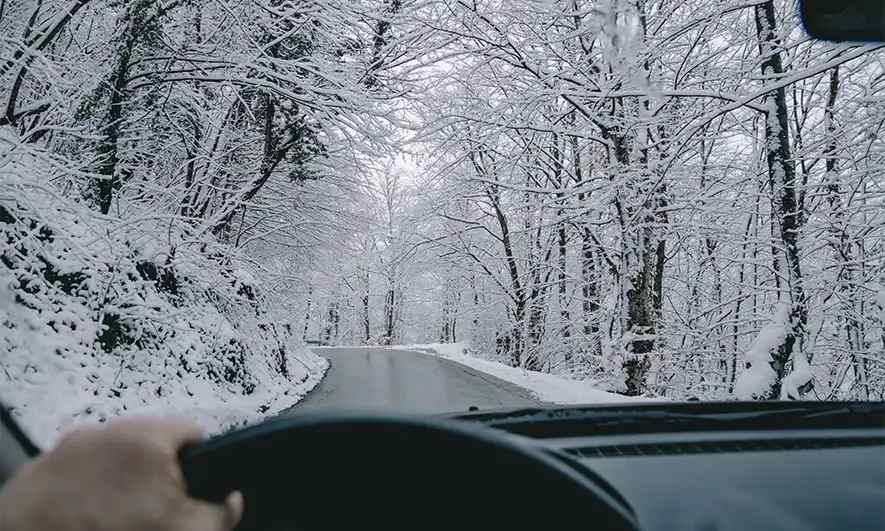
- Shaded roads under trees or buildings
- Early morning and late evening hours
To breakdown the
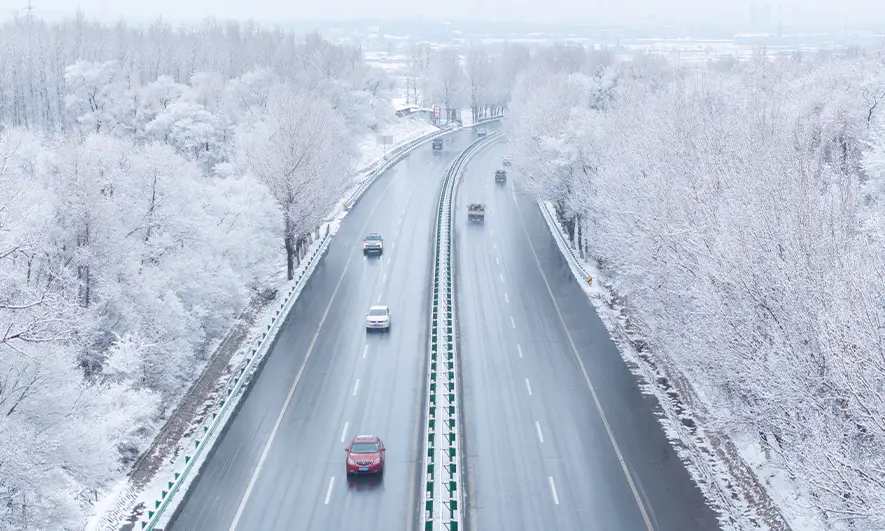
science: Bridges and overpasses freeze first because they’re exposed to cold air above and below, while shaded roads, curves, ramps and lightly traveled areas lose heat faster and may not warm up during the day. In short, if a road cools quickly and holds moisture, black ice is happy to settle in (without an invite).